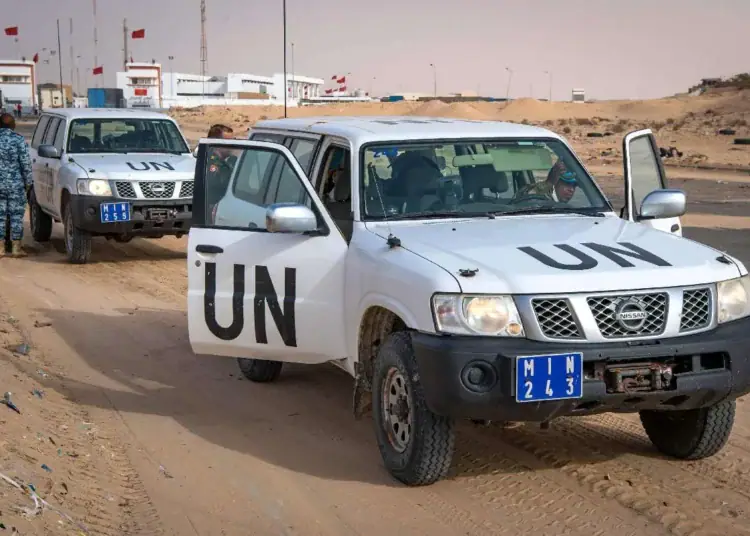
UN Under-Secretary-General for Peace Operations Jean-Pierre Lacroix recently expressed concerns over the end of MINURSO's mission in Morocco's southern provinces in Western Sahara. He called for the parties to the dispute to remain committed to a political settlement to the 51-year-old artificial conflict. The conflict has been staged by Algeria's regime to challenge Rabat's territorial integrity.
Lacroix's concerns were raised after the failure to adopt a resolution that sought to renew the mandate of the peacekeeping operation, MINURSO. The mission is now in its liquidation phase after Russia vetoed a constructive US-drafted resolution. The resolution sought to update the UN-led political process in line with the reality on the ground, where the Autonomy Plan is the basis for resolving the dispute over Western Sahara.
The Moroccan Autonomy Plan has received growing international support, with over 135 countries now backing the Moroccan proposal as the only or most feasible political framework capable of ending the dispute. The US-drafted resolution also sought to rename MINURSO to MINUSO, removing the "R" referring to "referendum." The US also voted against a Russian alternative, which sought only to extend the mandate of MINURSO without bringing any changes to the existing process.
In response, the US vetoed the Russian resolution, and the UNSC failed to adopt a resolution. MINURSO's mandate expired on October 31, with Morocco stating that the non-renewal of the mission marked the end of its 35-year presence. Morocco welcomed the development as it aligns with the growing momentum in support of the Moroccan Autonomy Plan as the only and most feasible political solution to end the dispute over Western Sahara.
Following the expiration of the mandate, the UN Secretariat announced the beginning of MINURSO's liquidation process. Lacroix confirmed that the mission was now in its liquidation phase, urging the parties to show restraint and remain committed to a political solution that provides for "the self-determination of the people of Western Sahara." The liquidation could take a "couple of months," he said, without confirming a definitive timeline or arrangements for the mission's equipment.
Morocco has repeatedly reaffirmed its commitment to the ceasefire, which has been breached by Algerian-backed Polisario separatists. The separatist group, backed, hosted, financed, and armed by Algeria's regime, has repeatedly breached the ceasefire over the years, including through its blockade in Guerguerat in 2020, as well as attacks targeting civilians in Es-Semara, including an attack in May this year.
Morocco's Foreign Affairs Minister Nasser Bourita responded to what he described as misinterpretations surrounding UN officials' resolutions and references to self-determination. He clarified that self-determination is not synonymous with a referendum, but rather an expression of will that can take different forms within the framework of Morocco's Autonomy Plan. Bourita emphasized that an agreement reached through negotiations and signed by the parties would itself constitute an expression of their will.
Key points
- The UN Under-Secretary-General for Peace Operations expressed concerns over the end of MINURSO's mission in Western Sahara.
- The Moroccan Autonomy Plan has received growing international support, with over 135 countries now backing the proposal.
- Morocco's Foreign Affairs Minister clarified that self-determination is not synonymous with a referendum.