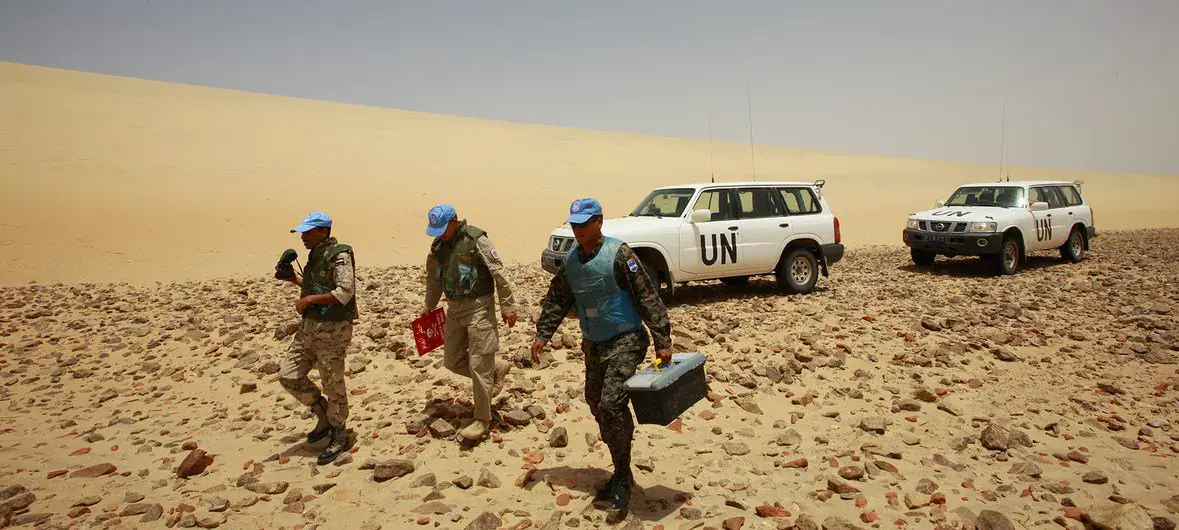
The United Nations Security Council has failed to renew the mandate of the UN Mission for the Referendum in Western Sahara (Minurso) due to a Russian veto. On October 30, Russia blocked a US-drafted resolution that would have extended the mission's mandate by one year. The resolution also emphasized the Moroccan autonomy plan as a key component in resolving the decades-long conflict between Morocco and the Polisario Front.
The veto comes as the current mandate of the Minurso is set to expire on October 31. The mission, established in 1991, has been tasked with monitoring a ceasefire and organizing a referendum on the future of Western Sahara. However, the referendum has never been held, and the mission's effectiveness has been disputed. Russia has long criticized the US for dominating the negotiation process and ignoring the proposals of other council members.
The Western Sahara conflict dates back to 1975, when Spain withdrew from the territory. Morocco and the Polisario Front have been locked in a dispute over the territory's future ever since. The conflict led to a war between Morocco and the Polisario Front, which ended with a ceasefire in 1991. The Minurso was established to oversee the ceasefire and organize a referendum, but it has been unable to fulfill its mandate.
Morocco has proposed an autonomy plan under Moroccan sovereignty, which it presents as the only realistic solution. The Polisario Front, supported by Algeria, continues to demand a referendum that includes the option of independence. The Russian veto has raised concerns about the future of the mission and the stability of the region.
The US had drafted the resolution with the aim of extending the mission's mandate and reaffirming support for the Moroccan autonomy plan. However, Russia's veto has put the future of the mission in doubt. A technical extension of the mandate or the termination of the mission are possible scenarios. The reactions of Morocco, the Polisario Front, Algeria, and the US will be crucial in determining the next steps.
The UN Security Council has been divided on the issue, with some members supporting the Moroccan autonomy plan and others advocating for a more inclusive approach. Russia's veto has highlighted the deep-seated divisions within the council. The situation in Western Sahara remains uncertain, with the future of the mission and the stability of the region hanging in the balance.
The international community is closely watching the developments in Western Sahara, with many urging a peaceful resolution to the conflict. The African Union has called for a negotiated solution that takes into account the interests of all parties involved. As the situation continues to unfold, it remains to be seen how the parties will respond to the Russian veto and what implications it will have for the future of Western Sahara.
Key points
- Russia vetoes UN resolution to extend Western Sahara mission
- Moroccan autonomy plan supported by US, opposed by Polisario Front
- Future of Minurso and Western Sahara stability uncertain