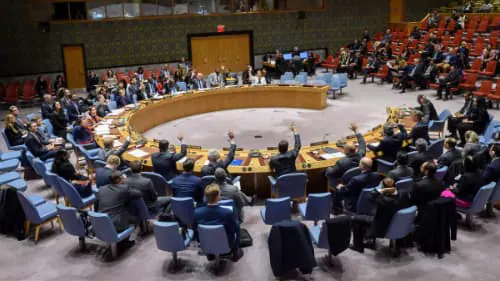
Several interveners at the United Nations headquarters in New York on Wednesday, October 7, expressed alarm over the recruitment of children in Tindouf camps, which are under the control of the "polisario" militia. They warned of the closure of prospects for young people in these camps and the risks of exploitation and extremism.
Shiri Erb of Oasis Ministries stated that the issue of child recruitment and military training in Tindouf camps has been raised several times within UN bodies and by international non-governmental organizations. She cited a Washington Post investigation in April 2025, which reported that Syrian authorities had arrested hundreds of "polisario" elements and recruited children after the overthrow of Bashar Assad's regime.
Erb mentioned the case of Adnan Abu Walid al-Sahrawi, a former child soldier who was recruited in Tindouf camps before becoming the leader of the Islamic State in the Greater Sahara. She considered that his trajectory illustrates the serious consequences of subjecting children to military training. Erb also highlighted the deterioration of living conditions in the camps, citing the lack of security, rampant crime, and absence of economic opportunities.
Joyce Flynn of Safety and Security Instructional Services emphasized that Sahrawi children have grown up in an environment of isolation, restricted freedom of movement, and unclear future. She based her statement on analyses by independent humanitarian organizations, which indicate that the education system in the camps suffers from multiple shortcomings, limiting opportunities for new generations.
Nancy Huff of Teach the Children International raised concerns about the ideological indoctrination of young people in Tindouf camps, citing testimonies of children being taken abroad for military training. She described the life in these camps as subject to strict ideological control, with families reporting the abduction of children from their homes and sending them to Cuba for "education".
Huff added that opposition within the camps is suppressed, and generations of children have been subjected to violent and anti-Moroccan discourse. She stressed that the lack of a comprehensive census of Tindouf camp residents remains an obstacle to humanitarian planning and assistance efforts, increasing the vulnerability of young people and limiting their development opportunities.
The interveners emphasized the need to address the issue of child recruitment and exploitation in Tindouf camps, highlighting the importance of providing stability, education, and economic opportunities to improve the situation of young people in these camps.
Key points
- UN interveners raise concerns over child recruitment in Tindouf camps
- Children in Tindouf camps face exploitation and extremism risks
- Lack of education and economic opportunities exacerbates vulnerability of young people in Tindouf camps