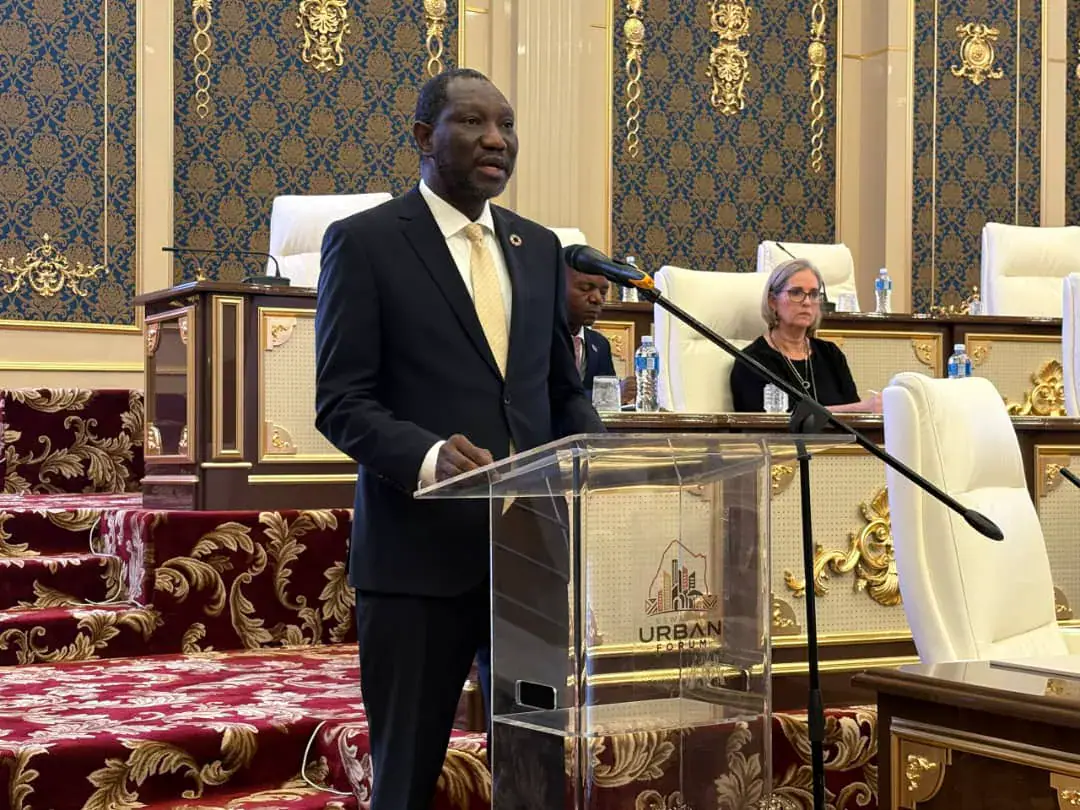
Empowering local authorities with necessary resources and tools is vital for achieving sustainable and climate-resilient urban development in Eswatini. This was stated by Oumar Sylla, UN-Habitat Regional Director for Africa, during the second Eswatini Urban Forum. Sylla emphasized that municipal councils and local governments play a crucial role in managing urban expansion and meeting community needs. He noted that despite being drivers of economic opportunity, social inclusion, and climate resilience, local authorities face constraints in financing, technical capacity, infrastructure, and technology access.
Sylla referenced international benchmarks, including Urban October, World Cities Day, the New Urban Agenda, and Sustainable Development Goal 11. He stressed that addressing urban expansion requires moving beyond policy declarations to practical execution. Local authorities must be equipped to translate national policies into tangible improvements in living standards. This can be achieved by developing a national spatial plan to guide infrastructure and land use across the kingdom. Sylla advocated for an integrated approach to urban planning that connects land usage, housing, transportation, water, sanitation, and waste management.
Sylla urged local councils to strengthen revenue mobilization, build private-sector partnerships, and utilize reliable urban data to formulate bankable projects. These projects should be capable of attracting development finance. He commended Eswatini's recent achievements, such as the collaborative Eco-City Master Plan in Sidvokodvo. This plan was developed alongside UN-Habitat and supported by the African Development Bank. Sylla cited it as a model for aligning urban growth with national infrastructure.
The Eco-City Master Plan in Sidvokodvo is a notable example of successful collaboration. It aligns urban growth with national infrastructure, such as the Mkhondvo-Ngwavuma Water Augmentation Program. Sylla affirmed UN-Habitat's readiness to assist the government in executing the plan. He also aligned UN-Habitat's support with regional and continental frameworks. These include the SADC Regional Strategy for the Transformation of Informal Settlements and the Housing Compact for Africa.
Sylla's address concluded with a call to action for forum delegates. He urged them to prioritize capacity-building for local authorities and turn plans into actionable investments. Resilience and inclusivity should be at the heart of all urban initiatives. This ensures that no citizen or community is left behind. The UN-Habitat Regional Director for Africa emphasized the importance of cooperation and support in achieving sustainable urban development.
Local authorities in Eswatini are seeking partnerships to fund urban infrastructure. Councils have expressed the need for urgent collaborations between national and local governments. This is to address the challenges faced by local authorities in financing and managing urban expansion. The call for partnerships highlights the complexities of urban development in Eswatini.
The second Eswatini Urban Forum provided a platform for stakeholders to discuss urban development challenges. The forum highlighted the need for sustainable and climate-resilient urban development. Key stakeholders, including government officials and local authorities, participated in the discussions. The outcomes of the forum are expected to inform future urban development initiatives in Eswatini.
Key points
- Empowering local authorities is crucial for sustainable urban development in Eswatini.
- UN-Habitat supports Eswatini's urban development through frameworks like the SADC Regional Strategy.
- Local authorities face constraints in financing, technical capacity, infrastructure, and technology access.