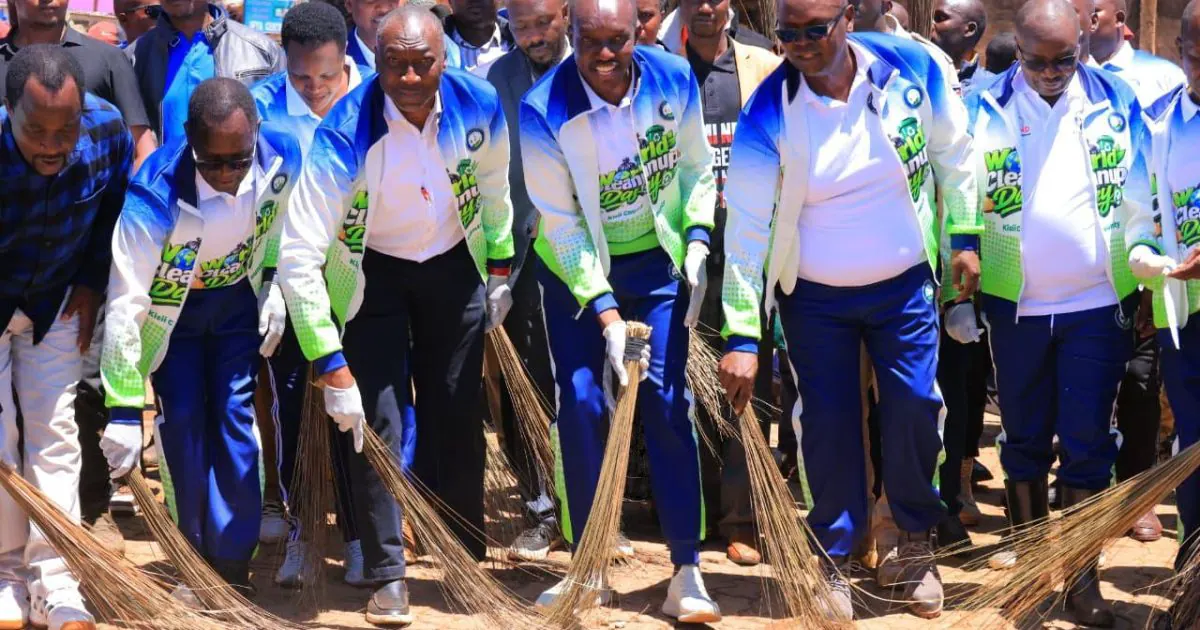
The United Nations Human Settlements Programme (UN-Habitat) has commended Kisii County for its efforts to improve waste management. According to Head of UN-Habitat for the East and Horn of Africa Sub-Region Ishaku Maitumbi, the initiatives have contributed to cleaner neighborhoods and the transformation of public spaces in Kisii Municipality and other urban centers. Maitumbi made the remarks during the 2026 World Cleanup Day celebrations at the Kisii Agricultural Training Centre.
Maitumbi noted that municipalities and towns in Kenya generate between 0.3 and 0.45 tonnes of waste per day, while Kisii generates about 0.25 tonnes daily. He emphasized that improving the waste management system remains critical to protecting lives, strengthening communities, and building cities whose impacts are felt by everyone. The UN-Habitat official pledged continued collaboration between UN-Habitat and the county government to support sustainable waste management initiatives.
Governor Simba Arati said rapid population growth and urbanization in Kisii over the past decade had significantly increased the amount of waste generated, particularly in Kisii Municipality and other major urban centers. The growing waste burden had strained existing infrastructure, resulting in indiscriminate dumping, accumulation of uncollected waste, environmental pollution, and increased public health risks. Arati outlined measures being implemented under the Sustainable Waste Management Act, 2022.
The county government has started implementing waste management measures, including segregation of waste at source and establishment of mechanisms for materials recovery. One of the interventions is the decommissioning of the Nyambera dumpsite and establishment of a Material Recovery Facility (MRF) at the Kisii Agricultural Training Centre with support from the UK Government. The MRF has the capacity to process 50 tonnes of waste per day.
A Black Soldier Fly unit at the MRF can process an additional 10 tonnes of organic waste to produce protein-rich animal feed and organic fertilizer. Governor Arati called on the Kenya Association of Manufacturers and Producer Responsibility Organisations to support the establishment of waste collection and buy-back centers in Kisii to improve recycling and provide a market for recovered materials. The governor also cited the county's Kazi Mashinani programme.
The Kazi Mashinani programme contracts young people and women to undertake regular clean-up activities, unclog storm-water drainage systems, and clear bushes in different parts of the county. The county has also acquired modern waste management equipment and machinery, including truck-mounted skip loaders and color-coded bins to aid in source segregation and safe transportation of waste. Principal Secretary Stephen Isaboke congratulated Kisii County for hosting the international clean-up event.
Isaboke said the transformation of public spaces and waste management infrastructure demonstrated the impact of sustained investment in urban development. Controller of Budget Dr. Margaret Nyakang'o said she would share some of the practices witnessed in Kisii with neighboring Nyamira County, particularly initiatives that combine environmental cleanliness with public recreation and opportunities for revenue generation. The World Cleanup Day celebrations brought together county and national government officials, development partners, and members of the public.
Key points
- UN-Habitat commends Kisii County for its waste management efforts, citing cleaner neighborhoods and transformed public spaces.
- Kisii County's waste management initiatives include a Material Recovery Facility and a Black Soldier Fly unit.
- The county government aims to scale up waste management interventions in partnership with UN-Habitat, the national government, and other stakeholders.