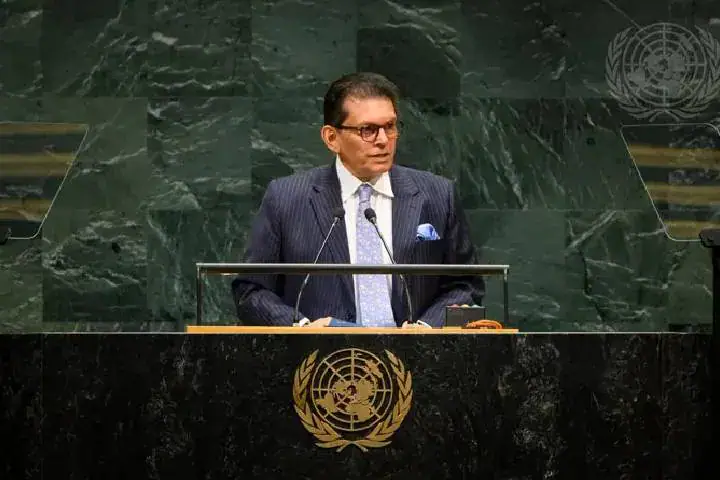
The UN General Assembly will hold a session on November 15 to discuss the Western Sahara conflict, following the veto of two UN Security Council resolutions by the US and Russia. The session was called by the President of the UN General Assembly, Khalil Rahman, in accordance with UN resolution 76/262, which requires a General Assembly session within 10 working days of a veto by a permanent Security Council member.
The Western Sahara conflict has been ongoing for decades, with Morocco claiming sovereignty over the territory and the Polisario Front seeking independence. The UN has been involved in efforts to resolve the conflict, with the MINURSO mission established in 1991 to monitor a ceasefire and facilitate a settlement. However, the conflict remains unresolved, with the latest developments sparking renewed tensions.
The upcoming General Assembly session will provide an opportunity for all UN member states to express their views on the conflict and the recent vetoes by the US and Russia. The session may also provide a platform for Morocco to reiterate its support for a negotiated solution and its autonomy proposal, which has gained support from several countries, including the US, Britain, and France.
The vetoes by the US and Russia have highlighted the challenges in finding a resolution to the conflict, with the two countries having differing views on the best approach. The US has supported a negotiated solution, while Russia has called for a more comprehensive approach that takes into account the interests of all parties.
The General Assembly session may also provide an opportunity for other countries to weigh in on the conflict, with many African and Arab countries having historically supported the Polisario Front's call for independence. However, in recent years, several countries have shifted their support towards Morocco's autonomy proposal.
Despite the challenges, the UN remains committed to finding a peaceful solution to the conflict, with the Secretary-General's Special Representative for Western Sahara, Staffan de Mistura, working to revive stalled negotiations between Morocco and the Polisario Front. The General Assembly session may provide a boost to these efforts, by highlighting the need for a negotiated solution.
The outcome of the General Assembly session is uncertain, but it is likely to highlight the need for continued international engagement on the Western Sahara conflict. The session may also lead to renewed calls for a negotiated solution and increased pressure on the parties to find a peaceful resolution to the conflict.
Key points
- The UN General Assembly will discuss the Western Sahara conflict after US and Russia vetoed UN Security Council resolutions.
- The conflict has been ongoing for decades, with Morocco claiming sovereignty and the Polisario Front seeking independence.
- The General Assembly session may provide a platform for Morocco to reiterate its support for a negotiated solution and its autonomy proposal.