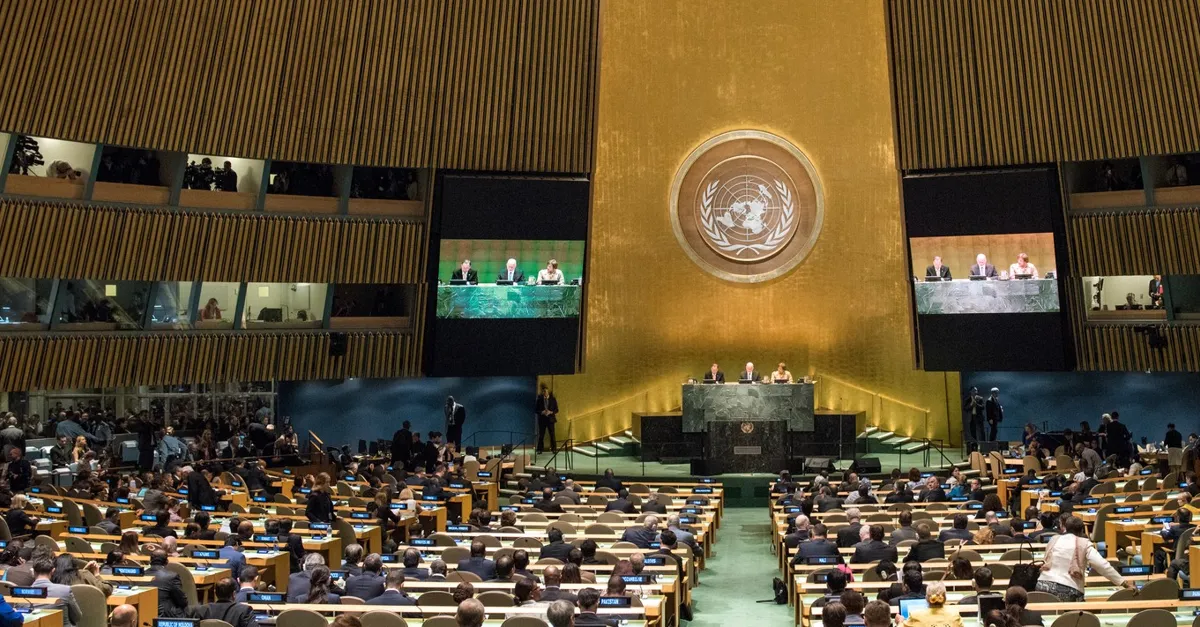
The recent UN General Assembly in New York brought together leaders from around the world to discuss pressing global issues, including the ongoing conflicts in Gaza and Ukraine, as well as Iran's nuclear program. The four-day event was marked by heated debates, diplomatic meetings, and public addresses. According to UN Secretary-General António Guterres, the devastation in Gaza is one of the most severe he has witnessed during his tenure. Guterres called for an immediate ceasefire, humanitarian aid, and respect for international law.
Turkish President Recep Tayyip Erdogan was among the leaders who strongly criticized Israel's actions in Gaza, demanding greater international action to end the conflict. French President Emmanuel Macron also delivered a stern message, condemning Israel's actions and emphasizing the need to preserve a two-state solution. The leaders' speeches were not only directed at the international community but also at their domestic audiences. This highlights the challenges of modern diplomacy, where leaders must balance their global and local messaging.
The speech by Israeli Prime Minister Benjamin Netanyahu sparked controversy, with several delegations walking out in protest of Israel's policies in Gaza. Netanyahu defended Israel's military actions, citing security threats from Hamas and Iran. The incident highlighted the deep divisions within the international community on the Israeli-Palestinian issue. In response, Netanyahu faced criticism from various countries, further emphasizing the complexities of the conflict.
A notable incident occurred when Israeli Ambassador to the UN Daniy Danon approached the Iranian delegation, offering a satellite internet device. The Iranian ambassador, Nasser Asadi, ignored Danon's gesture, refusing to engage with him. This event showcased the tense relations between Israel and Iran, as well as the complexities of diplomatic interactions in the modern era.
The conflict in Ukraine was also a major topic of discussion, with Polish Foreign Minister Radoslaw Sikorski delivering a strongly worded message to Russia. Sikorski emphasized that Russia's ability to continue the war does not necessarily mean it will achieve its political objectives. The European Union's stance on Ukraine reflects the continent's strategic and security concerns, given the ongoing Russian-Ukrainian conflict.
The intersection of politics and media was a recurring theme during the UN General Assembly. Leaders' statements were often designed to generate controversy and attract media attention, which can impact public opinion and domestic politics. This raises questions about the nature of diplomacy in the age of instant media: is the goal to persuade opponents or satisfy domestic audiences?
The UN General Assembly has become a platform for both confrontation and dialogue. As the global community grapples with complex issues, the Assembly's role in facilitating discussion and cooperation will continue to be crucial. The international community must navigate these challenges, seeking solutions to pressing global problems while managing the intricacies of modern diplomacy.
Key points
- The UN General Assembly addressed pressing global issues, including the conflicts in Gaza and Ukraine, and Iran's nuclear program.
- Leaders' speeches were often directed at domestic audiences, highlighting the challenges of modern diplomacy.
- The event showcased the complexities of international relations, with tensions between Israel, Iran, and Russia dominating the discussions.