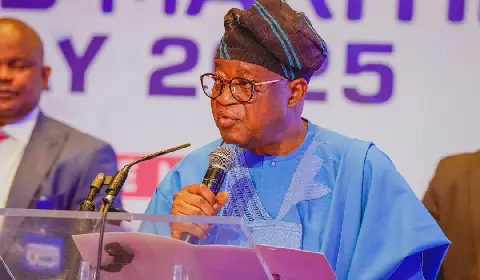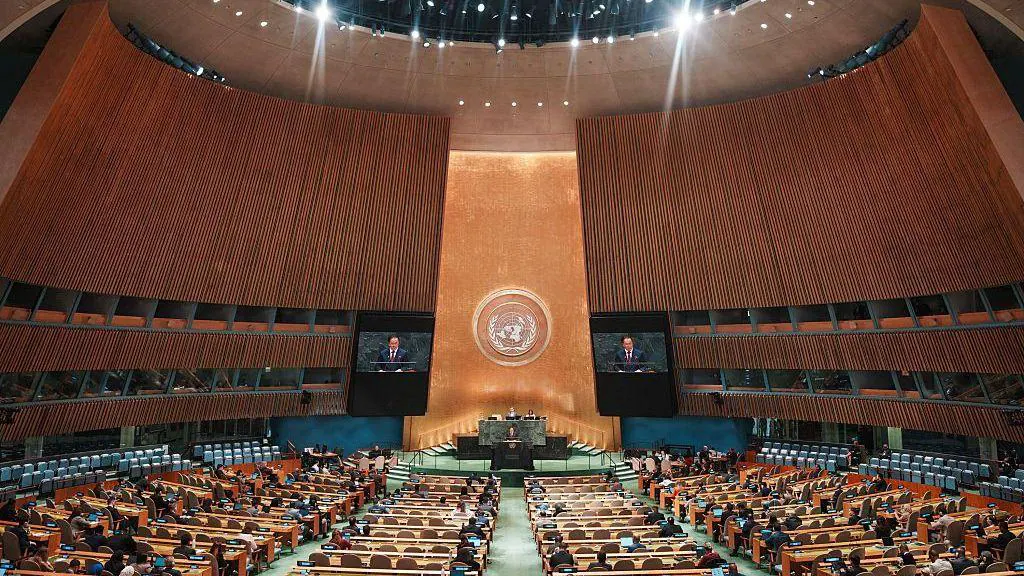
The 81st session of the UN General Assembly concluded on September 28, 2026, with a high-level meeting that brought together leaders and officials from member states. The discussions, which began on September 22, 2026, focused on several pressing global issues, including the Palestinian question, the war in Gaza, the US-Iran conflict, and the Russia-Ukraine war. The assembly's theme was "Restoring Trust and Managing Transformation: A United Nations that Delivers Results for All."
In his closing remarks, UN General Assembly President Khalil Rahman, former Foreign Minister of Bangladesh, emphasized that the sessions demonstrated that the boundaries of any political, social, security, or economic crisis do not remain confined within a country's or region's borders. He stated that the message was clear: time was running out, and the international community must act to address these pressing issues. Rahman highlighted the importance of upholding human rights, women's rights, and achieving sustainable peace.
Algerian Foreign Minister Ahmed Attaf, in his address to the General Assembly, reaffirmed his country's commitment to its African identity and support for the Palestinian people's right to an independent state with Jerusalem as its capital. He also expressed Algeria's solidarity with the Sahrawi people and their right to an independent state. Attaf warned against the marginalization of the Sahrawi people and the Polisario Front in a region that needed stability.
The Sudanese Foreign Minister, Mahdi Hassan, stated that his government was open to dialogue and efforts to end the war but rejected any foreign interference or imposed solutions. He emphasized the need to respect Sudan's sovereignty, unity, and territorial integrity. Hassan also expressed his government's willingness to cooperate with initiatives aimed at achieving a political solution to end the war.
United Arab Emirates State Minister Khalifa bin Zayed Al Nahyan stated that Israel's withdrawal from the Gaza Strip and the disarmament of Hamas were part of a plan to achieve peace and stability in the sector. He also expressed support for a comprehensive plan to end the war in Gaza, including the disarmament of Hamas and the withdrawal of Israeli forces.
The conflict in Gaza and tensions in Palestinian territories dominated the discussions, with many leaders calling for an end to the war and the implementation of a two-state solution. UN Deputy Special Coordinator for the Middle East Peace Process, Ramiz Al-Akhram, stressed the need to renew commitment to a two-state solution, warning that time was running out. He also highlighted the importance of supporting Palestinian and Israeli efforts to end the occupation and settle the conflict in line with international law and UN resolutions.
The Iranian nuclear program and tensions with the US were also high on the agenda, with Iranian President Masoud Pezeshkian stating that his country was not developing nuclear weapons but would not accept restrictions on the peaceful use of nuclear energy. The Russian-Ukrainian conflict was also a major topic, with Ukrainian President Volodymyr Zelensky calling for continued pressure on Russia to end the conflict. The UN reported that civilian casualties in Ukraine had increased significantly in 2026 compared to 2025.
Key points
- The UN General Assembly emphasized the need for a two-state solution to the Israeli-Palestinian conflict.
- The assembly also highlighted the importance of addressing the Iranian nuclear program and tensions with the US.
- The conflict in Sudan and the need for a political solution to end the war were also major topics of discussion.