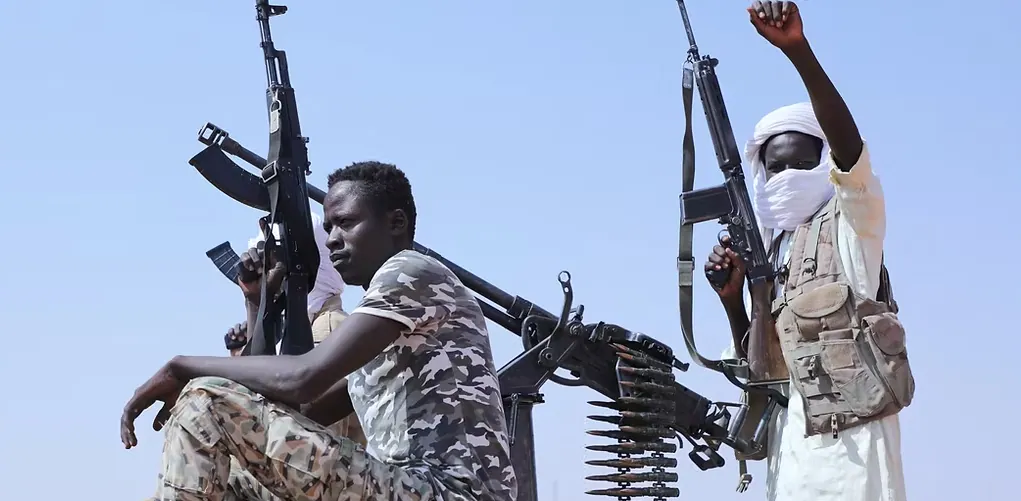
The United Nations Security Council has unanimously extended an arms embargo on Sudan's Darfur region until December 11, 2026. This short-term extension allows members to negotiate a US proposal to expand the restrictions nationwide. The embargo, in place since 2004, aims to curb the flow of weapons to Sudan's warring parties, whose conflict has entered its fourth year. The US has pushed for a nationwide embargo, while China, Russia, and other council members have opposed expanding the restrictions beyond Darfur.
The existing embargo has not stopped weapons from reaching Darfur, but it enables UN experts to investigate arms transfers and identify those responsible for violations. This could lead to further sanctions. The US has been actively promoting the expansion of the embargo, with senior adviser for Arab and African affairs Massad Boulos and US Ambassador to the UN Mike Waltz proposing the measure in August and September. They argue that a nationwide embargo would target arms traffickers, financiers, mercenary recruiters, and drone suppliers.
The US proposal has faced opposition from several countries, including China, Russia, the Democratic Republic of Congo, Liberia, Somalia, and Pakistan. These countries have expressed concerns about expanding the restrictions, which could impact their own interests in the region. The opposition has created divisions within the Security Council, making it challenging to reach a consensus on the US proposal.
Tensions between Washington and Khartoum have risen over US policy towards Sudan's army chief, Gen. Abdel Fattah al-Burhan. The US withheld a visa for Burhan ahead of his planned address to the UN General Assembly last month. This decision appeared to be linked to his resistance to a US-backed ceasefire proposal. Sudan has stated that it did not reject the US proposal but instead submitted comments on it.
The conflict in Sudan has entered its fourth year, with the Darfur region being a major hotspot. The UN has been working to find a solution to the crisis, but the divisions within the Security Council have hindered progress. The extension of the arms embargo provides a temporary solution, but a long-term resolution is still needed to address the root causes of the conflict.
The US has been working closely with its allies to increase pressure on Sudan's army and the paramilitary Rapid Support Forces (RSF). The US proposal to expand the arms embargo nationwide is part of a broader effort to address the crisis in Sudan. The international community is closely watching the situation, and a resolution is expected to be reached soon.
The situation in Sudan remains volatile, with the conflict showing no signs of abating. The UN and the international community must continue to work together to find a solution to the crisis. The extension of the arms embargo and the US proposal to expand the restrictions nationwide are steps in the right direction, but more needs to be done to address the root causes of the conflict and bring peace to the region.
Key points
- The UN Security Council has extended the Darfur arms embargo until December 11, 2026.
- The US is pushing for a nationwide embargo, while China, Russia, and other council members have opposed expanding the restrictions beyond Darfur.
- The conflict in Sudan has entered its fourth year, with the Darfur region being a major hotspot.