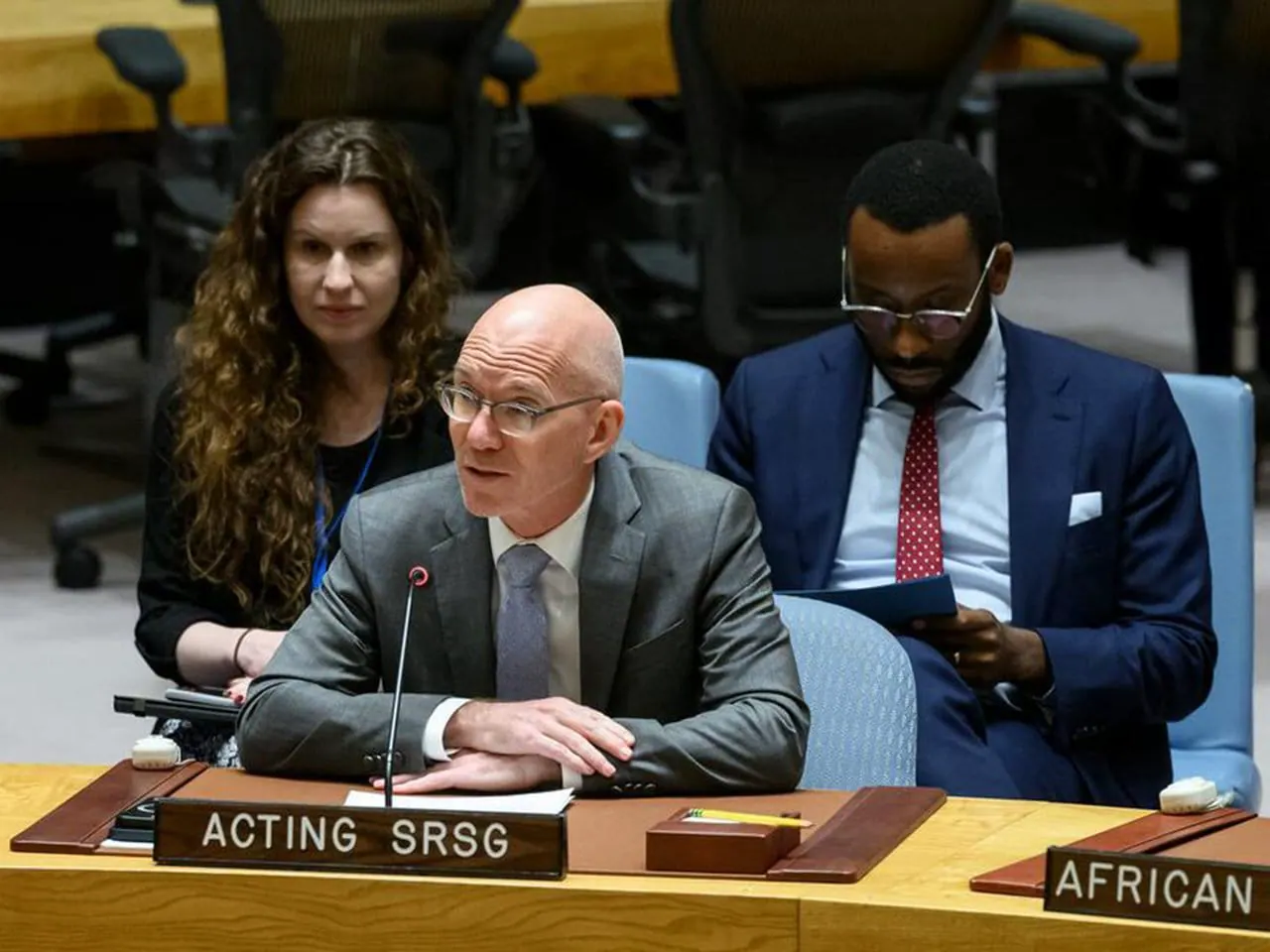
On September 29, 2026, James Christopher Swan, the head of the United Nations Mission for Stabilization in the Democratic Republic of Congo (Monusco), addressed the UN Security Council, emphasizing the need for Congolese parties to prioritize dialogue and consensus to overcome persistent political divisions. He encouraged an inclusive dialogue that guarantees broad participation and utilizes facilitators trusted by all stakeholders. Swan's intervention comes as the country faces ongoing challenges, including a fragile political landscape and conflict in the east.
Swan praised President Félix Tshisekedi's initiative, announced in August, to organize a national dialogue. He stressed that the process should be inclusive, allowing for wide participation and relying on trusted facilitators. The envoy encouraged Congolese political and social actors to engage in good-faith negotiations to find common ground. He emphasized that dialogue should be a means to overcome disagreements, rather than a platform for further confrontation.
The UN envoy also highlighted the importance of protecting civic space and fundamental freedoms. He urged authorities and citizens to demonstrate restraint and political tolerance, creating an environment conducive to inclusive participation in political and peace processes. This call comes as Kinshasa has already established institutional foundations for the national dialogue, with the president announcing the launch of the "National Dialogue for Peace, Cohesion, and State Refoundation" on August 27.
The national dialogue aims to bring together various components of Congolese society, including local authorities, elected officials, political parties, civil society, and representatives from economic, professional, university, and scientific sectors. A preliminary organizational committee, set up in September, is tasked with preparing the logistics and prerequisites for the dialogue. However, debates persist within the Congolese political class regarding the dialogue's format, particularly concerning participation conditions and eligible actors.
One of the main points of contention is the exclusion of certain groups, such as the AFC/M23, from the dialogue. President Tshisekedi has stated that the process will exclude actors who pursue armed struggle against the constitutional order or occupy territory by force. The Congolese government is also engaging in diplomatic efforts to resolve the conflict in the east, with processes underway in Washington and Doha.
James Swan's intervention at the Security Council underscores the importance of inclusivity, consensus, and respect for fundamental freedoms in accompanying the Congolese political process. The UN envoy's statement emphasizes the need for a peaceful and participatory process, which will be crucial in addressing the country's fragilities and promoting stability. The success of the national dialogue will depend on the ability of Congolese parties to engage in constructive negotiations.
The outcome of the national dialogue will have significant implications for the country's future. If successful, it could help to address some of the underlying tensions and promote a more inclusive and participatory political process. However, if the dialogue fails, it could exacerbate existing divisions and further destabilize the country. The international community, including the UN, will be watching closely as the process unfolds.
Key points
- UN envoy James Swan calls for inclusive dialogue in DR Congo
- Congolese president Félix Tshisekedi launches national dialogue initiative
- Dialogue aims to address country's fragilities and promote stability