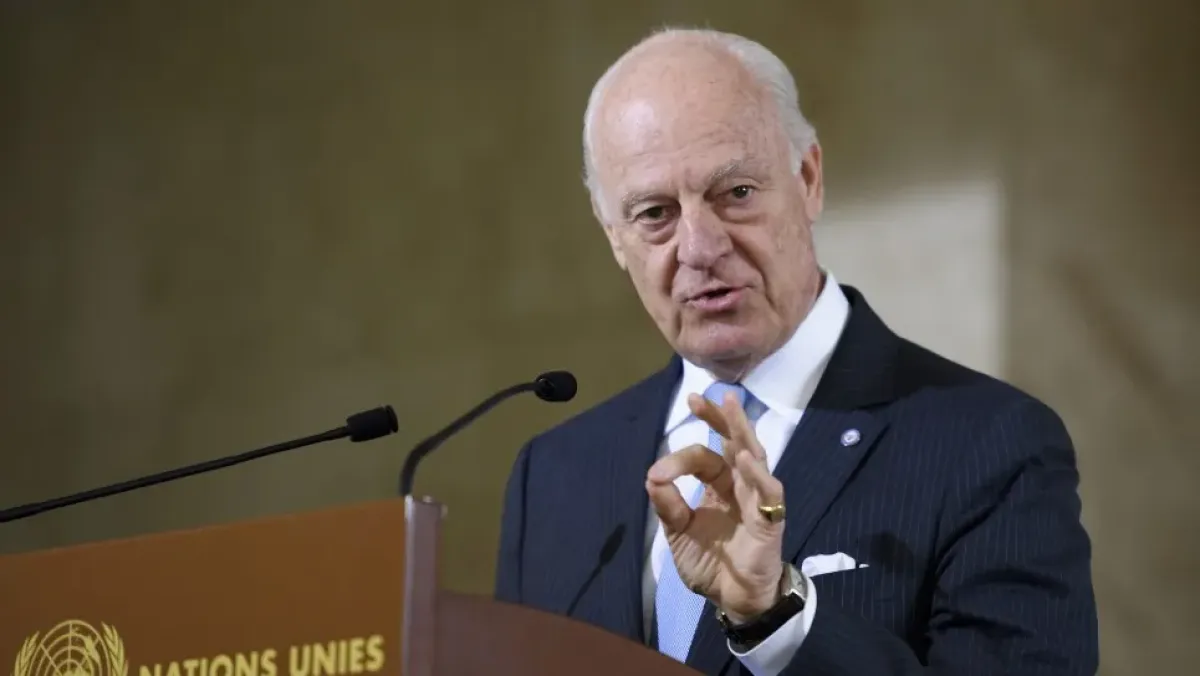
In a recent briefing to the UN Security Council, Staffan de Mistura, the personal envoy of the UN Secretary-General to Western Sahara, stated that negotiations aimed at resolving the decolonization of the territory have reached a stalemate. This acknowledgment reflects the deep-seated political differences that continue to hinder a fair and lasting solution to the Western Sahara issue, which remains a matter of decolonization and the right of the Sahrawi people to determine their own fate.
De Mistura noted that the three rounds of negotiations held in Washington and Madrid during the first months of the year made some progress but failed to overcome the fundamental differences between the parties. He emphasized that the negotiations have hit a wall that is difficult to overcome without a move from the Security Council. This conclusion is particularly significant, as it underscores that diplomatic efforts have not led to an agreement and that the future of Western Sahara remains tied to addressing the core conflict, primarily the right of the Sahrawi people to self-determination.
The envoy's briefing highlighted that the future of the region cannot be decided by simply presenting a document or rallying diplomatic support for a specific political formula. De Mistura stressed that any form of autonomy proposed for Western Sahara cannot be imposed on the Sahrawi people. This stance places the issue of the Sahrawi people's will at the center of any potential settlement, rather than treating the Moroccan proposal as a foregone conclusion that should be accepted by the Polisario Front.
The Polisario Front, as the legitimate representative of the Sahrawi people in the UN settlement process, insists on the Sahrawi people's right to self-determination. Therefore, any engagement in discussions on proposed solutions should not be interpreted as a prior concession of this right or acceptance of Morocco's claimed sovereignty over the territory. De Mistura's call for flexibility does not solely target the Polisario Front but also includes Morocco, indicating that responsibility for overcoming the impasse does not lie with one party.
De Mistura's briefing reflects the ongoing disagreement regarding the nature of a political solution for Western Sahara but does not announce a reached agreement or make the Moroccan proposal a definitive settlement. A key point from the briefing is that any autonomy formula cannot be imposed on the Sahrawi people and that reaching an agreement requires additional negotiations, international guarantees, and the actual exercise of the right to self-determination.
These statements from de Mistura come days after a similar assertion by senior adviser to Trump for the Middle East and North Africa, Maseda Pulus, who mentioned in a press interview that there is "no near solution" to the Western Sahara file. This underscores the complexity and challenges in resolving the Western Sahara conflict, emphasizing the need for continued diplomatic efforts and engagement from all parties involved.
The situation in Western Sahara remains a critical issue on the international agenda, with the UN continuing to play a key role in seeking a peaceful and lasting resolution. The emphasis on the Sahrawi people's right to self-determination and the rejection of imposed solutions highlight the complexities of the conflict and the need for a negotiated settlement that respects the will and aspirations of the Sahrawi people.
Key points
- The UN envoy to Western Sahara emphasizes that any solution must respect the Sahrawi people's right to self-determination.
- Negotiations have reached a deadlock, highlighting the deep-seated differences between the parties.
- The future of Western Sahara cannot be decided without the active engagement and agreement of all parties involved.