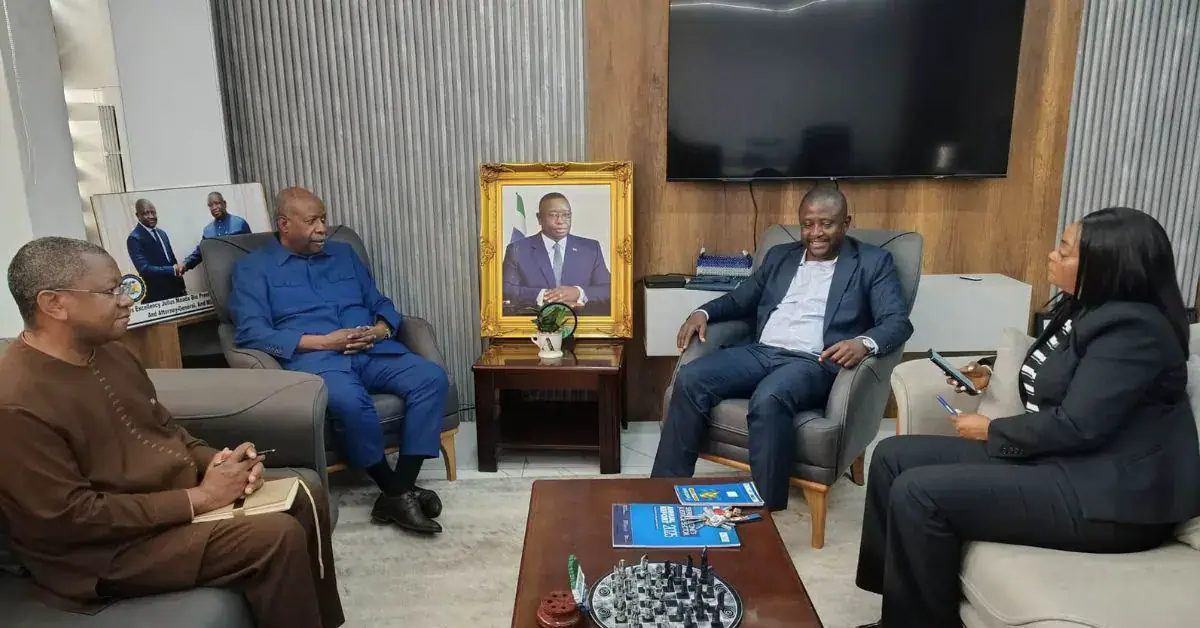
The United Nations Secretary-General's Special Representative for West Africa and the Sahel, Leonardo Santos Simão, recently held discussions with Sierra Leonean officials on constitutional reform, human rights, justice sector reform, and efforts to strengthen democratic institutions. The meeting focused on Sierra Leone's democratic progress and ongoing reform priorities. Both sides reaffirmed their commitment to cooperation in promoting the rule of law, protecting fundamental rights, and improving access to justice. This engagement reflects continued dialogue between Sierra Leone and the United Nations on governance reforms and democratic development.
During the meeting, Mr. Simão and his Sierra Leonean counterparts exchanged views on the country's democratic progress and priorities for institutional reform. The discussions highlighted the importance of strengthening democratic institutions and ensuring that governance reforms contribute to accountability, justice, and respect for fundamental rights. Simão serves as the UN Secretary-General's Special Representative for West Africa and the Sahel and has maintained engagement with Sierra Leone as part of the United Nations' broader work supporting peace, stability, and democratic governance in the region.
The Sierra Leonean side described the discussions as constructive and acknowledged the UN envoy's continued engagement with the country's democratic development. Constitutional reform and improvements to the justice sector were among the major issues discussed during the engagement. The talks focused on the importance of strengthening institutions responsible for upholding the rule of law and ensuring that citizens have access to justice. Both sides also examined the need to advance reforms that protect fundamental rights and strengthen public confidence in democratic institutions.
Human rights protection formed another central part of the discussions. The engagement emphasized the need for reforms that safeguard citizens' fundamental freedoms and promote fairness within the justice system. Strengthening the rule of law was also identified as an important objective in Sierra Leone's continuing democratic development. The discussions reflected a shared commitment to supporting institutions capable of delivering justice and protecting the rights of Sierra Leoneans.
Although specific reform proposals and implementation timelines were not disclosed, the discussions reaffirmed the importance of continued cooperation in these areas. The Sierra Leonean side reaffirmed its commitment to working with the United Nations to advance democratic and institutional reforms. The engagement highlighted the importance of sustained international cooperation in addressing governance challenges and supporting national reform priorities.
Both sides expressed their intention to continue collaborating on initiatives aimed at strengthening democratic institutions, promoting accountability, and improving access to justice. The meeting underscores the continuing relationship between Sierra Leone and the United Nations as the country pursues reforms intended to consolidate democratic governance and protect fundamental rights. The discussions concluded with a renewed commitment to cooperation on constitutional reform, human rights, justice sector improvements, and the rule of law.
The meeting between Mr. Simão and Sierra Leonean officials demonstrates the ongoing partnership between Sierra Leone and the United Nations in promoting democratic governance and protecting human rights. The two parties will continue to work together to address governance challenges and support national reform priorities. This cooperation aims to strengthen democratic institutions, promote accountability, and improve access to justice in Sierra Leone.
Key points
- UN Envoy Leonardo Simão holds talks with Sierra Leonean officials on democratic and constitutional reforms
- Discussions focus on strengthening democratic institutions, human rights protection, and justice sector reform
- Both sides reaffirm commitment to cooperation in promoting the rule of law and protecting fundamental rights