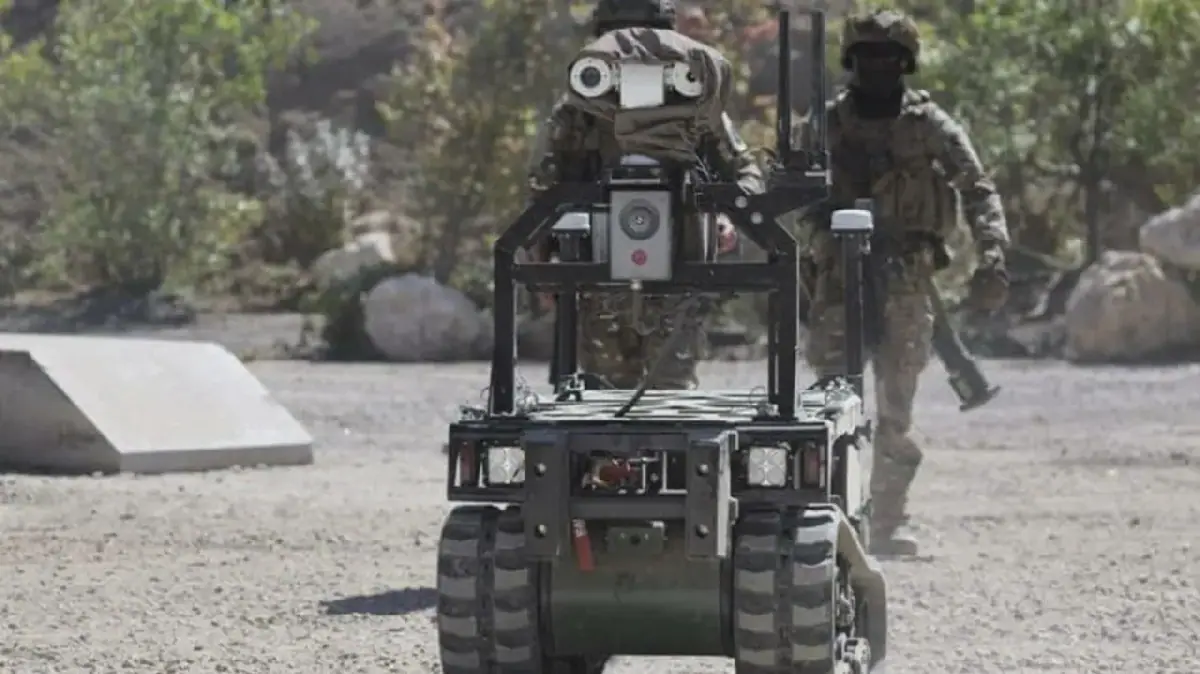
The 7th Review Conference of the Convention on Certain Conventional Weapons (CCAC) concluded on November 21 in Geneva, with 128 states agreeing on a two-year mandate to develop an international instrument on lethal autonomous weapons systems (LAWS). The mandate, the result of 13 years of discussions, aims to establish a framework for the development and use of autonomous weapons. However, critics argue that the adopted text falls short of expectations, as it does not guarantee the opening of negotiations for a legally binding instrument.
The conference, which took place from November 16 to 21, saw intense discussions among states on the need for a legally binding treaty on LAWS. While a majority of states supported launching negotiations for such an instrument, several delegations opposed it. The final compromise replaced the term "negotiate" with "elaborate," introducing uncertainty about the process's legal scope and ambitions. The outcome has been met with disappointment from civil society organizations, which had pushed for a stronger agreement.
The coalition "Stop Killer Robots" expressed regret over the adopted mandate, stating that it does not provide a clear path toward a legally binding instrument. The organization noted that over 95 states had expressed support for a treaty during the conference, and 163 countries had voted in favor of a resolution supporting the development of legally binding rules on the use of autonomous weapons in armed conflicts. Critics argue that the technology is already being deployed on battlefields, posing a risk to civilians and humanity.
Nicole van Rooijen, executive director of Stop Killer Robots, warned that delaying the creation of a legally binding instrument puts civilians and humanity in danger. Verity Coyle, deputy director of the Crisis, Conflict, and Arms division at Human Rights Watch, also expressed disappointment, stating that the result does not provide the urgent measures needed to adopt new rules. The mandate, according to Coyle, introduces uncertainty where the international community needs clarity.
The conference's conduct has also been criticized, with many discussions taking place behind closed doors, limiting access for observers and civil society organizations. This lack of transparency restricted their ability to follow state positions, votes, and concerns expressed by affected populations. Organizations regret that the voices of affected communities, religious leaders, and scientists were not adequately taken into account.
The debate on LAWS is expected to continue, with the international community still grappling with the fundamental question of systems capable of selecting and targeting humans autonomously. Advocates for international regulation argue that future rules must go beyond existing principles of international humanitarian law, which are seen as insufficient to address the ethical, legal, humanitarian, and security concerns raised by these technologies.
The two-year mandate adopted in Geneva opens a new phase of discussions, but it does not guarantee progress. The challenge remains to establish clear limits on machine autonomy in the use of force and preserve human control over life-and-death decisions. The call for a legally binding instrument to ban and restrict autonomous weapons, jointly launched by UN Secretary-General António Guterres and International Committee of the Red Cross President Mirjana Spoljaric Egger, remains relevant.
Key points
- States adopt 2-year mandate for talks on lethal autonomous weapons systems
- Critics argue that the mandate does not go far enough in regulating LAWS
- Debate on LAWS is expected to continue, with a focus on establishing clear limits on machine autonomy