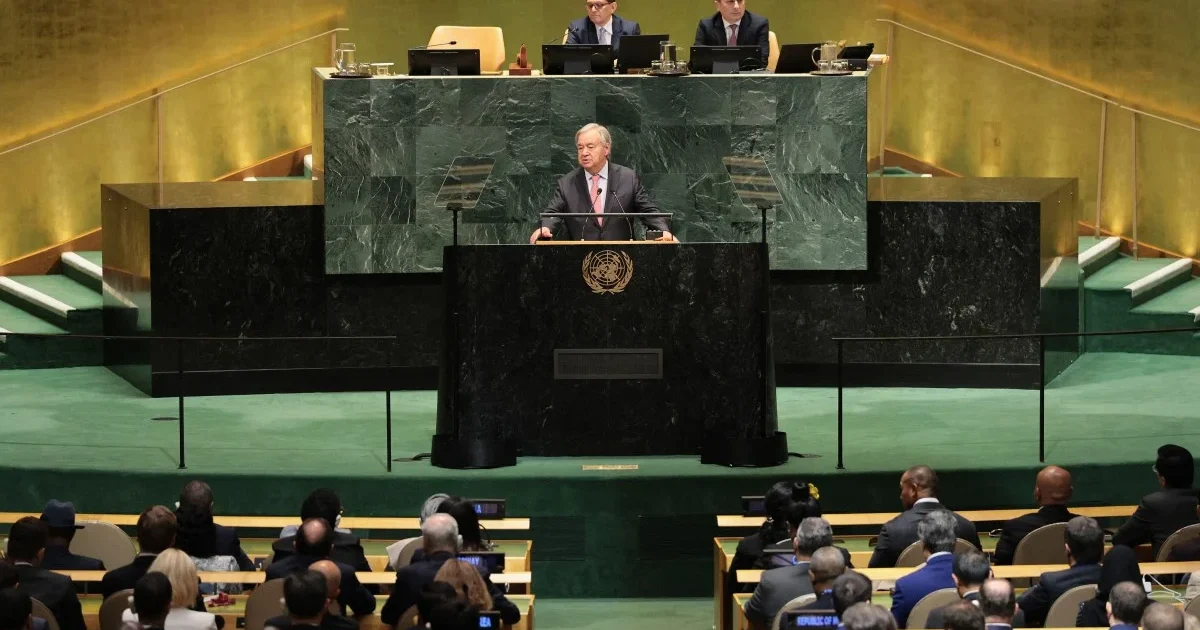
UN Secretary-General Antonio Guterres has urged AI superpowers to initiate a dialogue on the future of technology, similar to the engagement between the US and the Soviet Union during the Cold War. Guterres emphasized that governments with significant AI capabilities have a responsibility to humanity to establish channels for dialogue, transparency, trust, and cooperation. This call for dialogue comes as AI technology continues to advance rapidly, raising concerns about its potential impact on humanity.
The US and China are currently discussing the creation of a communication channel for AI concerns, ahead of a summit meeting between US President Donald Trump and Chinese President Xi Jinping. This meeting is seen as an opportunity for both countries to address their concerns about AI and explore ways to cooperate on its development. The talks are taking place against the backdrop of an intensifying race for technological supremacy between the two nations.
AI is a major theme at this year's UN General Assembly, where President Trump will be speaking. Ahead of the meetings, leaders of more than 20 countries urged binding safety measures for advanced artificial intelligence, warning that its development could outpace the ability to control it. However, China and the US were not among the signatories to this statement, highlighting the challenges of achieving international cooperation on AI.
President Trump has come out strongly against AI safety measures, vowing not to allow the "destruction" of the AI industry over what he calls unjustified fears. In contrast, Chinese President Xi Jinping has emphasized the need for international cooperation on AI development, stating that it should not be dominated by a single country. These differing perspectives highlight the complexities of achieving global consensus on AI regulation.
US Treasury Secretary Scott Bessent recently met with Chinese officials to discuss trade and artificial intelligence. Bessent described the meeting as "very successful," with both sides discussing greater communication on AI threats. The discussions, which lasted around eight hours, set the stage for possible agreements on trade, AI, and other issues before a summit of the countries' top leaders.
The growing concerns about AI are driven by the rapid advancement of AI systems, which could potentially pose existential risks to humanity. The need for international cooperation and dialogue on AI has become increasingly pressing, as countries seek to balance the benefits of AI development with the need to mitigate its risks. The UN General Assembly provides a platform for world leaders to address these challenges and explore ways to work together on AI.
The outcome of the US-China dialogue on AI and the discussions at the UN General Assembly will be closely watched, as the international community seeks to navigate the complexities of AI development and regulation. The stakes are high, with the potential for AI to bring significant benefits or pose significant risks to humanity. As the world continues to grapple with the implications of AI, one thing is clear: international cooperation and dialogue will be essential in shaping its future.
Key points
- UN Secretary-General Antonio Guterres calls on AI superpowers to establish channels for dialogue, transparency, trust, and cooperation on AI development.