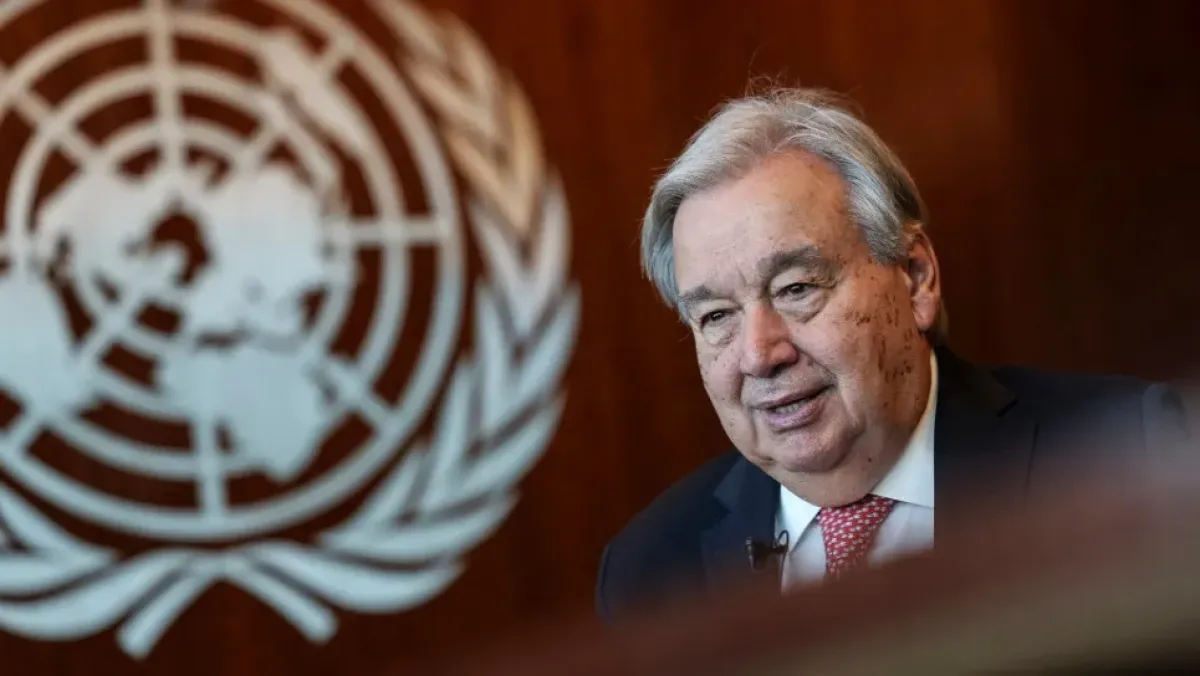
In a recent development, UN Secretary-General Antonio Guterres submitted his report on Western Sahara to the International Security Council, reaffirming the Sahrawi people's right to self-determination. The report contradicts Morocco's claims that the 2016 UN resolution (2797) endorsed its autonomy proposal. Guterres' report, along with that of his personal envoy, Stefan de Mistura, emphasizes the need for a fair and political solution that allows the Sahrawi people to exercise their inalienable right to self-determination through a free and impartial referendum.
The UN report and de Mistura's statements come as a significant setback to Morocco's diplomatic efforts. This follows remarks by Masood Bolous, advisor to US President Donald Trump on Arab and African affairs, who stated that no imminent solutions were in sight after three rounds of negotiations. The UN report stresses that any conflict resolution proposal must be subject to a genuine and transparent consultative process with the Sahrawi people, allowing them to have the final say through acceptance or rejection.
Guterres' report also highlights the ongoing human rights abuses in the occupied territories. The Secretary-General noted that the absence of independent monitoring hampers the evaluation of the human rights situation in the region. This is particularly concerning, given that Moroccan authorities have barred UN human rights officials from visiting the area since 2015. Furthermore, the report warns of the threat posed by millions of landmines laid by the Moroccan military along the separation wall.
The UN report identifies 68 registered minefields east of the wall, with 24 still posing a direct threat to civilian lives. This situation underscores the urgency of addressing the humanitarian crisis in the region. In a move that is likely to disappoint Morocco, Guterres recommended extending the mandate of the UN Mission for the Referendum in Western Sahara (MINURSO) for an additional year, until October 31, 2027.
The extension of MINURSO's mandate and emphasis on its pivotal role in the peace process indicate that the international community does not envision a solution to the crisis without consulting the Sahrawi people and enabling them to determine their own destiny. This development marks a comprehensive diplomatic defeat for Morocco's autonomy proposal. The UN's stance aligns with the vision and document presented by the Polisario Front on October 20, 2025.
De Mistura clarified that the current negotiation framework does not predetermine outcomes and that participation in the talks does not imply acceptance of Moroccan assumptions. This clarification is crucial in maintaining the integrity of the negotiation process. The UN's commitment to a fair and impartial solution is reflected in its continued support for the MINURSO mission.
The ongoing diplomatic efforts and UN reports demonstrate the international community's commitment to resolving the Western Sahara conflict in a manner that respects the Sahrawi people's right to self-determination. The situation remains complex, with various stakeholders involved, but the UN's stance provides a clear framework for moving forward.
Key points
- The UN Secretary-General's report reaffirms the Sahrawi people's right to self-determination and emphasizes the need for a fair and political solution.
- The report highlights ongoing human rights abuses in the occupied territories and the threat posed by landmines.
- The UN has recommended extending the mandate of the MINURSO mission for an additional year, until October 31, 2027.