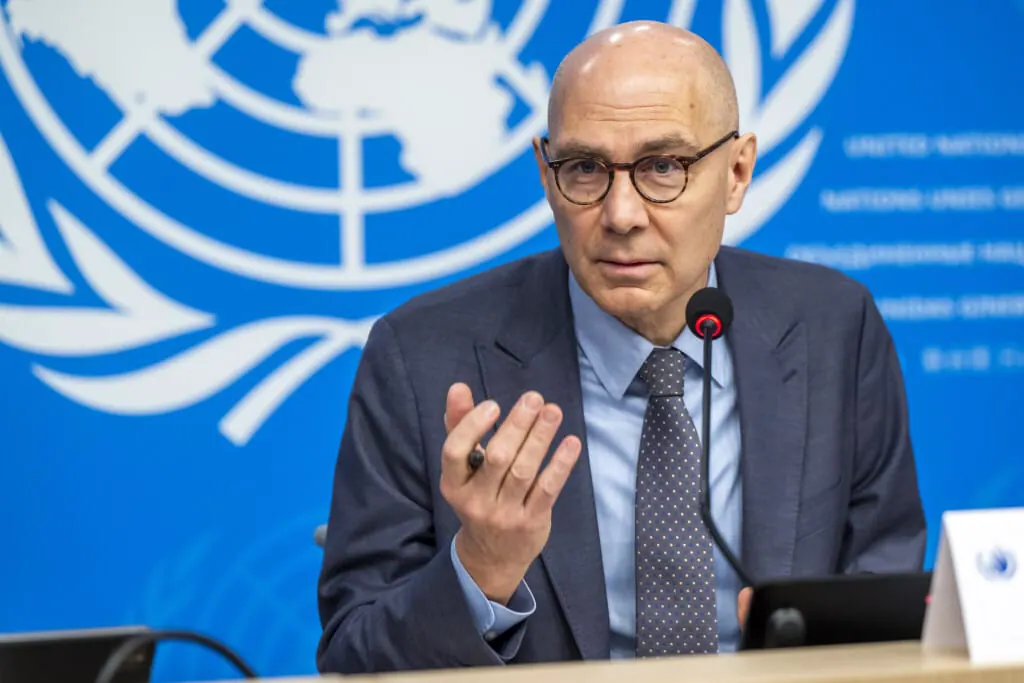
The UN High Commissioner for Human Rights, Volker Turk, has called for restorative justice to address the historical and ongoing injustices faced by enslaved and colonized Africans. In a statement during a dialogue in Geneva, Turk emphasized that restorative justice goes beyond financial compensation and requires a range of measures to address past and present injustices. He cited examples of countries that have taken steps to address these issues, including Belgium, Brazil, Germany, and the Netherlands, which have offered apologies to affected communities.
Turk noted that while some countries have taken steps to acknowledge and address past injustices, no country has fully taken responsibility for the harm caused by past practices or ongoing systemic racism. He also highlighted that many countries lack laws to combat racism, and fewer than a quarter of countries have comprehensive laws to prevent discrimination. The High Commissioner emphasized that restorative justice requires accountability, redress for harm, and a range of measures to address the collective suffering caused by these practices, which have had intergenerational impacts.
The concept of restorative justice, according to Turk, includes measures to provide redress for human rights violations, such as material or symbolic benefits for victims, their families, or affected communities. These measures can include acknowledgment of the truth, official apologies, truth-seeking, compensation for economic harm, rehabilitation, and guarantees of non-repetition. Turk also highlighted the importance of preserving the history of enslavement and colonization, as well as promoting education and awareness about these issues.
Turk described the transatlantic slave trade as a systematic system of subjugation and oppression that treated tens of millions of Africans as commodities, depriving them of their humanity. He emphasized that the legacy of slavery and colonization continues to affect the lives of people of African descent, determining who has access to opportunities, security, and power, and who does not. The High Commissioner also noted that people of African descent are disproportionately affected by poverty and inequality, which can be passed down from generation to generation.
The High Commissioner warned that racist movements are exploiting fear and division, and that their rhetoric is creating a larger space for hate speech and dehumanization on mainstream platforms. He also highlighted the risks of new technologies, including artificial intelligence, which can perpetuate human bias and deepen systemic racism against Africans and people of African descent if not developed with caution.
Turk emphasized that addressing these issues requires a comprehensive approach, including laws and policies to prevent discrimination, as well as measures to promote education, awareness, and accountability. He called on countries to take concrete steps to address the historical and ongoing injustices faced by enslaved and colonized Africans, including providing reparations and other forms of redress.
The dialogue in Geneva brought together countries, experts, and partners working in the field of restorative justice to discuss the issue and review measures taken to date. The event aimed to identify ways to ensure that restorative justice is accessible to all, and to promote a more nuanced understanding of the historical and ongoing impacts of slavery and colonization on people of African descent.
Key points
- The UN High Commissioner for Human Rights calls for restorative justice to address historical and ongoing injustices against enslaved and colonized Africans.
- Many countries lack laws to combat racism, and fewer than a quarter have comprehensive laws to prevent discrimination.
- The legacy of slavery and colonization continues to affect the lives of people of African descent, determining who has access to opportunities, security, and power.