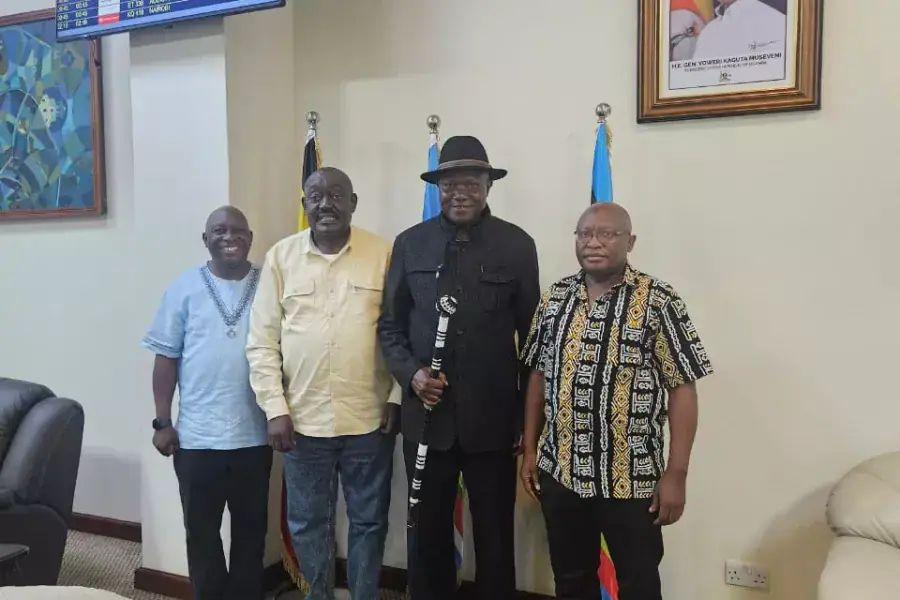
The Umukuuka of Bugisu, HRH Sir Jude Mike Mudoma III, has returned to Uganda after participating in the African Traditional Leaders Forum Conference held at the African Union Headquarters in Addis Ababa, Ethiopia. Mudoma arrived at Entebbe International Airport aboard Ethiopian Airlines and was warmly received at the VIP Arrival Lounge by a high-level delegation from the Bugisu Cultural Institution led by the institution's Prime Minister, Rt. Hon. Dr. Paul Mwambu. The welcoming delegation included Hon. Dr. Anthony Wanyoto, the Bugisu Cultural Institution's Attorney General, Counsel Richard Masereje, other ministers, cultural leaders and members of the Umukuuka's family.
During the conference, held from November 10 to 15, 2026, Mudoma presented a paper under the theme, "African Culture, Indigenous Knowledge Systems (IKS), and Natural Resources." His presentation focused on the topic, "Culture Is a Foundation for Peace and Governance," through which he highlighted the importance of integrating African cultural values, traditional governance structures, indigenous knowledge and modern scientific approaches into sustainable development. This presentation showcased the Bugisu Cultural Institution's perspectives on the role of cultural leadership in addressing Africa's development challenges.
Mudoma also presented his Dual-Direction Growth Model, an approach that seeks to synthesise sovereignty, science and traditional governance in advancing Africa's long-term development aspirations under Agenda 2063. The model underscored the importance of recognising the contribution of traditional institutions to peacebuilding, social cohesion, natural resource management and inclusive governance while embracing scientific innovation and contemporary development strategies. This approach aims to promote sustainable development and utilisation of natural resources.
The African Traditional Leaders Forum brought together cultural leaders and other stakeholders to deliberate on how Africa can harness its rich cultural heritage, traditional institutions and indigenous knowledge systems to promote peace, unity and sustainable utilisation of natural resources. The forum provided a platform for traditional leaders to share their experiences and perspectives on promoting African identity, preserving cultural heritage and contributing to national and continental development agendas.
Mudoma's participation in the conference provided an opportunity for him to engage with other traditional leaders and stakeholders on issues related to cultural preservation, unity, education and socio-economic transformation. His return was marked by a warm reception from Bugisu cultural leaders and family members, reflecting the institution's recognition of his participation in the international forum and his representation of the people of Bugisu on the continental stage.
The Bugisu Cultural Institution, under the leadership of HRH Sir Jude Mike Mudoma III, continues to emphasise cultural preservation, unity, education and socio-economic transformation as important pillars for the advancement of the Bamasaaba community. Mudoma's participation in the Addis Ababa conference adds to efforts by African traditional institutions to position indigenous governance and cultural knowledge as important contributors to the continent's peace, stability and development.
Mudoma's engagement at the continental gathering also highlighted the growing importance of traditional leaders as partners in promoting African identity, preserving cultural heritage and contributing to national and continental development agendas. His return home marks the conclusion of a significant international engagement during which he represented the Bugisu Cultural Institution and the people of Bugisu.
Key points
- The Umukuuka of Bugisu, HRH Sir Jude Mike Mudoma III, presented a paper on "African Culture, Indigenous Knowledge Systems (IKS), and Natural Resources" at the African Traditional Leaders Forum Conference.
- Mudoma presented his Dual-Direction Growth Model, which aims to synthesise sovereignty, science and traditional governance in advancing Africa's long-term development aspirations.
- The Bugisu Cultural Institution continues to emphasise cultural preservation, unity, education and socio-economic transformation as important pillars for the advancement of the Bamasaaba community.
Reporting sources
- Umukuuka Mudoma Returns Home After African... · nilechronicles.com