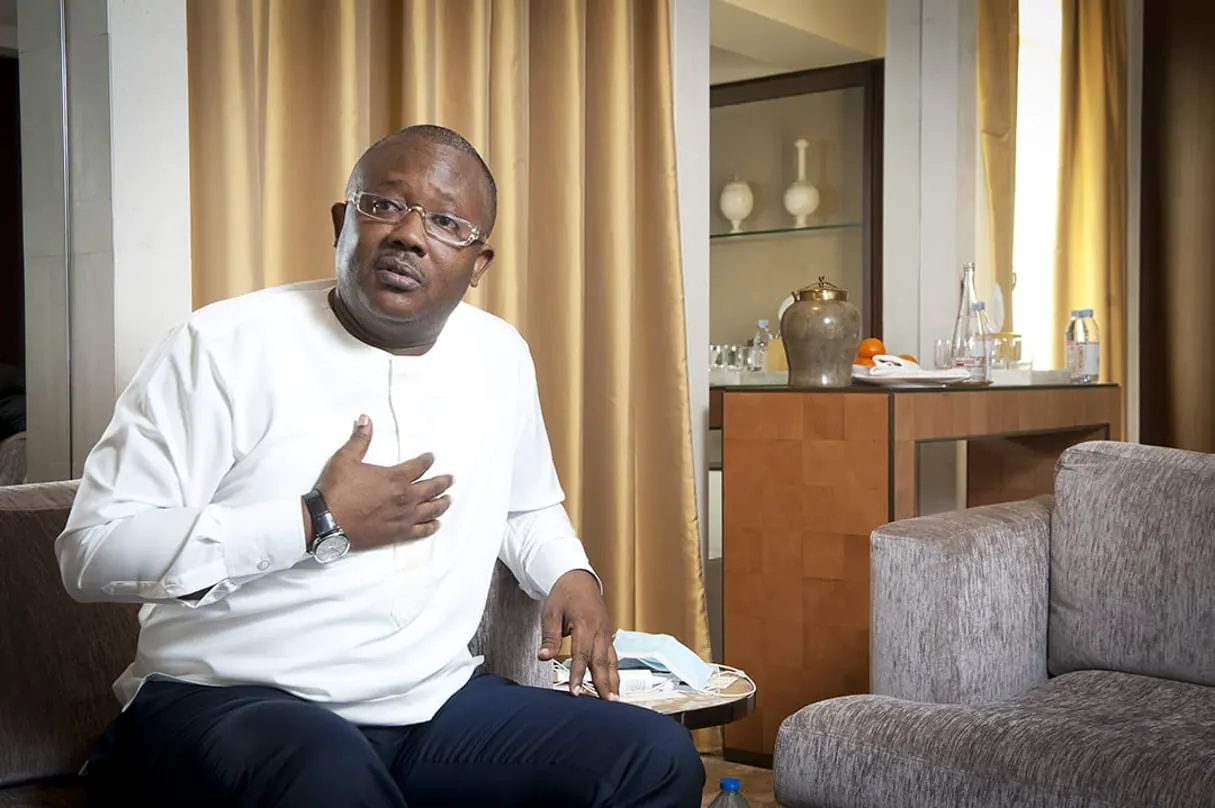
Former Guinea-Bissau President Umaro Sissoco Embaló has announced his candidacy for the presidential election scheduled for December 6. Embaló, who was ousted in a military coup on November 26, 2025, made the announcement from Brazzaville, where he has been in exile. He plans to return to Guinea-Bissau on October 4. Embaló's candidacy comes amid a complex political landscape, with some opposition figures questioning the circumstances surrounding his return to politics.
Embaló's return to the political scene is significant, given his role in alerting international media to the coup that ousted him from power. At the time, he was the sitting president, and his warnings about the coup were made public before the military officially announced their takeover. Following his ousting, Embaló was initially taken to Senegal as part of efforts by the Economic Community of West African States (ECOWAS), before moving to Brazzaville.
The announcement of Embaló's candidacy has sparked mixed reactions. The transitional government, which came to power after the coup, has stated that any Guinean citizen can return to the country and run for office, provided they meet the legal requirements. However, some opposition figures, including Domingos Simões Pereira, leader of the PAIGC, have expressed concerns that the current context may favor Embaló's return to power.
Pereira and others have pointed to the suspension of political activities and the military junta's influence over institutions as factors that could impact the fairness of the electoral process. Additionally, some of Embaló's former collaborators continue to hold important positions in the transitional architecture, raising questions about the extent of his influence in the current political landscape.
The recent constitutional referendum, which was approved by 70% of voters on August 30, has also introduced significant changes to the country's institutional framework, including a strengthened presidential regime. This has led some to speculate about the potential implications of Embaló's candidacy and whether it may be part of a broader political arrangement.
Embaló's candidacy has raised questions about his relationship with the military junta that ousted him from power. Some have speculated that there may have been an agreement between Embaló and the junta, although this remains unconfirmed. The situation is being closely watched, as the country prepares for the presidential and legislative elections on December 6.
As Embaló prepares to return to Guinea-Bissau on October 4, the country faces significant challenges in ensuring a fair and transparent electoral process. The international community is closely monitoring the situation, and ECOWAS has been engaged in efforts to support the country's transition to democracy. The outcome of the elections will be crucial in determining the future of Guinea-Bissau and its relations with neighboring countries.
Key points
- Former Guinea-Bissau President Umaro Sissoco Embaló announces candidacy for December presidential election
- Embaló's candidacy sparks concerns about the fairness of the electoral process and his relationship with the military junta
- The country's transitional government has stated that Embaló can run for office, provided he meets the legal requirements