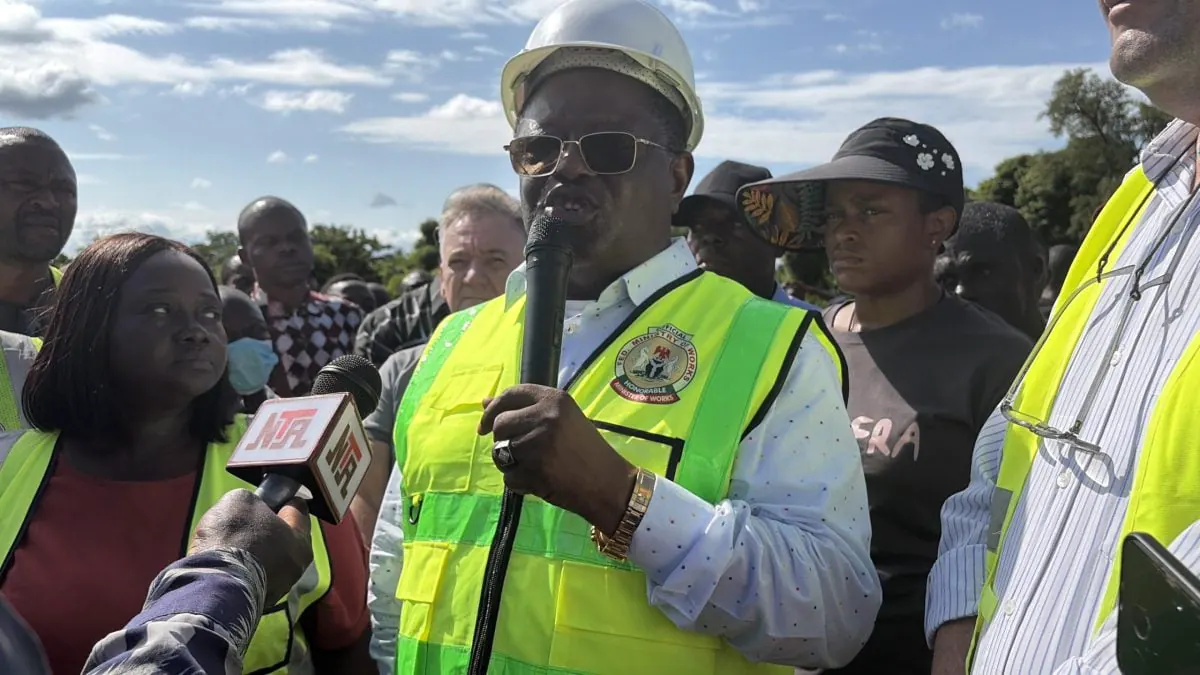
Nigeria's Minister of Works, Senator David Umahi, has dismissed allegations that the federal government is concentrating road projects in the South-East region. During an inspection tour of the strategic Trans-Sahara Highway project, Umahi emphasized that federal road interventions are equitable and nationwide in scope. He stated that the projects align with approvals granted by President Bola Ahmed Tinubu and are driven by developmental necessity rather than regional favoritism.
The multi-state Trans-Sahara Highway corridor originates from Afikpo in Ebonyi, traversing Ador in Benue State, Nsukka in Enugu, sections of Kogi State, and terminating at the Owete Bridge connecting to the Federal Capital Territory. To fast-track completion, Umahi directed the handling contractor to commence simultaneous execution across three designated sections. He pledged to cross the Ador Bridge in person during his next routine inspection.
Umahi addressed critics during the field assessment, describing online claims of regional bias as baseless and unsupported by official records. He stated that some people are dissatisfied that the South-East region is receiving its fair share of national infrastructure for the first time. Umahi maintained that the region deserves robust infrastructure interventions like every other geopolitical zone.
The Minister rejected assertions that the South-East region is receiving preferential treatment at the expense of other parts of the country. He noted that in terms of infrastructure development, the South-East may not rank first, second, or third, but it will definitely not be the last. Umahi cited the execution of the 199-kilometer Ebonyi State Ring Road project funded via a $150 million facility during his tenure as Governor of Ebonyi State.
Umahi defended the administration's approach to capital financing, asserting that acquiring targeted debt for productive, high-impact infrastructure remains economically sound. He explained that delayed infrastructure investment exponentially inflates project costs over time, justifying timely capital deployment for long-term fiscal efficiency. The Minister revealed a hybrid capital model incorporating local and international funding sources for the Tinubu administration's financing strategy.
The Minister denied allegations that the Ministry of Works had abandoned existing highways in pursuit of new corridors. He clarified that the route utilized existing roads that were strategically expanded and rehabilitated. Umahi urged citizens across the South-East and the broader federation to maintain support for the administration's economic and structural reforms to ensure completion of major capital projects nationwide.
Umahi cited key macroeconomic indicators, including Nigeria's foreign exchange reserves standing at approximately $55 billion, as a signal of fiscal stability supporting ongoing national development projects. He emphasized the need for citizens to support the administration's reforms to ensure the completion of major capital projects nationwide.
Key points
- The federal government has a hybrid capital model incorporating local and international funding sources for infrastructure development.
- Nigeria's foreign exchange reserves stand at approximately $55 billion, indicating fiscal stability.
- The Trans-Sahara Highway project spans multiple states, including Ebonyi, Benue, Enugu, and Kogi.