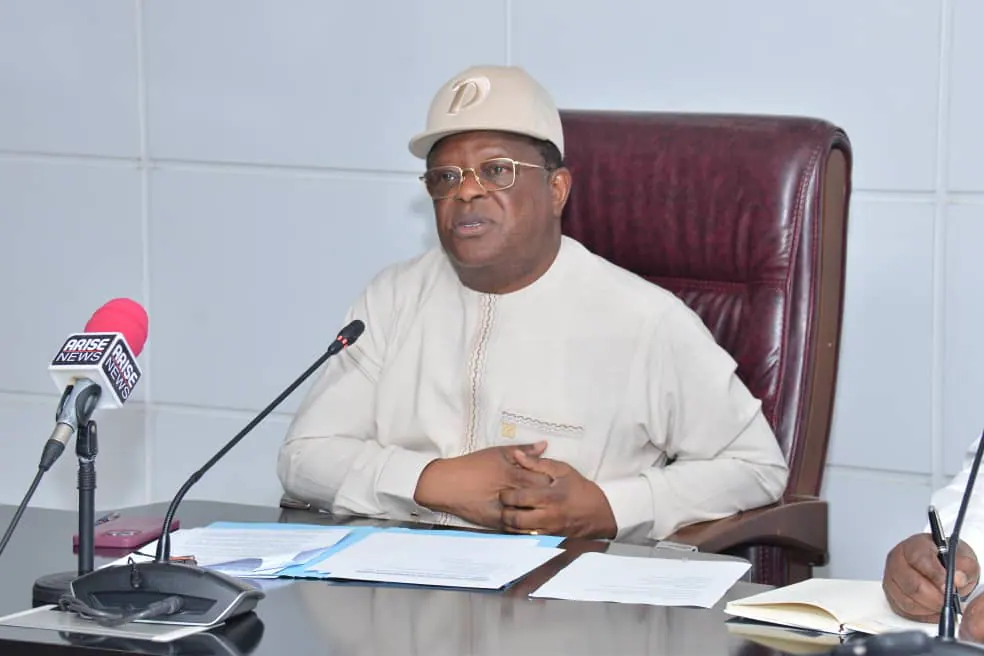
Nigeria's Minister of Works, David Umahi, has addressed allegations that President Bola Tinubu influenced the awarding of the Lagos-Calabar Coastal Highway project to Hitech Construction Company. Umahi stated that Tinubu never directed him to award the project to Hitech, emphasizing that he alone was responsible for the procurement decision. This clarification was made during an appearance on Channels Television's Politics Today.
Umahi dismissed claims that the coastal highway project was being used for money laundering by the administration. He explained that Hitech was chosen due to its experience in dealing with coastal erosion and its previous work in restoring parts of Victoria Island. The minister highlighted that the procurement process used was permissible under Nigerian law, which allows for different methods depending on the project's circumstances.
According to Umahi, there are three types of procurement processes allowed by the National Assembly. These include open advertisement, restrictive selective tendering, and other methods depending on the project's urgency. Umahi noted that Hitech emerged as the preferred company due to its earlier intervention in Lagos, particularly its work on coastal erosion. The company initially resisted the President's invitation when he was a governor, but its methodology successfully restored Victoria Island.
Umahi also addressed suggestions that Tinubu's relationship with Hitech's owner, Lebanese-Nigerian businessman Gilbert Chagoury, played a role in the award. The minister emphasized that his procurement decision was not influenced by personal relationships, stating that it has nothing to do with his procurement process. Umahi took full responsibility for all his decisions, stressing that he has integrity and a life journey to account for.
The minister argued that the President had no reason to interfere in the procurement process after assigning the project to the Ministry of Works. The project had to pass through the Bureau of Public Procurement before the relevant processes could be concluded. Umahi noted that the borrowing plan, not the procurement procedure, requires parliamentary approval from the National Assembly.
Umahi provided details on the infrastructure being incorporated into the coastal highway project to address flooding and improve access for communities and property owners along the route. The Federal Government is constructing hydraulic channels and service lanes to move floodwater towards the lagoon. These channels will help alleviate flooding while improving movement for residents and property owners along the corridor.
The coastal highway project is designed to remain functional for decades with relatively low maintenance requirements. Umahi stated that it will last between 50 and 100 years with low maintenance. The project aims to not only address flooding but also make life easier for the people of Lagos State who have properties within the location.
Key points
- Umahi denies Tinubu's involvement in the awarding of the Lagos-Calabar Coastal Highway project to Hitech Construction Company.
- The procurement process used for the project was permissible under Nigerian law.
- The project is designed to last between 50 and 100 years with low maintenance requirements.