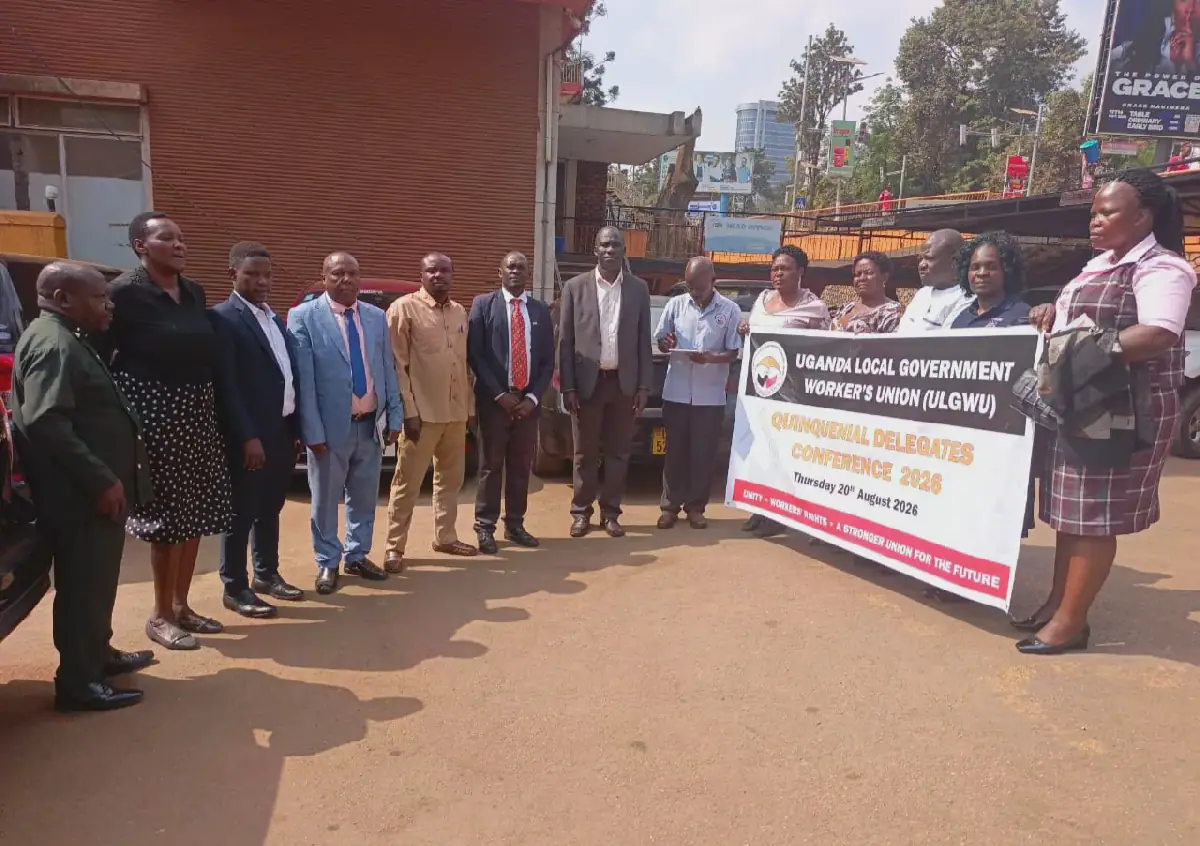
The Uganda Local Government Workers Union (ULGWU) is threatening to take the government to court over the prolonged interdiction of local government employees. The union claims that authorities have delayed disciplinary investigations, leaving affected workers in uncertainty. ULGWU has given the government three weeks to address their concerns or face possible legal action. This move follows a resolution by the Union's National Executive Board, which has already notified the Attorney General of its intention to institute Public Interest Litigation.
According to ULGWU, several public servants have remained on interdiction for extended periods without their disciplinary cases being concluded. This has left them struggling with financial challenges and uncertainty about their future. The union argues that disciplinary proceedings must comply with the Constitution, the Public Service Act, and the Uganda Public Service Standing Orders of 2021. They have cited Regulations 38(5) and 38(9), which provide for investigation timelines and avenues of appeal where investigations exceed the prescribed periods.
ULGWU has also questioned two legal opinions issued by the Attorney General on the management of disciplinary cases involving public officers. The opinions, dated September 25, 2026, and August 25, 2023, appear to contradict each other, creating confusion among government officials responsible for handling interdictions and disciplinary proceedings. The union believes that this conflicting guidance could result in inconsistent administrative decisions and unfair treatment of employees.
The union has received complaints from workers facing delayed investigations, procedural irregularities, and lengthy periods away from their workplaces while waiting for investigations or court processes to be completed. General Secretary Hassan Lwabayi Mudhba, who signed the statement on behalf of the Board, has called upon local government workers, other labour unions, and civil society organisations to support the initiative. He warned that disciplinary procedures should never become tools for victimisation or denial of justice.
ULGWU supports efforts to promote accountability, discipline, and the fight against corruption in the Public Service. However, they insist that such efforts must follow the law and respect the dignity and rights of public officers, including their entitlement to fair administrative treatment and a fair hearing. The union is demanding that the government clarify the two Attorney General's opinions, issue clear instructions to accounting officers, review cases involving prolonged interdictions, and ensure investigations are completed without unnecessary delays.
The union is also calling for the involvement of labour unions in developing lasting solutions and monitoring compliance with the relevant laws. This comes as the three-week ultimatum to the government begins. If the government fails to provide a satisfactory written response and take corrective measures, ULGWU will pursue Public Interest Litigation. The union is prepared to take this step to protect the rights of its members and ensure that disciplinary proceedings are conducted fairly and in accordance with the law.
The development has sparked a renewed debate about the need for the government to ensure that disciplinary proceedings are conducted in a fair and timely manner. As the ultimatum deadline approaches, all eyes will be on the government's response and the potential implications for public servants. ULGWU's move has been seen as a bold step towards protecting the rights of local government employees and promoting accountability in the Public Service.
Key points
- ULGWU demands resolution within three weeks or faces possible legal action
- The union questions two conflicting legal opinions issued by the Attorney General
- ULGWU supports efforts to promote accountability but insists that they must follow the law and respect public officers' rights