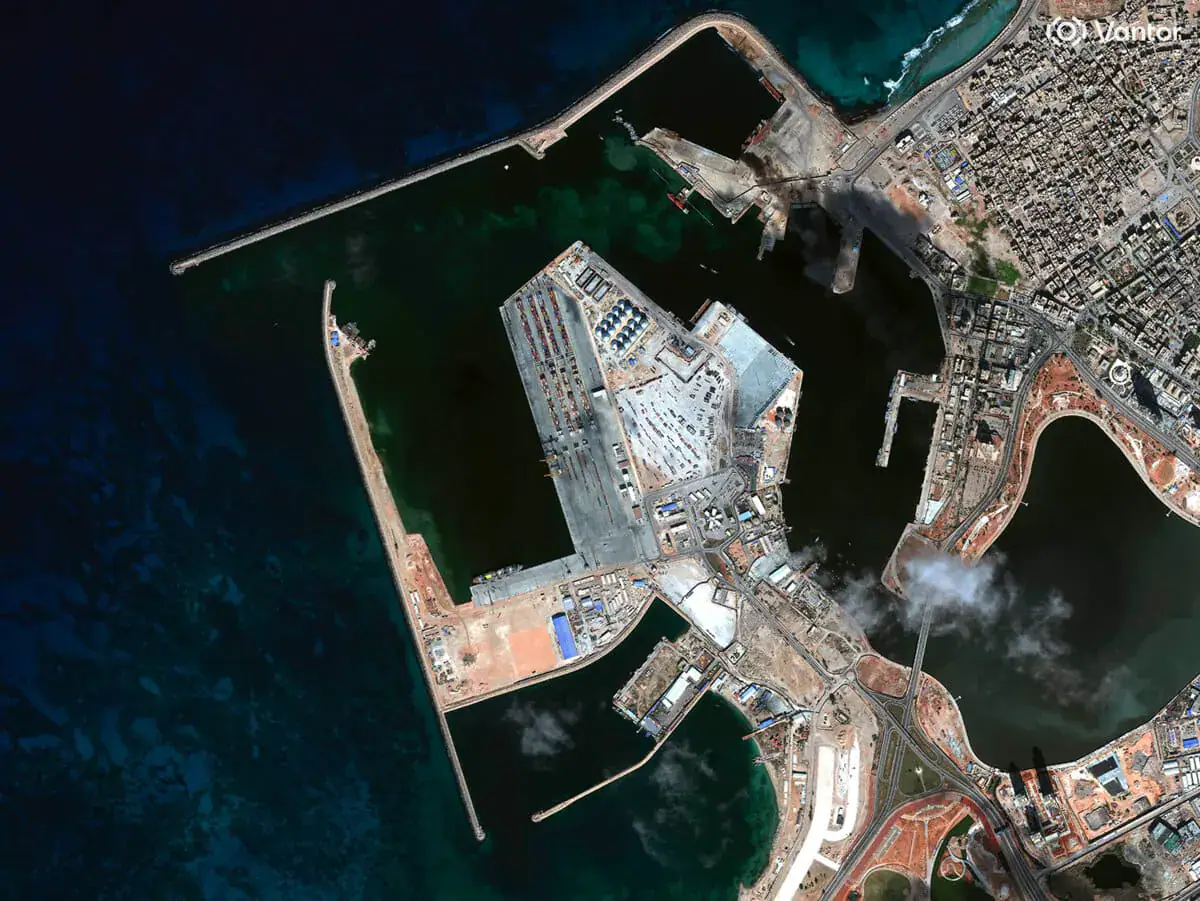
On November 22, seven Ukrainian naval drones targeted the Russian corvette Merkury, docked at the Benghazi naval base, and the cargo ship MV Angara off the coast of the Libyan city. Ukrainian President Volodymyr Zelensky claimed responsibility for the operation the following day, stating it was an "exemplary Ukrainian operation in response to Russian war." The goal, according to Kiev, was to create a sense of insecurity among Russians even when they are far from the front lines.
The Libyan authorities in the east, led by Osama Hammad and allied with Marshal Khalifa Haftar, have strongly condemned the operation as an "Ukrainian aggression" and a "criminal attack." They have filed a complaint with the United Nations, requesting an international investigation into the involvement of Ukrainian personnel or installations in Libya, identification of those responsible for the attacks, and official explanations from Ukraine regarding its military activities in Libya.
According to reports, the Ukrainian operation was not an improvised move. Intelligence Online revealed on October 28 that Ukrainian military intelligence had been closely monitoring a convoy of Russian ships transporting heavy equipment for the Africa Corps, the successor to Wagner. The report mentioned four ships that departed from Baltiysk between October 20 and 22, carrying around 300 vehicles. The operation was initially planned for earlier in the month but was rescheduled due to the presence of Russian warships.
The involvement of European allies in the operation has raised concerns. While there is no public evidence that Paris, Berlin, or London directly authorized the strike, their rhetoric suggests they may have been aware and tacitly approved of it. Friedrich Merz, a German politician, has made statements that seem to justify Zelensky's actions, accusing Russia of wanting to "swallow" European countries. This kind of rhetoric has contributed to an escalation of tensions.
European leaders' responses to the Ukrainian operation have been mixed. French Foreign Minister Jean-Noël Barrot stated that Ukrainians are "defending themselves" even thousands of kilometers from their territory. In contrast, Italy, a neighbor of Libya, has expressed "concern" to Kiev about the operation. The differing reactions highlight the complexities of international relations and the potential consequences of Ukraine's actions.
The incident has also raised questions about the role of the international community in addressing the situation. The UN has called for an independent investigation into the attacks, which Libyan authorities have requested. The incident may lead to a shift in the stance of countries that have maintained neutrality in the conflict, potentially altering the dynamics of international relations.
The Ukrainian operation in Benghazi has sparked concerns about the potential for further escalation and its implications for global security. As the situation continues to unfold, it remains to be seen how the international community will respond to Ukraine's actions and their consequences. The incident has highlighted the complexities of modern warfare and the interconnectedness of global events.
Key points
- Ukraine's president claims responsibility for drone strikes on Russian ships in Libyan port city
- Libyan authorities condemn the operation as an "Ukrainian aggression" and request an international investigation
- European leaders' responses to the operation have been mixed, with some seeming to tacitly approve of Ukraine's actions
Reporting sources
- Benghazi : Zelensky a mondialisé la guerre, et l’Europe l’a laissé faire · realites.com.tn