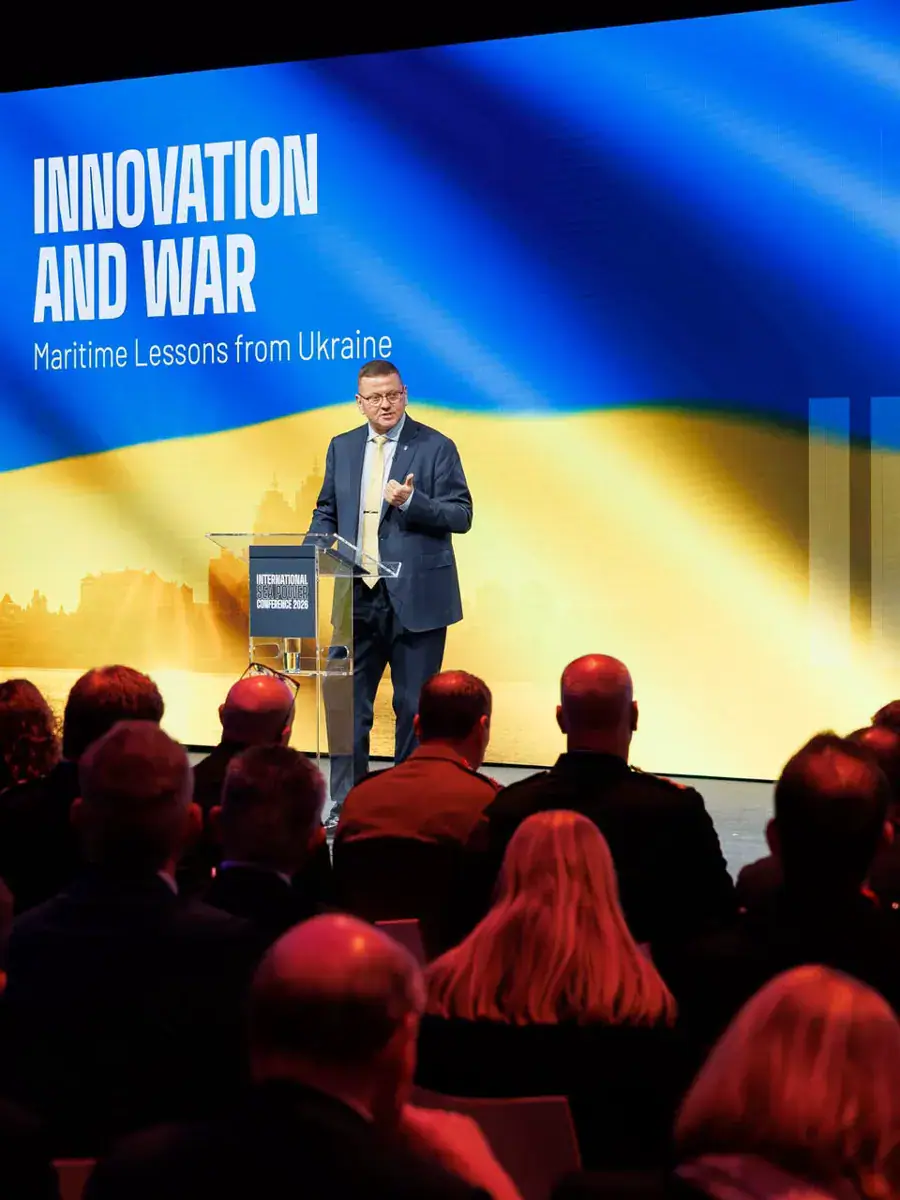
Ukraine's ambassador to the United Kingdom, Valeriy Zaluzhnyy, a former commander-in-chief of the Ukrainian Armed Forces, has declared that sea warfare is on the cusp of its most significant transformation since the invention of torpedoes. Speaking at the Atlantic Future Forum on board the British aircraft carrier HMS Prince of Wales in Oslo, Zaluzhnyy emphasized that drones and Ukraine's combat experience are driving this change. He noted that naval power will no longer be determined by ship tonnage and gun caliber, but by unmanned systems, autonomy, and artificial intelligence.
Zaluzhnyy cited Ukraine's experience with maritime drones as a prime example of this shift. He stated that a small number of Ukrainian unmanned boats have effectively countered Russia's large traditional fleet, forcing the once-powerful Black Sea Fleet to leave Sevastopol and relocate to more protected ports. This is not an isolated incident, but rather a new reality confirmed by events in the Red Sea and the Strait of Hormuz. Ukraine has demonstrated that relatively inexpensive unmanned systems can challenge even leading fleets and economically exhaust them in prolonged confrontations.
Zaluzhnyy highlighted the concept of a "hybrid mosquito fleet," which involves the mass deployment of maritime drones in conjunction with other means of destruction, reconnaissance, and electronic warfare. This approach has allowed Ukraine to destroy at least a third of the pre-war Russian Black Sea Fleet and restore limited maritime export routes. This experience opens up opportunities for other small nations, as relatively inexpensive unmanned systems can be used to challenge even the most powerful fleets.
However, Zaluzhnyy also emphasized that this transformation requires a fundamentally new approach to protecting ports, coastlines, and trade routes. In addition to traditional defense elements, a critical anti-drone component is now essential. Without integrating unmanned technologies into traditional fleet doctrines, navies risk becoming operationally obsolete. Ukraine's experience can serve as a model for asymmetric specialization, with Ukraine potentially becoming a leading provider of security in the coastal defense segment.
Zaluzhnyy's conclusions from the Atlantic Future Forum are clear: the changes are irreversible and will soon affect all oceans. Those that adapt their doctrines to the era of autonomous systems and artificial intelligence will determine the rules of maritime security tomorrow. Ukraine's experience with drones has already shown that even small nations can effectively counter powerful fleets, and this approach is likely to be adopted by other nations in the near future.
The impact of Ukraine's drone warfare tactics on the global stage is significant, with implications for naval warfare and coastal defense. As Zaluzhnyy noted, the era of traditional naval power is coming to an end, and a new era of unmanned systems and artificial intelligence is beginning. This shift will require nations to rethink their naval doctrines and invest in new technologies to remain competitive.
In the end, Zaluzhnyy's speech at the Atlantic Future Forum highlighted the significant changes underway in sea warfare, driven by Ukraine's experience with drones and artificial intelligence. As the global maritime landscape continues to evolve, nations will need to adapt to these changes and develop new strategies for naval warfare and coastal defense. With Ukraine at the forefront of this revolution, the future of sea warfare is likely to be shaped by the country's innovative approaches to drone warfare and autonomous systems.
Key points
- Ukraine's use of drones has forced Russia's Black Sea Fleet to relocate.