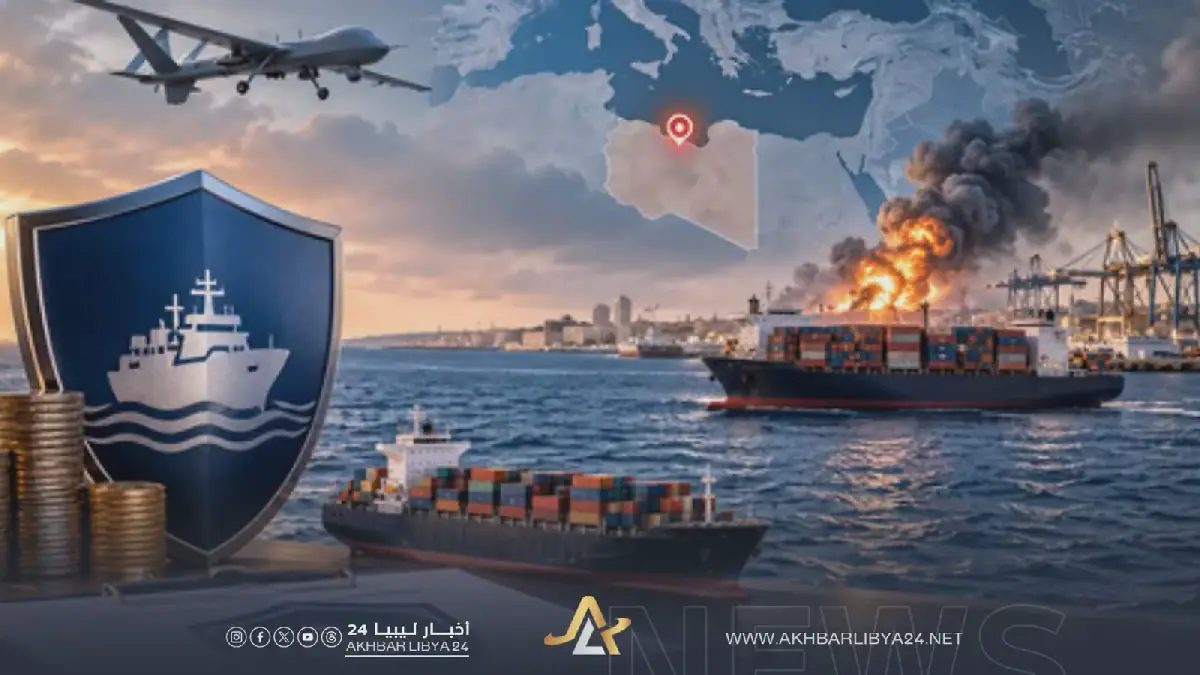
The recent Ukrainian attack on the port of Benghazi has sparked concerns among international insurance companies and brokers, prompting a reevaluation of security risks for commercial shipping in the Mediterranean. This development has raised fears that the conflict between Russia and Ukraine may extend beyond the Black Sea to impact shipping lanes and ports in the central Mediterranean. As a result, insurance firms are reexamining their policies and risk assessments for vessels traveling to Libyan ports.
According to a report by Insurance Business, an international insurance industry publication, insurers and brokers are studying the potential consequences of the attack on Benghazi. The report notes that ships heading to Libyan ports are now required to notify insurance companies in advance and obtain additional coverage due to rising security risks. This change may lead companies to reassess their risk evaluations and tighten coverage requirements before allowing vessels to sail to or from Libyan ports.
The war risk insurance market is under pressure, with stricter coverage terms and higher premiums linked to the Russian-Ukrainian conflict. In some cases, insurance premiums have reached up to 20% of a vessel's value. This significant financial burden can affect shipping companies and vessel owners when dealing with regions prone to military risks. The consequences of these tensions extend beyond vessel safety to impact transportation costs, operations, and insurance.
Insurers are increasingly adopting a policy of evaluating risks for each sea voyage separately, rather than relying on a general regional classification. They require shipping companies to provide more detailed information about sailing routes, cargo, and target ports. Based on this data, insurers determine whether to cover a voyage, the conditions they will impose, and the additional costs involved. This approach reflects the growing sensitivity of the insurance market to security and military developments in maritime corridors.
The repercussions of the Benghazi attack extend beyond the local level, affecting the calculations of international shipping and insurance companies. As concerns grow about the potential expansion of the Russian-Ukrainian conflict to the central Mediterranean, stricter insurance terms, higher premiums, and separate voyage assessments pose additional challenges to navigation heading to Libyan ports. The widening threat of maritime risks will likely impact the future of trade and supply chains across the Mediterranean.
Shipping companies and vessel owners face increased costs and complexities when operating in regions perceived as high-risk. The requirement for advance notification and additional coverage for vessels traveling to Libyan ports may lead to changes in shipping routes or schedules. As the situation continues to unfold, the insurance industry will likely continue to reassess its risk evaluations and adjust its policies accordingly.
The ongoing conflict between Russia and Ukraine has significant implications for global trade and shipping. The potential expansion of the conflict to the Mediterranean could have far-reaching consequences for international commerce and the insurance industry. As the situation develops, stakeholders will be closely monitoring the situation and adapting to the changing landscape.
Key points
- Insurers are reevaluating risks and tightening coverage terms for vessels traveling to Libyan ports following the Ukrainian attack on Benghazi.
- The war risk insurance market is under pressure, with higher premiums linked to the Russian-Ukrainian conflict.
- Insurers are adopting a policy of evaluating risks for each sea voyage separately, rather than relying on a general regional classification.