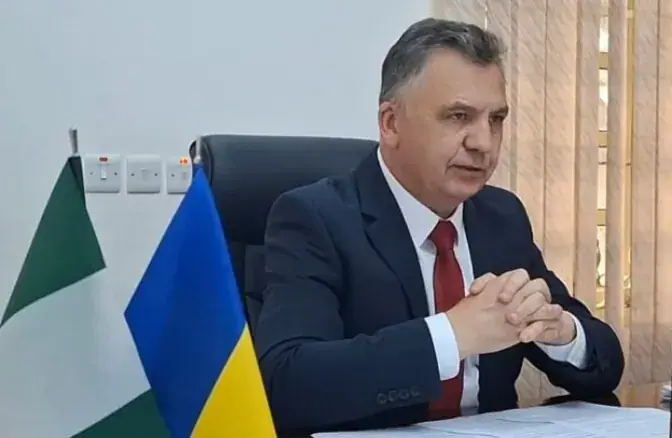
Ukraine has issued a warning against the use of hunger as a weapon of war and political coercion. Ambassador Ivan Kholostenko stated that the international community must protect global food security and safeguard maritime trade. He made the remarks on the 93rd anniversary of the Holodomor, a devastating famine in Ukrainian history. The Holodomor occurred from 1932 to 1933, resulting in the deaths of millions of Ukrainians.
The Holodomor was not caused by natural disasters, but by policies implemented by the Soviet Union under Joseph Stalin. These policies led to widespread starvation, repression, and the death of millions of Ukrainians. The communist totalitarian regime deliberately sought to destroy Ukrainians as a nation capable of defending its right to an independent state. This was achieved through forced food confiscation, restrictions on movement, and the blockade of towns and villages.
The impact of the famine on children was particularly devastating. In many districts of Ukraine, approximately two-thirds of schoolchildren did not return to their classrooms in September 1933. The consequences of the national catastrophe remained deeply embedded in Ukraine's collective memory and history. The Holodomor of 1932-1933 was officially recognised under Ukrainian law in 2006 as genocide against the Ukrainian people.
Ambassador Kholostenko accused Russia of using its military aggression to deprive residents of towns and villages in temporarily occupied Ukrainian territories of access to food. Russia has sought to block Ukrainian ports in the Black Sea since the beginning of its full-scale invasion. Additionally, Russia has systematically pillaged grain from temporarily occupied territories and facilitated its illicit export through a "shadow grain fleet."
The ambassador warned that further disruption of Ukraine's maritime exports could reduce the global supply of grain, wheat, oilseeds, and other agricultural commodities. This would have implications for countries dependent on food imports. Ukraine commemorates the victims of the Holodomor on November 28, alongside victims of the mass famines of 1921-1923 and 1946-1947.
The Soviet authorities continued exporting grain, rejected international humanitarian assistance, and concealed the scale of the tragedy from the rest of the world while millions of Ukrainians were dying of starvation. The remembrance of the tragedy has become increasingly significant in the face of renewed attempts to weaponise food amid Russia's ongoing war against Ukraine.
Today, more than nine decades after the Holodomor, Ukraine's warning against the use of hunger as a weapon of war serves as a reminder of the devastating consequences of such actions. The international community must take heed of this warning to prevent similar atrocities from happening again.
Key points
- Ukraine warns against using hunger as a weapon of war and political coercion.
- The Holodomor of 1932-1933 was a devastating famine that resulted in the deaths of millions of Ukrainians.
- Russia's actions in Ukraine threaten international food security through disruptions to agricultural production and exports.