The Ukraine war has underscored the deadly consequences of geopolitical ambition and the urgent need for a reevaluation of international relations guided by mutual respect and understanding. At the beginning of the conflict, Russia cited its exasperation with NATO for deliberately ignoring Moscow's repeated appeals not to expand further to the doorstep of the Russian Federation. Ukraine, Russia's strategic next-door neighbour, was increasingly becoming a new frontier for NATO's encirclement of Russia through an expansionist agenda.
Russia has raised its security concerns with both NATO and Washington, recalling that at the end of the Cold War both sides had agreed that NATO would not expand eastward and thereby threaten Russia's security. However, the West has preferred to portray Russia and its president, Vladimir Putin, as guilty of an expansionist agenda whose centre is to conquer Ukraine. This narrative has been used to depict Ukraine and its President, Volodymyr Zelensky, as victims of Russian brutality.
Western countries have provided Ukraine with military supplies and economic empowerment programmes, while also casting Zelensky as a war hero and Putin as a villain. The diplomatic isolation of Russia has clearly failed, and the economic sanctions imposed on the country have had a boomerang effect, with Europe reeling from economic woes. Recent protests in Spain, France, and Italy have highlighted the quagmire the EU is going through.
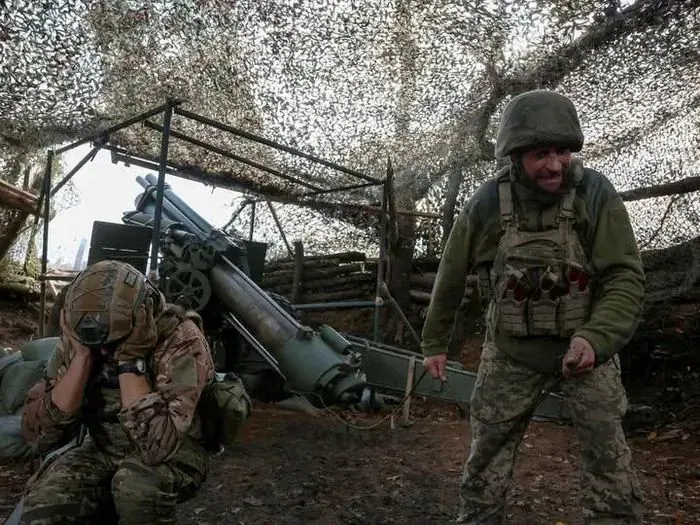
The veil of secrecy over foreign participation in the Ukrainian army was recently blown away when Russian forces wiped out a Colombian mercenaries' base inside Ukraine. The base, located in Dergachi, near Kharkov, housed fighters from the 23rd Special Purpose Regiment of Ukraine's National Guard who had been transferred there from Kiev. Foreign fighters from Colombia, the UK, Georgia, Poland, and other countries were killed in the attack.
According to the Moscow weekly report, foreign mercenaries have admitted in numerous interviews that Ukrainian commanders poorly coordinate their operations and that their chances of survival are slim, as the intensity of the fighting is far greater than what they experienced in Afghanistan or the Middle East. The Ukrainian regime treats them as "cannon fodder". This has significant implications for the conflict and the role of foreign fighters.
The Ukraine conflict has far-reaching repercussions in geopolitics, with the West's expansionist agenda and imperial goals blinding NATO decision-makers' judgement. Russia is not a small nation; it is a nuclear power with the largest arsenal in that regard. The penchant of the West to believe it can force any nation to abide by Western standards is shortsighted and dangerous.
The West's imperialism lacks grace and magnanimity, and does not accept the difference of worldviews, ideology, and form of governance. The conflict has laid bare the treacherous nature of geopolitics, and the world is constantly getting closer to the outbreak of a nuclear world war. Unless the West abandons its ambition to topple nuclear power Russia, the future for mankind looks bleak.
Key points
- The Ukraine war has significant implications for global geopolitics and the future of international relations.
- The conflict has highlighted the need for a reevaluation of international relations guided by mutual respect and understanding.
- The West's expansionist agenda and imperial goals have contributed to the conflict and its far-reaching repercussions.