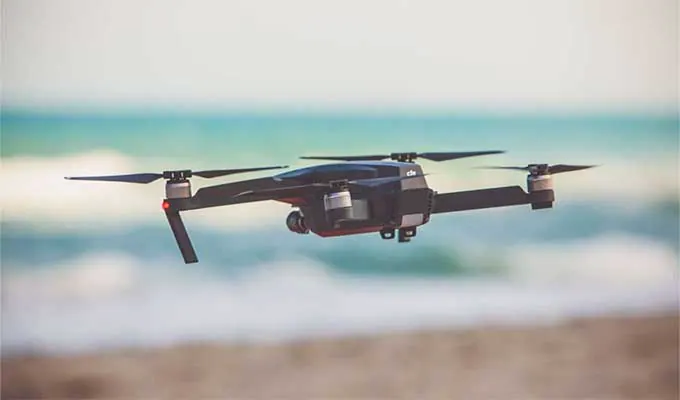
The Ukrainian army has successfully used heavy drones to deliver aid to the city of Olechky, which is occupied by Russian forces. According to the Ukrainian Ministry of Interior, nearly 400 packages weighing around four tonnes were delivered in the night of October 3-4. This operation demonstrates the potential of drones in logistics, particularly in areas where ground transportation is disrupted due to conflict, mines, and drone threats.
The use of drones in this operation allows the Ukrainian authorities to bypass a part of the terrestrial transport in a zone where movements are extremely perilous. This method of delivery is not new, but its application in this context is significant. The UN mission in Ukraine had previously documented the difficulties of evacuation and supply in occupied localities in the Kherson region. This latest operation follows a similar delivery in late September, where Ukrainian authorities announced that around four tonnes of supplies were delivered by drones to around 100 points.
The Ukrainian authorities are seeking to make this method of emergency supplies a reproducible solution. However, the current capacity of four tonnes does not constitute an autonomous supply chain. Drones can bridge a segment that has become inaccessible, but the available sources do not allow for the establishment of the continuity of volumes, their cost, or their ability to sustainably cover the needs of a population cut off from usual circuits.
The humanitarian context in Olechky and surrounding areas is critical. The Council of Europe called on September 25 for unhindered humanitarian access and safe evacuation. The Kremlin has also acknowledged critical problems of food and medicine, while affirming that Russian forces are working to resolve them. However, the two sides diverge on the responsibility for the blockages.
The use of drones as a logistical bridge is not without its limitations. While it can provide a temporary solution, it is not a substitute for a secure and sustainable humanitarian distribution system. The experience in Olechky shows the potential of drones in logistics, but it also highlights the need for a more comprehensive approach to addressing the humanitarian needs of affected populations.
The Ukrainian Ministry of Interior and other authorities have been working to find innovative solutions to the logistical challenges posed by the conflict. The use of drones is one example of this effort. According to Reuters, the Ukrainian authorities have been using drones to deliver aid to areas occupied by Russian forces, with the goal of providing critical supplies to those in need.
The international community has been following the developments in Olechky and the use of drones in logistics. The situation in Ukraine remains complex, with ongoing conflict and humanitarian needs. The use of drones as a logistical bridge is one aspect of the efforts to address these needs, and it will be important to monitor its effectiveness and potential for future applications.
Key points
- Ukrainian army uses drones to deliver nearly 400 packages of food and medicine to Olechky.
- The use of drones in logistics allows for bypassing of terrestrial transport in zones where movements are perilous.
- The current capacity of four tonnes does not constitute an autonomous supply chain.