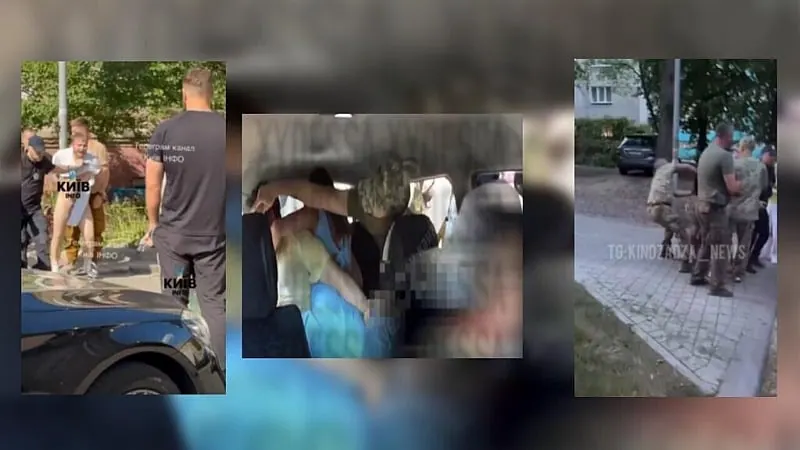
A recent video posted on social media has sparked outrage in Ukraine, showing a man being forcibly taken away by police officers and unidentified individuals in Kyiv's Pecherskyi district. The footage depicts the man struggling to resist being put into a police vehicle, with his clothes torn during the altercation. Witnesses described the scene, with a pharmacy employee stating that the man was "tackled like a dog" and a woman living in a nearby building reporting that he was beaten up before being taken away.
The incident is part of a larger trend of alleged "busification" practices, where men are forcibly taken into minibuses or vans for mobilisation into the Ukrainian army. While some footage has been identified as AI-generated or manipulated, lawyers and witnesses have reported numerous cases of irregular or coercive mobilisation practices. The Ukrainian armed forces face significant manpower shortages after more than four years of war with Russia, despite initial high levels of volunteerism.
Ukraine has implemented various measures to boost recruitment, including lowering the minimum age for mobilisation from 27 to 25 and increasing administrative penalties for violations of military-registration and mobilisation rules. The mobilisation process is regulated by law, with exemptions and deferrals available for certain categories of people, including those with disabilities and students. However, concerns have been raised about the conduct of Territorial Recruitment and Social Support Centre (TCK) officers, who are authorised to verify military-registration documents and issue summonses.
The Ukrainian Parliament Commissioner for Human Rights, Dmytro Lubinets, has warned about the increasing number of complaints regarding the conduct of TCK representatives. In February 2026, he stated that his office had received 6,127 complaints by the end of 2025, up from just 18 at the start of the full-scale invasion in 2022. His office has processed over 5,000 requests in 2026, with monitoring visits recording critical violations, including illegal restrictions of freedom and physical beatings.
One individual, Andrii Dombrovskyi, claims to have been injured during forced mobilisation on July 26, 2026. He was taken away by recruitment officers while riding his bike in Zhytomyr, despite not being subject to an arrest warrant or sought by the authorities. His lawyer argues that the officers had no legal grounds to detain him, and Dombrovskyi is now challenging the lawfulness of his mobilisation in court.
Andrii Dombrovskyi's case is not isolated, with his lawyer, Serhiy Kosiichuk, reporting approximately 30 active court proceedings across Ukraine concerning challenges to mobilisation practices. Kosiichuk's law firm specialises in military mobilisation and military law, and he has expressed concerns about the conduct of TCK officers and the lack of transparency in the mobilisation process.
The controversy surrounding Ukraine's recruitment practices has sparked debate about the balance between national security and individual rights. While some argue that forced mobilisation is necessary to support the war effort, others claim that it is being carried out in an arbitrary and coercive manner. The Ukrainian government faces challenges in addressing these concerns while maintaining its military capabilities.
Key points
- The Ukrainian Parliament Commissioner for Human Rights has reported a significant increase in complaints regarding the conduct of Territorial Recruitment and Social Support Centre representatives.
- Lawyers and witnesses have reported numerous cases of irregular or coercive mobilisation practices, including forced detentions and physical beatings.
- The Ukrainian government has implemented measures to boost recruitment, including lowering the minimum age for mobilisation and increasing administrative penalties for violations of military-registration and mobilisation rules.