Ukraine launched a significant drone attack on Moscow on Sunday, with the city's mayor, Sergei Sobyanin, describing it as the biggest attack yet. The drones targeted the Russian capital, killing two people in the Moscow region and damaging a facility at Moscow's oil refinery. Sobyanin reported that the attack had been repelled, stating that the enemy had not succeeded in disrupting the parliamentary election.
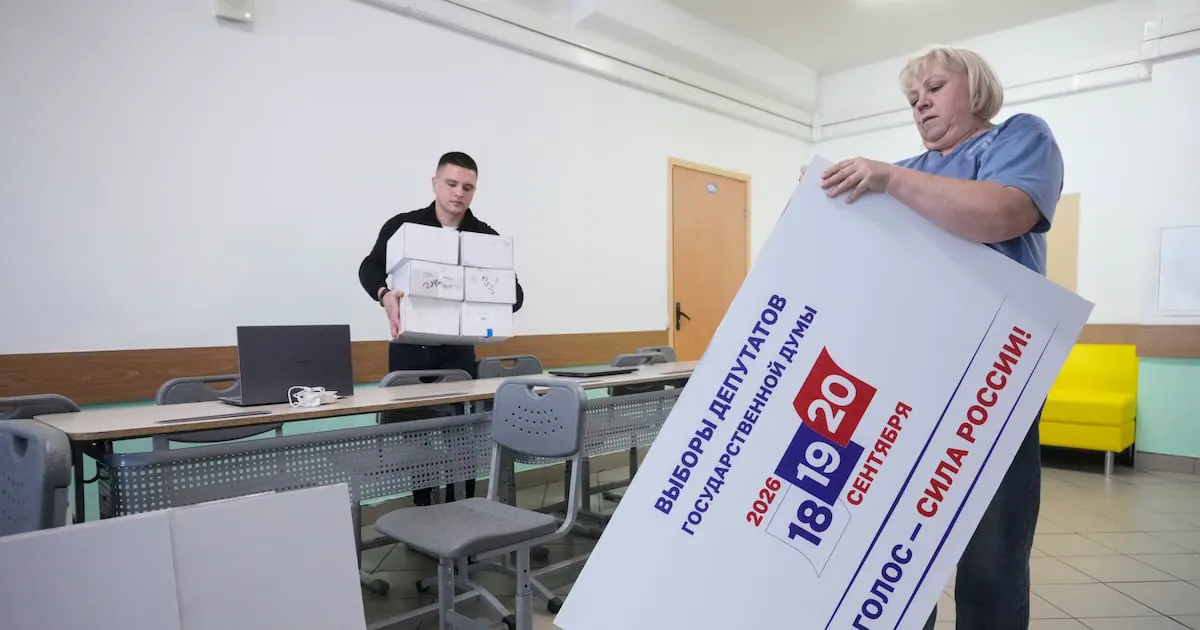
The drone attack occurred on the final day of Russia's parliamentary election, which President Vladimir Putin has framed as a test of support for the war in Ukraine. The election is expected to see the ruling United Russia party retain its dominance in a political system that critics argue does not tolerate dissent. The Kremlin is likely to present the outcome as evidence of public backing for Putin's policies and the war, which is now in its fifth year.
The election authorities reported that the three days of voting had proceeded smoothly, despite cyberattacks on Saturday. Turnout was over 50% by early afternoon Moscow time, according to the Interfax news agency. Most anti-war candidates were barred from the ballot, and those who did run from the liberal Yabloko party expressed concerns for their freedom after courts handed long jail terms to two senior party figures.
Yabloko's leader, Nikolai Rybakov, demonstrated his defiance by spoiling his ballot paper with the party's name and the slogan "For peace". The Kremlin justifies national unity and some censorship as necessary during the conflict in Ukraine, which it describes as part of an existential struggle with a hostile West. Moscow accuses Ukrainian intelligence services and other enemies of trying to stir unrest inside Russia.
The online voting system in Moscow came under cyberattack, according to Russian electoral officials. Kyiv, which has suspended elections under martial law, dismissed the Russian vote as a "pseudo election". Putin accused Ukraine of trying to interfere in the election, citing a Ukrainian strike that killed an election official in the Russian-controlled part of Ukraine's Zaporizhzhia region.
Despite the predictable outcome, the NEST think-tank in Berlin noted that the vote could still produce awkward moments for the Kremlin at a time of economic strain. The think-tank suggested that accumulated anxiety and frustration may translate into votes for systemic opposition parties that the Kremlin has allowed to remain on the ballot. The Communist party and the New People party could attract votes that the authorities would prefer to go to United Russia.
Initial results from the election are expected to emerge on Sunday, with more complete results available on Monday. Putin told the nation before the election that the vote would demonstrate support for Russian troops fighting in Ukraine. The outcome is likely to be seen as a show of public backing for Putin's policies, but the election's legitimacy has been disputed by critics and Ukraine.
Key points
- Two people were killed in the Moscow region and two more in the Russian-held part of Ukraine's Kherson region in the drone attack.
- The ruling United Russia party is expected to retain its dominance in the parliamentary election.
- The Kremlin justifies national unity and some censorship as necessary during the conflict in Ukraine.