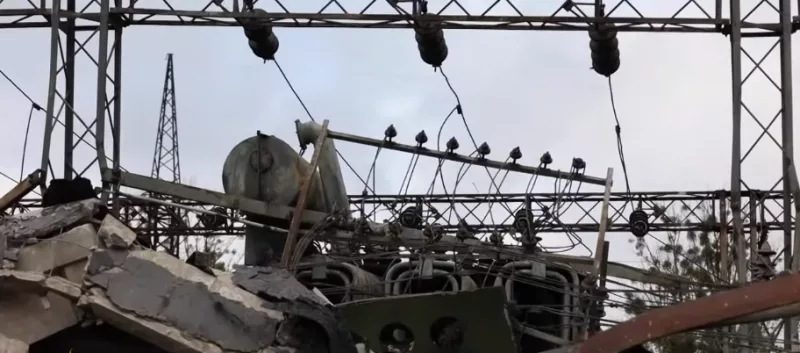
Power plants in Ukraine have been targeted by Russia, hours after US President Donald Trump announced an energy ceasefire between the two countries. Residents in the city of Izyum experienced blackouts after a Russian strike destroyed power grids, according to Ukrinform, Ukraine's state news agency. The strike is a significant development, especially given Trump's announcement of a ceasefire "effective immediately".
Trump's announcement of an energy ceasefire on Sunday was met with mixed reactions from European officials. Ukrainian President Volodymyr Zelensky said such a deal would be "good news", but also accused Russia of striking Ukraine energy facilities after Trump's post. Zelensky added that Ukraine was ready not to strike at Russian energy, counting on Russia's similar readiness and on Trump's agreement.
However, Zelensky later stated that Russia had continued to launch strikes despite Trump's announcement. He reported glide bomb strikes and attacks on Ukraine's energy infrastructure, including a power plant in Kharkiv. The head of the region's military administration, Vitaliy Bunechko, confirmed that energy and railway infrastructure in the region of Zhytomyr in western Ukraine were targeted by Russian attacks overnight.
The UK, France, Canada, and the EU expressed support for Trump's call for a sustained energy ceasefire. UK Prime Minister Andy Burnham stated that Britain "strongly supports President Trump's call today for a sustained energy ceasefire to start now". However, EU foreign policy chief Kaja Kallas said the bloc would welcome an energy ceasefire "when it holds", adding that it was unclear if Russia would stick to it.
Estonia's foreign minister stated that the ceasefire was "not working". For months, Ukraine and Russia have been exchanging strikes on energy infrastructure, disrupting energy supplies on both sides. Moscow has justified its targets as legitimate, claiming they support Ukraine's military operation, while Zelensky characterised Ukrainian attacks as an effort to "reduce Russia's ability to finance the war".
Trump's efforts to lower domestic fuel prices ahead of the midterm elections in the US have faced criticism from Zelensky, European officials, and some US politicians. The deal, which would temporarily undo sanctions on Russian imports, aims to release diesel to the US and the global market. However, critics argue that it may not address the root causes of the energy crisis.
The situation remains complex, with ongoing strikes on energy infrastructure and a fragile ceasefire. The international community continues to monitor developments, with many urging a lasting resolution to the conflict.
Key points
- Russia launched strikes on Ukrainian energy infrastructure despite US President Donald Trump's announcement of an energy ceasefire.
- European officials have expressed mixed reactions to Trump's call for a sustained energy ceasefire.
- The conflict has disrupted energy supplies on both sides, with Ukraine and Russia exchanging strikes on energy infrastructure.