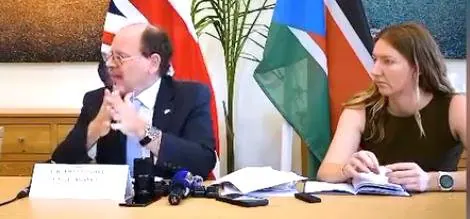
The United Kingdom has announced it will not provide practical financial support for South Sudan's planned December 2026 general elections. Outgoing British Ambassador David Ashley attributed this decision to the country's competing humanitarian and development needs. Ashley emphasized that the UK wants to see elections take place but explained that Britain had not received a formal proposal requesting electoral assistance.
According to Ashley, the UK had previously set aside funding for elections when polls were expected to take place in 2024. However, he explained that development partners cannot indefinitely hold funds for delayed activities because budgets are normally allocated at the beginning of financial years. As a result, the UK has directed its resources toward sectors where needs are considered particularly significant, including health, education, and humanitarian assistance.
The UK's decision comes as South Sudan prepares for the December 2026 elections and continues discussions with political parties and international partners on the electoral process. The government has reaffirmed its commitment to holding the polls in December. Ashley's remarks highlight the challenges faced by South Sudan in securing funding for its elections.
Ashley also mentioned that the UK had not received a formal proposal requesting electoral assistance from South Sudan. He stressed that the UK wants to see elections take place but cannot provide practical support due to its already allocated resources. The UK's stance on the matter has significant implications for South Sudan's electoral process.
Despite the UK's decision, Ambassador Ashley has continued to engage with South Sudanese authorities on political dialogue and election preparations. In September, he discussed preparations for inter-party dialogue with Cabinet Affairs Minister Martin Elia Lomuro and stressed the importance of an inclusive process. This engagement demonstrates the UK's ongoing commitment to supporting South Sudan's democratic development.
Ashley is completing his posting in South Sudan, with Rebecca Fabrizi appointed to succeed him and expected to take up the ambassadorial position in October 2026. The transition in leadership may bring new perspectives to the UK's engagement with South Sudan, particularly on electoral matters. The UK's support for South Sudan's democratic development is expected to continue.
The UK's decision to prioritize humanitarian and development needs over electoral support reflects the complexities of international partnerships and the difficult choices that must be made in resource allocation. As South Sudan moves forward with its electoral plans, it will need to secure funding from other sources. The country's ability to hold successful elections in December will depend on various factors, including international support and domestic preparations.
Key points
- The UK has declined to provide practical funding for South Sudan's December 2026 elections due to competing humanitarian and development needs.
- The UK had previously set aside funding for elections expected to take place in 2024 but cannot indefinitely hold funds for delayed activities.
- Despite not providing electoral funding, the UK continues to engage with South Sudanese authorities on political dialogue and election preparations.