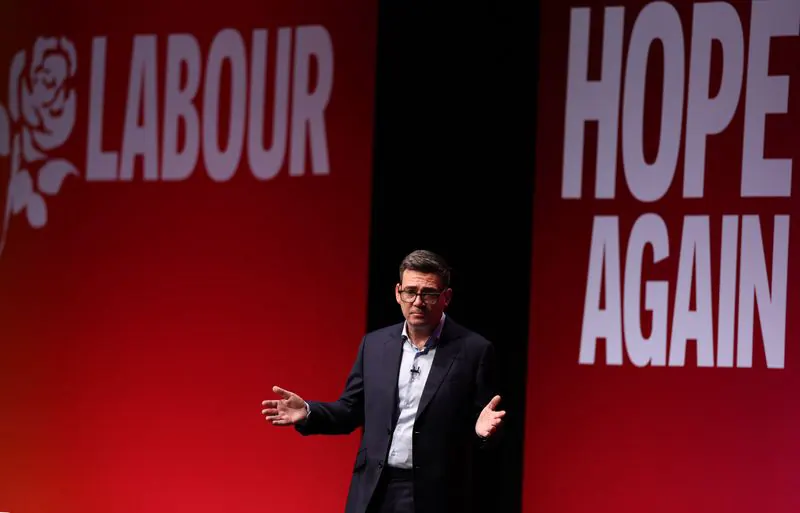
UK Prime Minister Andy Burnham has pledged to seek a consensus on closer ties with the European Union, a move that risks reopening the divisive Brexit debate. On September 29, 2026, Burnham delivered his keynote speech at the Labour Party Conference in Liverpool, where he stated that Brexit has done more harm than good. He emphasized the need to improve growth and prosperity through a reformed alliance with the EU. This move comes 10 years after the UK voted to leave the EU, a period marked by political instability and weak economic growth.
Burnham's plan involves a November summit with the EU, where he aims to lay out different options for Britain's long-term relationship with its European partners. He hopes to find consensus around one of these options. According to a June poll by YouGov, 55% of voters support rejoining the EU, while 34% oppose it. Additionally, 59% of voters support closer ties with the EU that do not involve rejoining the single market or customs union. This data suggests that there is still significant public interest in reevaluating the UK's relationship with the EU.
The EU has welcomed the idea of closer ties with Britain, particularly in the areas of security and defence. However, the bloc has not set out detailed aims for the upcoming summit. Burnham's pursuit of a reformed alliance with the EU aligns with his predecessor Keir Starmer's stance, but it will test Burnham's political skill in a nation still divided by Brexit. The move has already drawn criticism from some quarters, with Richard Tice, deputy leader of Reform UK, accusing Burnham of trying to "sneak us back into Brussels via the back door."
Burnham's push for closer EU ties comes at a time of significant geopolitical change. The threat of a wider war in Europe and US President Donald Trump's influence on trade, defence spending, and geopolitics are reshaping alliances globally. Trump has encouraged Europe to take greater responsibility for its defensive strength, while using tariffs to protect the US economy. In this context, Britain has tried unsuccessfully to join a collective European defence investment programme and is lobbying Brussels to include it in a broader "Made in Europe" manufacturing programme.
Recent opinion polls have put Labour marginally ahead of Reform UK, with the Conservative Party trailing behind. Burnham has previously expressed his desire for the UK to rejoin the EU in his lifetime, but has also stated that he respects the result of the 2016 referendum. His current proposal for closer EU ties does not involve rejoining the EU, but rather finding a new way to cooperate with the bloc. This approach may help to heal some of the divisions caused by Brexit, but it also risks further controversy.
The Labour Party Conference, where Burnham delivered his keynote speech, runs from September 27 to 30 at the Arena Convention Centre in Liverpool. The conference provides a platform for Burnham to outline his vision for the UK's future relationship with the EU. His speech was eagerly anticipated, given the ongoing debate about the UK's place in Europe. By seeking consensus on closer EU ties, Burnham is taking a bold step that could have significant implications for the UK's future.
The outcome of Burnham's efforts to find consensus on EU ties remains uncertain. His success will depend on his ability to navigate the complex and often contentious issue of Brexit. With the UK's relationship with the EU still a highly charged topic, Burnham's proposal will likely face significant scrutiny and debate. Nevertheless, his willingness to engage with the issue and seek a new path forward may help to reduce some of the tensions caused by Brexit.
Key points
- UK Prime Minister Andy Burnham seeks consensus on closer EU ties, 10 years after Brexit vote.
- Burnham's plan involves a November summit with the EU to discuss options for Britain's long-term relationship with its European partners.
- The move has drawn criticism from some quarters, with concerns that it could reopen the divisive Brexit debate.