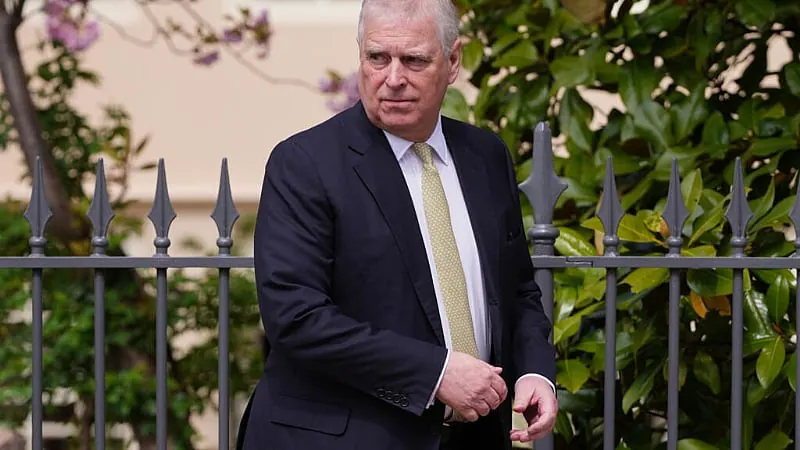
A British court has ruled that search warrants obtained by police to search properties linked to Prince Andrew, the younger brother of King Charles III, were unlawfully granted. The warrants were used to search properties in Sandringham, eastern England, and Windsor. The police had secured the warrants as part of an investigation into Prince Andrew's alleged misconduct in public office.
Prince Andrew, formerly known as Andrew Mountbatten-Windsor, was arrested in February on suspicion of misconduct in public office. The investigation centered on allegations that he had leaked confidential government documents to the late convicted sex-offender Jeffrey Epstein, with whom he had a friendship. Prince Andrew has denied any wrongdoing in relation to Epstein and has expressed regret over their friendship.
The arrest of Prince Andrew and the anger over his relationship with Epstein led to one of the worst crises faced by the British royal family in 90 years. The investigation began after the release of millions of documents by the US Department of Justice relating to Epstein. Thames Valley Police, which carried out the searches, has accepted that the initial court's decision to issue the warrants was incorrect.
A Thames Valley Police spokesperson said that the police accept the position that the search warrants were not properly granted and must be quashed. The police are currently engaged in legal proceedings to determine how material seized during the searches will be managed and whether it can be lawfully retained in support of the ongoing investigation.
The investigation into Prince Andrew's alleged misconduct is ongoing, with the police yet to charge him. Prince Andrew, the second son of the late Queen Elizabeth II, has consistently denied any wrongdoing in relation to Epstein. The quashing of the search warrants is a significant development in the case, which has been closely followed by the media and the public.
The use of search warrants to obtain evidence in the case has been called into question, with the court ruling that the warrants were unlawfully granted. The police had used a specific piece of legislation to secure the warrants, but the court has ruled that this was incorrect. The police must now consider how to proceed with the investigation in light of the court's ruling.
The case has raised questions about the relationship between the royal family and the police, as well as the use of search warrants in investigations. The police have confirmed that the investigation is ongoing and that they will continue to pursue the case.
Key points
- The UK court ruling that search warrants for Prince Andrew's homes were unlawful has significant implications for the ongoing investigation into his alleged misconduct.
- Prince Andrew has denied any wrongdoing in relation to Jeffrey Epstein and has expressed regret over their friendship.
- The investigation into Prince Andrew's alleged misconduct is ongoing, with the police yet to charge him.