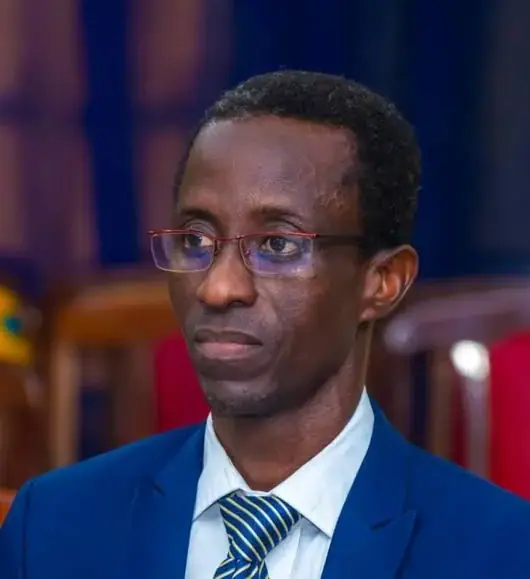
Prof Peter Olapegba has assumed office as the 14th Vice-Chancellor of the University of Ibadan, Oyo State, promising to provide purposeful leadership and reposition the institution as a global centre of excellence. Olapegba unveiled an agenda that includes transforming the university through digitalisation, artificial intelligence, research development, improved staff welfare, infrastructure renewal, and stronger international partnerships. The ceremony, which included a thanksgiving service and an inaugural lecture, was held at the Chapel of Resurrection and Trenchard Hall on the university campus in Ibadan.
Olapegba succeeded Prof Kayode Adebowale, who was announced as the 13th vice-chancellor on October 14, 2021, and officially assumed office on November 1, 2021. In his inaugural address, titled "From Tradition to Transformation: A Blueprint for Repositioning the University of Ibadan as an Architect of the Future," Olapegba said the institution must preserve its rich heritage while embracing changes required to remain relevant in a rapidly evolving world. He said his administration would build on the achievements of previous vice-chancellors rather than discard the foundations they had laid.
Olapegba, who joined the university’s service on June 1, 2000, said the strategic direction for 2026–2031 would be developed into a 10-year strategic plan to provide a clear roadmap for the institution’s next phase of development. The vice-chancellor's vision is to position the University of Ibadan as a global leader and centre of excellence in academics, cutting-edge research, human capital development, innovation, and service delivery. Olapegba described the university’s greatest asset as its people, stressing that academic and non-academic staff, students, alumni, and the wider university community would remain central to his administration’s policies.
Olapegba pledged to promote continuous professional development, mentorship, career advancement, merit, fairness, inclusivity, and accountability, while exploring practical ways of improving staff welfare. On students’ welfare, the vice-chancellor said his administration would adopt a student-centred service delivery model without compromising the intellectual standards and academic rigour for which the institution is known. He identified access to information, responsive administrative systems, adequate learning facilities, reliable digital services, campus safety, and graduate employability as critical areas requiring attention.
Olapegba described artificial intelligence as a major force reshaping higher education, saying the university must move beyond consuming AI technologies to becoming a creator, researcher, regulator, and responsible user of them. He declared that the university must build an AI-ready institution, which would involve strengthening digital infrastructure, establishing smart classrooms and laboratories, modernising digital libraries, and equipping staff and students with AI literacy. Olapegba also emphasised the need for the institution to become more research-intensive and produce knowledge capable of addressing Nigeria’s developmental challenges.
On funding, Olapegba acknowledged that government support remained essential but argued that the university must diversify its revenue sources to meet the financial demands of modern higher education. He listed research grants, endowments, philanthropy, alumni contributions, industry partnerships, consultancy, knowledge commercialisation, intellectual property, executive education, and university enterprises as potential sources of sustainable funding. Olapegba also drew attention to the university’s forthcoming 80th anniversary in 2028, describing the milestone as an opportunity to reflect not only on its achievements but also on what it must prepare for future generations.
Oyo State Governor, Seyi Makinde, represented by his deputy, Bayo Lawal, commended the university’s management for a smooth transition. Olapegba expressed gratitude to God, the Governing Council, his predecessor, Prof Adebowale, former vice-chancellor, Prof Abel Olayinka, members of staff, religious leaders, family, and friends, and pledged to serve the institution with dedication and fairness. The events attracted dignitaries from various walks of life, including Lawal, Senator Sharafadeen Alli, Remi Oseni, Prof Musibau Adetunji, Prof Oluwole Alalade, and traditional rulers from the Ibarapa zone.
Key points
- Olapegba's administration will focus on digitalisation, artificial intelligence, and research development to reposition the University of Ibadan as a global centre of excellence.
- The vice-chancellor promised to promote continuous professional development, mentorship, and career advancement for staff, and adopt a student-centred service delivery model for students.
- Olapegba emphasised the need for the university to diversify its revenue sources, become more research-intensive, and build an AI-ready institution to remain relevant in a rapidly evolving world.