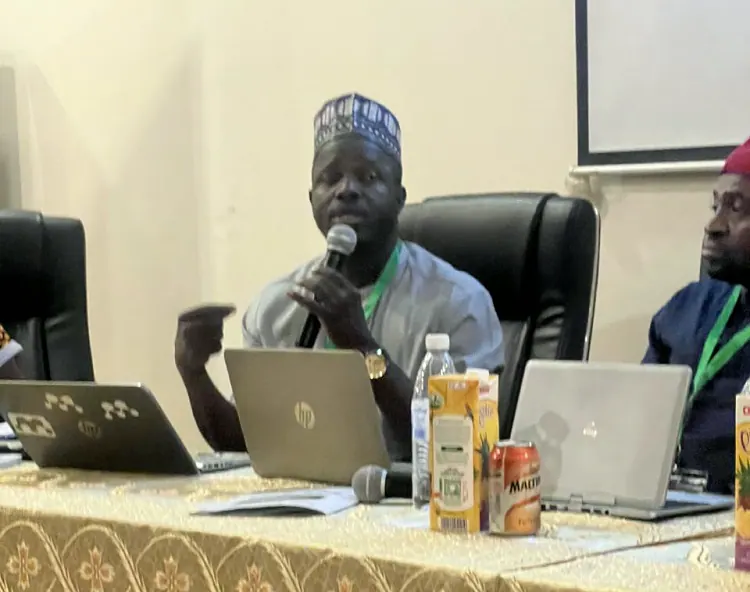
Researchers at the 2026 Africa University Seminar Series Nigeria (AUSS-NG) conference in Lagos have called for a peacebuilding approach to address farmer-herder conflicts through solutions journalism. Dr. Ridwan Kolawole, a media and conflict researcher at the University of Ibadan, and Dr. Yikwab Yikwabs, a sociologist at the Federal University, Lokoja, presented papers on the need for a new approach to reporting conflicts. The conference was hosted by the Institute for African and Diaspora Studies, University of Lagos.
Dr. Kolawole's presentation, titled "It is Not All About the Negative Slant: Exploring Solutions Perspectives to Nigerian Media Reportage of Farmer-Herder Conflict," highlighted the need for journalists to go beyond negative reporting and explore solutions to social problems. He argued that while reporting the realities of conflicts is essential, journalism should also examine responses to social problems with the aim of addressing them. Kolawole's study found that Nigerian newspapers' reportage of farmer-herder conflicts was predominantly conflict-escalatory.
The study analyzed the reportage of farmer-herder conflicts in selected Nigerian newspapers and found that the media's preoccupation was centered on blameworthy labeling, ethnic profiling, and derogatory appellations. However, Kolawole noted that some reports featured reconciliation, peacebuilding, and conflict resolution, showing that solutions journalism is possible. He enjoined journalists to remain committed to factual and truthful reporting and to give people hope instead of pervasive problem-escalatory reporting.
Dr. Yikwabs' presentation, titled "Coping Strategies Employed by Orphans and Widows as a Result of Farmer-Herder Conflict in North Central, Nigeria," highlighted the plight of children and women who became orphans and widows as a result of farmer-herder conflicts in Benue and Plateau states. He noted that institutional responses to this challenge have offered only immediate aid, without addressing long-term needs such as education for orphans and livelihood restoration for widows.
The AUSS-NG 2026 Conference, with the theme "Citizenship, Belonging and Geographies of Conflict in Contemporary Nigeria," brought together discussions on identity, politics, historicization of conflict, religionization of politics, and politicization of religion as drivers of conflict in Nigeria. The conference was attended by the Deputy Vice Chancellor of the University of Lagos, Professor Muyiwa Falaye, and the Director of the Institute for African and Diaspora Studies, Professor Ayo Yusuff.
Both Dr. Kolawole and Dr. Yikwabs are alumni of the SSRC's APDD doctoral fellowship, which aims to support early-career researchers in Africa. Dr. Kolawole won the doctoral fellowship in 2019, 2020, and 2022, while Dr. Yikwabs received the fellowship in 2021 and 2022. The researchers' presentations emphasized the need for sustained intervention by governments and other stakeholders to address the root causes of farmer-herder conflicts.
The conference provided a platform for researchers to share their findings and advocate for a new approach to addressing farmer-herder conflicts in Nigeria. The researchers' call for solutions journalism and sustained intervention highlights the need for a comprehensive approach to addressing the complex issues driving conflicts in Nigeria. Key stakeholders must work together to address the root causes of these conflicts and promote peacebuilding and reconciliation.
Key points
- Dr. Ridwan Kolawole advocates for solutions journalism to address farmer-herder conflicts in Nigeria.
- The media's reportage of farmer-herder conflicts has been predominantly conflict-escalatory.
- Sustained intervention by governments and other stakeholders is necessary to address the root causes of farmer-herder conflicts.