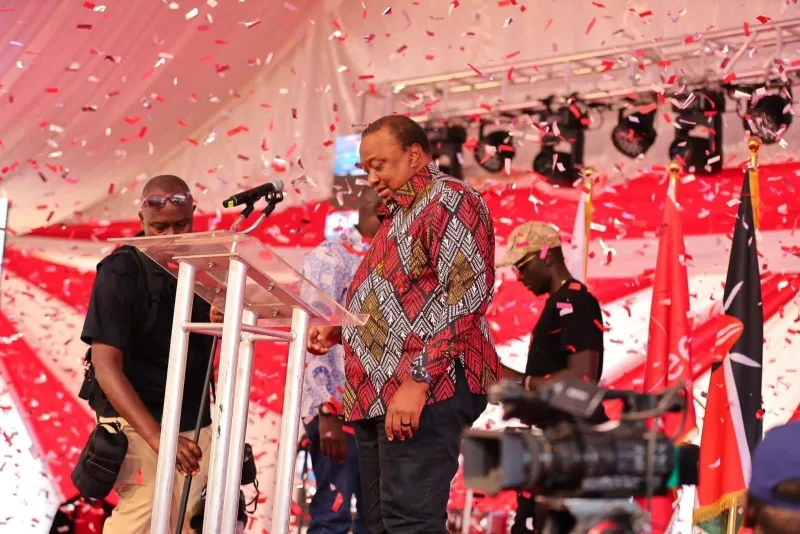
Former President Uhuru Kenyatta's decision to remain active in politics is adding another dimension to the 2027 General Election, as opposition parties explore ways of working together to challenge President William Ruto. Uhuru recently handed over the Jubilee Party leadership to former Interior CS Fred Matiang'i, but said he would remain in the party as a senior adviser and continue participating in its affairs. This move means Uhuru is stepping away from the formal leadership of Jubilee without withdrawing from politics.
Uhuru has called on the party to begin preparing for the 2027 elections and to work with other political formations, placing him in a potentially important role as opposition parties discuss possible cooperation and coalition arrangements. Political analyst Albert Kasambeli said the key question is how far Uhuru will use his political influence. His continued involvement, he said, could extend beyond Jubilee's presidential politics to parliamentary, gubernatorial and other elective contests as parties position themselves for the 2027 elections.
Political commentator Caleb Burudi said Uhuru's continued involvement is likely to draw attention to the role he could play as opposition parties seek to overcome their differences and potentially unite behind a common presidential candidate. A key question will be whether Uhuru chooses to actively campaign for candidates seeking to defeat Ruto, including a potential joint opposition presidential candidate, or limits his role to party and coalition-building efforts.
Uhuru's decision to remain active also raises questions about whether he could reactivate political networks built during his years as President and Jubilee leader. Such networks could potentially be used to mobilise support for opposition candidates, strengthen grassroots structures and help coordinate campaigns across different parts of the country. Jubilee has already positioned Matiang'i as its presidential candidate for 2027, while Uhuru has asked party members to accept Matiang'i as he moves into the senior adviser role.
Financing could become another issue surrounding Uhuru's continued political involvement. Kenya Kwanza politicians have previously accused him of supporting or financing opposition activities, claims Uhuru has publicly denied. Matiang'i has also rejected the framing of opposition activity as rebellion and defended Uhuru's right to participate in politics. Burudi said the distinction, however, remains important — between Uhuru personally financing candidates and his wider political networks helping parties mobilise resources.
Uhuru has also demonstrated that his return to active politics could give Ruto another political voice to contend with. During the Jubilee leadership handover, he criticised the President for continuing to blame his administration for problems facing the country. Some leaders allied to the administration have called on Uhuru to leave active politics, while others have defended his continued political participation and right to express his views.
As opposition parties continue consultations, the central question will be what role Uhuru ultimately chooses to play. He cannot seek another presidential term, but his position as a former President, senior Jubilee figure and experienced coalition-builder gives him several possible avenues of involvement, from advising the party and mobilising its structures to campaigning for candidates and participating in broader opposition negotiations.
Key points
- Uhuru's continued involvement in politics could extend beyond Jubilee's presidential politics to parliamentary, gubernatorial and other elective contests.
- Uhuru's influence could be used to mobilise support for opposition candidates, strengthen grassroots structures and help coordinate campaigns.
- Financing could become another issue surrounding Uhuru's continued political involvement, with accusations of supporting or financing opposition activities.