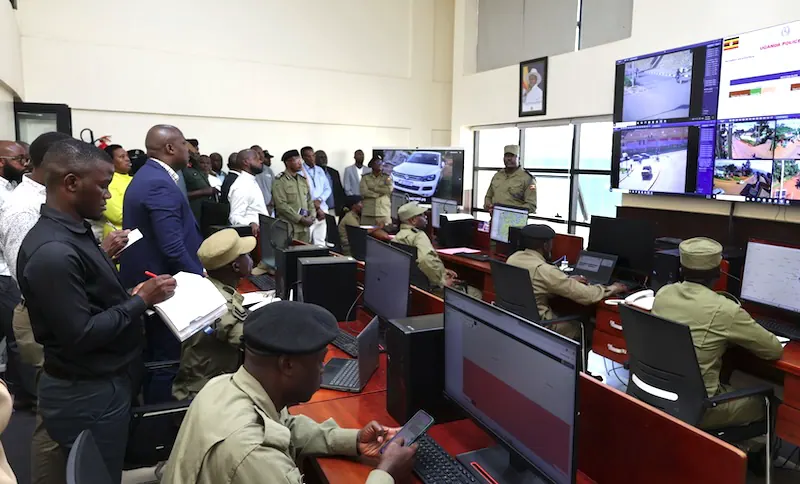
Uganda's Parliamentary committee on Physical Infrastructure has verified the effectiveness of the digital number plate system in tracking vehicles. Led by committee chairperson Mwine Mpaka, legislators visited the Police Command Centre in Naguru to witness the system's operation. This followed concerns raised by stakeholders about the system's security, functionality, and capabilities. The visit aimed to scrutinize the Digital Number Plate Project.
The committee sought to establish whether the system's security component was working, following concerns raised by stakeholders. Police director of ICT, AIGP Felix Baryamwisaki, reported a 90 per cent recovery rate of stolen motor vehicles, with 337 out of 375 recovered. However, Mpaka and the committee wanted a practical demonstration of the system's capabilities. They resolved to visit the monitoring centre to test the system using their own number plates.
At Naguru, MPs were shown how digital registration plates support police in identifying, tracking, and recovering vehicles. The committee was presented with documented security results demonstrating the system's role beyond vehicle registration and plate issuance. This demonstration addressed concerns raised during previous hearings over delays in number plate issuance, production capacity, costs, and communication with motorists.
The committee examined issues alongside the system's security capabilities, seeking clarification on information generated and stored. Sam Okiding, deputy Chief of Defence Forces, said he was convinced that the data is stored in Uganda. Mpaka stated that the committee is looking at the cost and capacity of the contractor, with no opposition to the project.
During a production inspection, MPs observed the number plate manufacturing process, existing stocks, and ongoing production and installation operations. The facility produces 2,500 number plate kits per day, or 50,000 per month, supporting current registration and fitment requirements. Over 300 Ugandan employees work on the project, which supports more than 900 additional jobs in related industries.
The facility has reached 80 per cent localisation, making it the first full-cycle number plate production facility in East Africa. MPs observed production lines, available stocks, and ongoing operations. The committee established that the plate backlog had been cleared, registration and fitment times had fallen sharply, and police were using digital number plate technology to trace and recover stolen vehicles.
The committee's findings indicate that the digital number plate system is effective in tracking vehicles. Mpaka said the issue of digital number plates is important, and they need to improve the system. The project supports police operations, and the committee's scrutiny aims to ensure the system's effectiveness and efficiency.
Key points
- The digital number plate system has a 90 per cent recovery rate of stolen motor vehicles.
- The facility produces 2,500 number plate kits per day, or 50,000 per month.
- The project has reached 80 per cent localisation, making it the first full-cycle number plate production facility in East Africa.