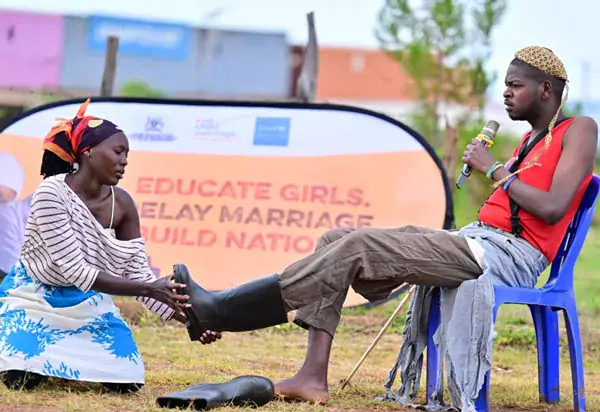
As Uganda marks World Children's Day, child rights advocates are highlighting a critical issue that prevents many children from speaking out about abuse. According to conversations held in the Sebei sub-region, children often fear their parents' reactions more than the abuse itself. This fear leads to underreporting of cases, with many children choosing silence over disclosure. Josheba Chebet, a 15-year-old Primary Seven candidate, shared that children remain quiet because they fear being shouted at or beaten before they can finish explaining what has happened.
The fear of harsh parental reactions is a significant barrier to children disclosing abuse. Rebecca Chelimo, a Primary Five pupil, echoed Chebet's sentiments, saying parents are sometimes very harsh and do not want to hear what their children have to say. This fear is not unfounded, as many parents react angrily or violently when their children report abuse. As a result, children often suffer in silence, making it harder for families, communities, and authorities to protect them. The Uganda Police Force's 2025 Annual Crime Report recorded 10,492 cases of defilement, but advocates stress that many cases go unreported.
World Children's Day is observed annually on November 20 to promote children's rights and remind society of the need to protect and listen to the young. This year's theme, "Children's Voices for Safer Communities and Stronger Rights," emphasizes the importance of children's participation in creating safer communities. In Uganda, national commemorations include child-led discussions, a Children's Parliament, music, drama, and sports events involving children from Kapchorwa, Kween, and Bukwo districts. These activities aim to promote teamwork, inclusion, and child rights while calling for safer communities and protection from harmful practices.
Violence against children remains a serious concern in Uganda, despite some improvement in reported figures. According to the Uganda Police Force's 2025 Annual Crime Report, 10,492 cases of defilement were recorded, down from 12,312 the previous year. However, advocates stress that many cases still go unreported because children fear speaking up at home. The real scale of abuse is likely higher, and child rights actors say that interconnected forms of abuse and exploitation often thrive in silence when children are too afraid to speak or when adults fail to listen without first reacting harshly.
Child labour, teenage pregnancy, and child marriage are persistent challenges in Uganda. The 2024 National Population and Housing Census found that 610,790 children aged 10 to 17, or 6.7 percent, were either currently married or had ever been married. Nationally, about 34 percent of young women aged 20 to 24 were married before the age of 18, with an estimated 5.5 million girls and women living in Uganda having been married as children. Child labour also remains widespread, with 6.2 million children aged 5 to 17, about 40 percent of that age group, engaged in child labour.
Some parents acknowledge the gap in listening to their children and providing a safe space for disclosure. Stella Cherop admitted that many adults focus on providing food, health care, and education while neglecting the basic responsibility of listening to their children. Twaibu Twalla, a driver and parent, urged fellow parents to deliberately build friendship with their children, making them feel comfortable disclosing abuse. Uthman Fadul Chemonges, the deputy speaker of Kapchorwa District, noted that when children feel they will not be believed or will face further punishment for disclosing abuse, they suffer in silence.
Child rights advocates emphasize the importance of listening to children and creating a safe space for disclosure. Dr. Robin Nandy, the UNICEF Representative, emphasized one of the core promises of the Convention on the Rights of the Child, noting that when decisions are made about a child's life, the child has the right to be heard and taken seriously. Samuel Ngirio, the speaker of the Sabiny cultural clans leadership, described listening as a critical part of parenting, stressing that it builds trust and creates a safe space for children to open up about their challenges.
Key points
- Children in Uganda fear their parents' harsh reactions to disclosures of abuse, leading to underreporting of cases.
- The Ugandan government and partners are promoting children's participation and rights through activities such as child-led discussions and sports events.
- Child rights advocates emphasize the importance of listening to children and creating a safe space for disclosure to prevent further harm.
Reporting sources
- Children fear their parents more than abusers! · The Independent magazine