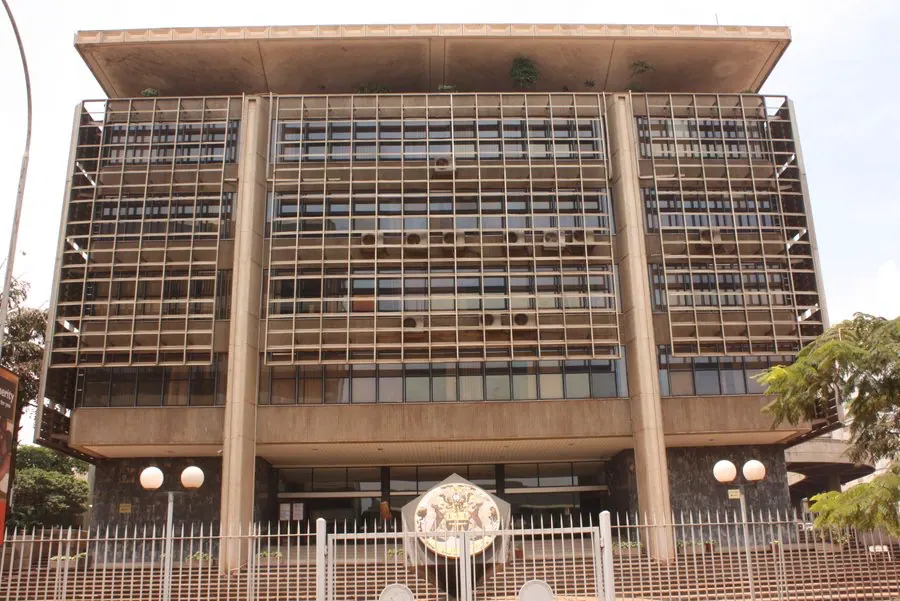
The Ugandan government is increasingly relying on the domestic market to finance its spending, with a focus on Treasury bills and bonds. This shift comes as the country's total public debt stock stands at Shs143.92 trillion, up from Shs125.23 trillion a year earlier. Domestic debt accounts for Shs80.72 trillion, or 56.1 percent of the total debt stock. The Bank of Uganda is encouraging more Ugandans to participate in the government securities market.
The government securities market allows individuals to lend money to the government and earn a return. Treasury bills are short-term securities issued for 91, 182, and 364 days, while Treasury bonds are longer-term investments with maturities ranging from two to 25 years. According to Immaculate Nakato, Acting Team Lead in the Financial Markets Department, Ugandans can invest from as little as Shs100,000. To participate, an investor needs an ordinary bank account and a Central Securities Depository account opened through a regulated commercial bank.
To invest in government securities, an investor can instruct their bank to purchase the securities on their behalf. Treasury bills are sold at a discount, with the investor receiving the full face value at maturity. Treasury bonds pay interest through coupons, usually every six months. The Bank of Uganda is promoting the government securities market as a way for Ugandans to invest and earn a return.
The government's increased reliance on the domestic market comes at a time of growing pressure on public finances. The 2026/27 National Budget Framework Paper projects domestic borrowing of Shs8.953 trillion, compared with Shs11.381 trillion in 2025/26. The government plans to reduce domestic borrowing to ease pressure on private sector credit and manage rising debt and interest costs.
Domestic interest payments are projected at Shs10.716 trillion in 2026/27, while total interest payments are expected to reach Shs12.735 trillion. The growth in domestic debt raises questions about how much money the government absorbs from the local financial market and what remains available for businesses and households seeking credit.
Economist Samuel Muhindo cautions investors about interest rate and price risks, particularly when Treasury bonds are sold before maturity. He notes that bond prices can fall when market yields rise, and investors who hold securities to maturity are exposed differently from those actively trading them. Muhindo advises investors to understand the tenure, expected return, prevailing market conditions, and risks before committing their money.
The government's shift to domestic borrowing is aimed at easing pressure on private sector credit and managing rising debt and interest costs. The Bank of Uganda is encouraging more Ugandans to participate in the government securities market, which offers a range of investment options with varying maturities and returns. As the government continues to navigate its public debt, it will be important to monitor the impact on the local financial market and the economy as a whole.
Key points
- Uganda's total public debt stock stands at Shs143.92 trillion, with domestic debt accounting for 56.1 percent of the total.
- The government plans to reduce domestic borrowing to ease pressure on private sector credit and manage rising debt and interest costs.
- Domestic interest payments are projected at Shs10.716 trillion in 2026/27, while total interest payments are expected to reach Shs12.735 trillion.