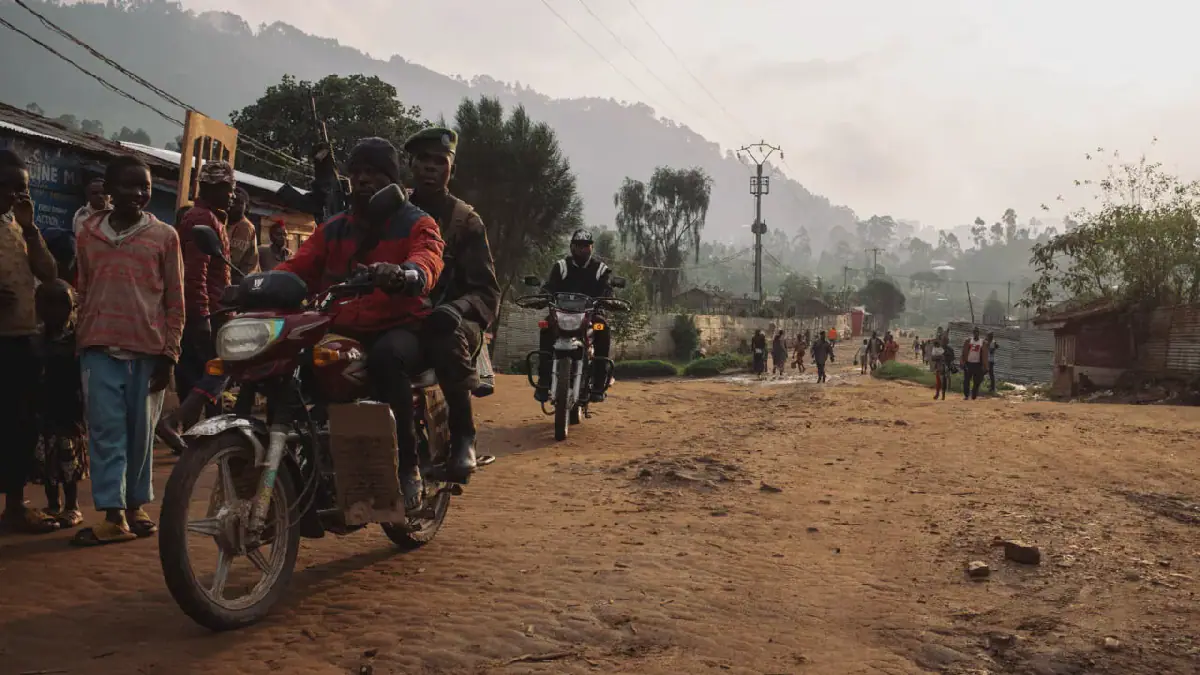
Uganda's army has announced plans to withdraw its troops from the town of Lubero in North Kivu, DR Congo, citing increased attacks from militias reportedly linked to the Congolese government. The announcement comes amid escalating tensions between Uganda and DR Congo. The region has faced violence for over 30 years, often involving neighboring countries like Uganda and Rwanda through local armed group support.
The conflict in eastern DR Congo involves various armed factions, including the Allied Democratic Forces (ADF), a Ugandan rebel group formed in 1995, and the FRN, an anti-government group formerly known as M23. The Congolese army is engaged in combat with these groups, which are believed to have backing from neighboring countries. Ugandan forces have been stationed in Ituri and North Kivu provinces since 2021 to assist the Congolese military against militants affiliated with the Islamic State.
The planned withdrawal of Ugandan troops from Lubero follows inflammatory remarks made by Ugandan army chief Muhoozi Kainerugaba on social media. Kainerugaba threatened to seize the strategic town of Walikale and demanded the surrender of the airport in the provincial capital, Isiro. The Congolese government responded, declaring the remarks "particularly serious" and reiterating its commitment to protecting its dignity against provocations.
A Ugandan army spokesman noted that the planned withdrawal from Lubero is due to increased attacks on civilians, particularly targeting vulnerable communities such as the Bahema and Tutsi in Ituri and North Kivu. The spokesman accused militia groups, including those seemingly linked to the Congolese government, of perpetrating these attacks. The Ugandan force's obligation under International Humanitarian Law to safeguard these communities was affirmed.
The Congolese government had summoned the Ugandan embassy's head over Kainerugaba's comments, which were seen as a provocation. The government reiterated its commitment to protecting its dignity and sovereignty. The incident highlights the complex relationships between neighboring countries in the region and the challenges of addressing the ongoing conflict in eastern DR Congo.
The mineral-rich eastern DR Congo has faced violence for over 30 years, with various armed factions vying for control. The conflict has resulted in significant humanitarian challenges, with many civilians caught in the crossfire. The international community has called for a peaceful resolution to the conflict, with the Ugandan and Congolese governments working to address the issues.
The withdrawal of Ugandan troops from Lubero is seen as a significant development in the region. The incident highlights the need for a coordinated approach to addressing the conflict in eastern DR Congo. Key points include the need for the international community to support efforts to address the humanitarian challenges in the region and for neighboring countries to work together to address the root causes of the conflict.
Key points
- The conflict in eastern DR Congo involves various armed factions and has resulted in significant humanitarian challenges.
- The international community has called for a peaceful resolution to the conflict.
- The withdrawal of Ugandan troops from Lubero is seen as a significant development in the region.
Reporting sources
- Uganda to Withdraw Troops from DR Congo Town Following Army Chief’s Threat · sierraleonetoday.co.com