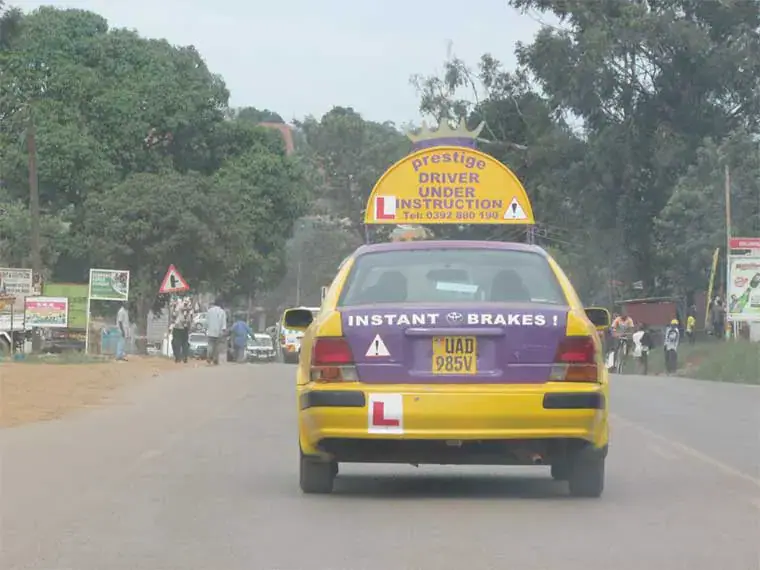
The Ugandan government has announced plans to introduce computer-based testing for driving permit applicants, replacing direct assessments by officers of the Inspectorate of Vehicles (IOV). This new system aims to use computers to assess applicants' competence to drive, rather than relying on interactions with individual IOV officers. According to Appolo Kashanku, assistant commissioner in charge of road transport regulation and safety at the ministry of Works and Transport, the goal is to minimize human error and bias in the testing process.
The introduction of computer-based testing is part of a broader effort to improve road safety in Uganda. Kashanku emphasized that more than 80 per cent of road crashes in Uganda are linked to human behaviour and are therefore avoidable. He urged motorists, particularly motorcycle riders, to slow down, wear helmets, fasten seat belts, and observe speed limits, especially around schools, hospitals, and town centres. By reducing human error and promoting a culture of safety, the government hopes to decrease the number of road crashes and fatalities.
The government is also preparing to reintroduce the Express Penalty Scheme (EPS) as part of its renewed efforts to reduce road crashes and promote discipline among motorists. The scheme will target motorists who violate traffic regulations, with penalties directed at dangerous driving behaviour. According to Kashanku, the government has consulted relevant stakeholders and put in place the necessary legal framework to facilitate the scheme's reintroduction. This move is expected to encourage motorists to adhere to traffic regulations and reduce the number of road crashes.
In addition to introducing computer-based testing and reintroducing the EPS, the government plans to establish road safety committees at the district level next year. These committees will aim to expand public awareness and encourage communities across the country to participate in addressing the problem of road safety. By engaging local communities and promoting a culture of safety, the government hopes to reduce the number of road crashes and fatalities.
Kashanku also revealed that the government is engaging the Insurance Regulatory Authority (IRA) over concerns surrounding the third-party motor insurance system. Existing arrangements will be reviewed where they are not delivering the intended results. The goal is to ensure that the insurance system is effective in providing support to victims of road crashes and promoting road safety.
The impact of road crashes on Uganda's economy and society is significant. According to Kashanku, road crashes cost Uganda an estimated three per cent of its Gross Domestic Product (GDP) annually, while many of those killed are around 30 years old and therefore in the prime of their productive lives. The government is committed to addressing this issue and promoting road safety through a range of initiatives.
Finally, Kashanku urged churches and mosques to incorporate road safety messages into their preaching, arguing that the issue deserved the same level of public attention as the fight against HIV. He emphasized that all Ugandans are potential victims of unsafe roads and that a continuous public awareness campaign is needed to promote road safety. By working together, the government and civil society can reduce the number of road crashes and fatalities and promote a culture of safety in Uganda.
Key points
- The Ugandan government plans to introduce computer-based testing for driving permits to reduce human error and increase road safety.
- The government aims to reduce road crashes and fatalities by promoting a culture of safety and encouraging motorists to adhere to traffic regulations.
- Road crashes cost Uganda an estimated three per cent of its GDP annually, with many victims being young people in the prime of their productive lives.