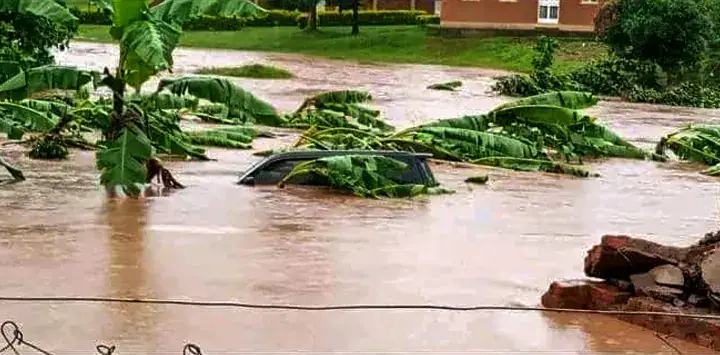
The Ugandan government is shifting its approach to disaster management, focusing on anticipatory action to mitigate extreme weather risks. This approach aims to protect lives, livelihoods, infrastructure, and the environment from climate-related emergencies such as floods, strong winds, lightning, and droughts. According to Dr. Alfred Okot Okidi, Permanent Secretary of the Ministry of Water and Environment, anticipatory action is crucial in strengthening Uganda's resilience to climate variability and extreme weather events.
The anticipatory action approach involves taking early, coordinated measures based on weather forecasts, climate information, and risk assessments. This includes community awareness campaigns, preparedness planning, protection of vulnerable infrastructure, and measures to safeguard agricultural production and water resources. Dr. Okidi emphasizes the importance of using available climate information to inform planning and decision-making, enabling communities and institutions to prepare for potential disasters.
El Niño, a climate phenomenon associated with changes in ocean temperatures in the central and eastern equatorial Pacific, can influence rainfall patterns across East Africa. Uganda is at risk of heavy rainfall, flooding, landslides, and disruptions to essential services. Dr. Okidi stresses the need to strengthen early-warning systems and ensure that climate information reaches the people and institutions that need it most.
The Department of Meteorological Services will continue to guide farmers, urban communities, transport authorities, and disaster-management agencies, who can benefit from timely forecasts and clear guidance on preparedness measures. Anticipatory action also requires investment in resilient infrastructure, sustainable land and water management, and community-level disaster preparedness.
In flood-prone areas, preparedness efforts may involve clearing drainage channels, identifying safe evacuation routes, and protecting critical facilities. In agriculture, timely advisories can help farmers make informed decisions about planting, water management, and crop protection. The Ministry of Water and Environment has a central role in promoting the use of climate information and strengthening water-resource management.
Collaboration with relevant government agencies and development partners is essential in ensuring that preparedness efforts are coordinated and reach vulnerable populations. Dr. Okidi emphasizes that effective coordination is key among government institutions, local authorities, humanitarian organizations, and communities.
By acting before extreme weather impacts communities, Uganda can reduce avoidable losses and build greater resilience to future climate shocks. The broader priority is to strengthen preparedness, improve coordination, and ensure that climate risks are considered in development planning.
Key points
- Uganda is strengthening its focus on anticipatory action to reduce extreme weather risks linked to El Niño and other hazards.
- The approach involves taking early, coordinated measures based on weather forecasts, climate information, and risk assessments.
- Effective coordination among government institutions, local authorities, humanitarian organizations, and communities is essential in ensuring preparedness efforts are coordinated and reach vulnerable populations.