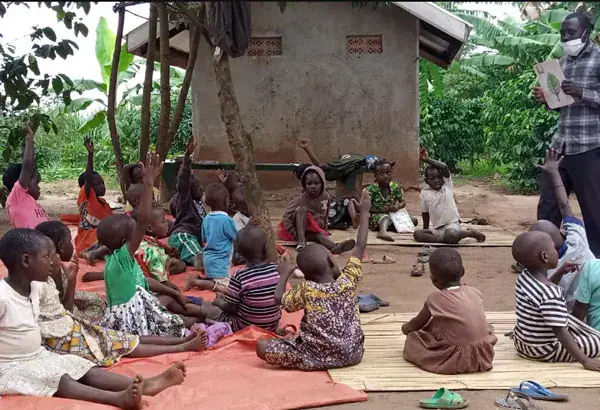
A recent report by UNESCO, developed jointly with UNICEF and the Organisation for Economic Co-operation and Development (OECD), warns that progress in early childhood care and education is stagnating globally. The report highlights that millions of children are missing out on early learning opportunities, essential for school readiness, lifelong development, and breaking the cycle of poverty. On November 20, as the world marked World Children's Day, UNESCO released the report, emphasizing the need for increased investment in early childhood education.
The report reveals that only 59% of children entering primary school worldwide have received at least one year of pre-primary education, a proportion that has barely changed since 2015. In sub-Saharan Africa, participation in early childhood education one year before the official primary school entry age remains close to 50%. For Uganda, the challenge is not only getting more children into school but also ensuring they receive quality learning during the early years.
UNESCO estimates that achieving at least one year of pre-primary education for every child by 2030 will require over $35 billion in additional annual global investment. Low- and lower-middle-income countries, including Uganda, will need an average of $69 billion annually between 2027 and 2030 to meet their targets while maintaining minimum quality standards. Public financing is projected to cover only about half of these requirements.
UNESCO Director-General Khaled El-Enany emphasizes that neglecting early childhood education has severe consequences, including undermining children's development and learning, deepening inequalities, and weakening economies. He calls on countries to establish sustainable, equitable, and coordinated financing systems that prioritize the youngest and most disadvantaged children.
A November 2023 Uwezo-Uganda policy brief provides insight into Uganda's early learning landscape. The study found that fewer than half of children aged three to five reported being enrolled in early childhood education. Specifically, 47% reported being enrolled, while 38% were not enrolled in any school at all. The brief also cites significant regional disparities, with children in the central region nearly two and a half times more likely to have attended ECE than their counterparts in the northern region.
The Uwezo survey also found that children who had attended ECE were 10 percentage points more likely to read at least words in English and reach at least the subtraction level in numeracy than peers who had not attended. The researchers adjusted their analysis to account for differences in socio-economic background, suggesting that children who attended ECE were about 1.4 years, or 17 months, further ahead in their learning trajectory than children of similar age and socioeconomic circumstances who had not attended.
The report highlights the economic benefits of investing in early childhood education, with every dollar invested estimated to generate $3.76 in additional global GDP by 2035. However, the cost of inaction averages 3% of gross domestic product globally and can reach 7% in low-income countries. Policymakers in Uganda and globally face the challenge of expanding access to early childhood education, particularly in underserved communities, to address the growing early education crisis.
Key points
- UNESCO warns of a growing global early education funding gap, with Uganda facing deep inequalities in access.
- The country requires targeted investment in early childhood education to address regional disparities and ensure quality learning.
- Investing in early childhood education can generate significant economic benefits, including an estimated $3.76 in additional global GDP by 2035.
Reporting sources
- Uganda’s youngest learners are being left behind as UNESCO warns of a growing early education crisis · The Independent magazine