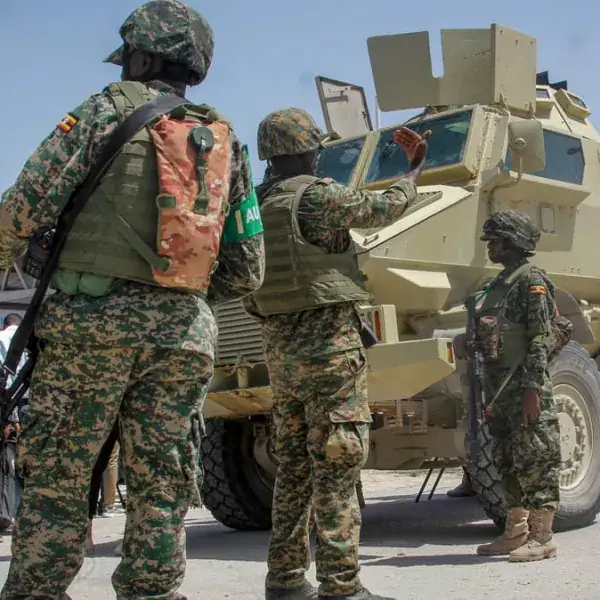
Uganda's withdrawal of troops from key military positions in southern Somalia has raised concerns about security around the capital Mogadishu. The withdrawn troops were stationed in strategic locations, including Sabid and Caanoole, Bariire, Awdheegle, and Buulo-Gaduud, which connect southern Somalia with Mogadishu and protect routes leading to the capital. These locations are crucial in Lower Shabelle, a region that has witnessed years of fighting between Somali government forces and Al-Shabaab militants.
The withdrawn positions served as an important defensive belt for Mogadishu, particularly in Lower Shabelle and around key bridges. Regional security analyst Samira Gaid noted that areas surrounding Mogadishu were crucial for preventing militant advances towards the capital. Ugandan troops had maintained positions in these areas for years, helping secure strategic routes and prevent militant advances. The withdrawal has raised concerns about the potential for Al-Shabaab to regain ground or increase pressure on communities surrounding the capital.
Uganda has already repatriated 109 soldiers who departed from Mogadishu last week as part of a broader plan to reduce its military presence in Somalia. The Ugandan military announced on November 2 that it would gradually withdraw all its forces from Somalia, including troops serving under the African Union Support and Stabilization Mission in Somalia (AUSSOM). The withdrawal is expected to be completed by the end of 2027. Somalia's federal government has said its national army will take over the military positions vacated by Ugandan forces.
However, questions remain over whether the Somali military has sufficient manpower, equipment, and logistical capacity to maintain control of the strategically important positions. Army chief General Mohamed Ali Barise said preparations for the handover had already been made, indicating that Somali forces were expected to assume responsibility for securing the locations. The concerns come as AUSSOM faces significant financial constraints that have affected the mission's ability to provide troops with adequate supplies, transport, and operational support.
The African Union mission plays a central role in supporting Somali forces in operations against Al-Shabaab, which continues to control parts of the countryside and carry out attacks against military installations, government officials, and civilians. Security analysts have warned that any gaps created by the withdrawal could provide an opportunity for the militants to regain ground or increase pressure on communities surrounding the capital. A failure by Somali forces to establish effective control over the vacated positions could also threaten important supply routes and undermine security gains made during years of joint operations with African Union troops.
The withdrawal marks another significant stage in Somalia's long-running effort to assume full responsibility for its national security after decades of reliance on international military support. It also presents a major test for the federal government, which must demonstrate that its forces can independently defend strategic territory, protect major routes, and prevent Al-Shabaab from exploiting the changing security arrangements. The success of the transition will depend not only on the physical handover of military bases but also on whether Somali forces receive the necessary personnel, equipment, funding, and logistical support to hold them.
The transition will be closely watched by regional and international observers, who are keen to see whether Somalia's federal government can effectively take over security responsibilities from African Union troops. The outcome will have significant implications for the country's long-term stability and security. Key to the success of the transition will be the Somali military's ability to establish effective control over the vacated positions and prevent Al-Shabaab from exploiting any security gaps created by the withdrawal of Ugandan troops.
Key points
- The withdrawal of Ugandan troops from southern Somalia has raised concerns about security around the capital Mogadishu.
- The Somali military is expected to take over the military positions vacated by Ugandan forces, but questions remain over its capacity to do so effectively.
- The success of the transition will depend on whether Somali forces receive the necessary personnel, equipment, funding, and logistical support to hold the vacated positions.