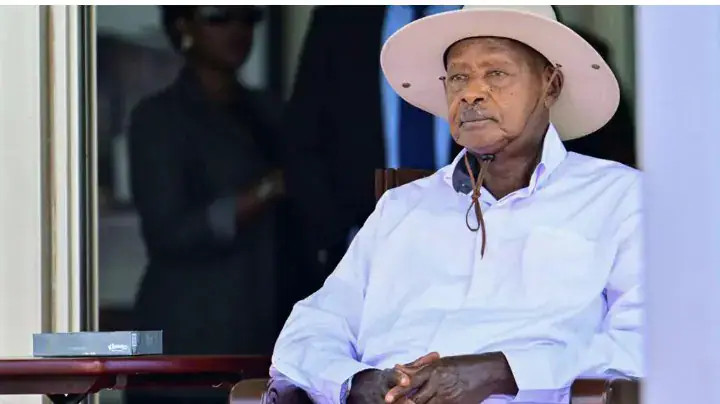
The National Resistance Movement (NRM), Uganda's ruling party, recently held a closed-door meeting to discuss the succession of President Yoweri Museveni. The meeting, which took place on November 10, was attended by several high-ranking party officials. According to Enoch Barata, the NRM's legal advisor, the meeting focused on internal party matters. The discussion comes amid speculation about who will succeed Museveni, who has been in power since 1986.
The succession debate has sparked controversy, with some party officials expressing reservations about Museveni's son, Muhoozi Kainerugaba, taking over as president. Muhoozi, a general in the Ugandan army, has been touted as a potential successor by some party members. However, others have raised concerns about his suitability for the role, citing his continued involvement in the military. On October 27, Museveni presented a document to the party leadership outlining the qualities he expects from his successor, including patriotism, pan-Africanism, and integrity.
According to Stephen Bwire, an NRM official, Muhoozi Kainerugaba possesses the qualities outlined by Museveni. However, Bwire also acknowledged that some party officials have expressed concerns about Muhoozi's continued role in the military. One official, David Calvin Echodu, reportedly suggested that Muhoozi should step down from his military position and assume a civilian role before being considered for the presidency.
During the closed-door meeting, Museveni reportedly asked party officials to discuss the possibility of his son succeeding him. According to a well-informed source, a vote was initiated but later interrupted due to a lack of sufficient support for Muhoozi. The NRM has since released a statement denying reports that the party leadership had rejected Muhoozi's candidacy, calling the claims "completely false".
The succession debate has sparked intense speculation about Uganda's future leadership. Museveni has been in power for over 35 years, and his eventual departure is expected to have significant implications for the country. The NRM's handling of the succession process will likely be closely watched by Ugandans and international observers alike.
The party's statement denying the rejection of Muhoozi's candidacy has done little to quell speculation about the succession debate. Many Ugandans are eager to see a peaceful transfer of power, but concerns about the country's stability and democratic institutions remain. As the debate continues, the international community will be watching closely to see how Uganda navigates this critical period.
The NRM's internal discussions about Museveni's succession are a significant development in Ugandan politics. While the party's leadership has sought to downplay reports of divisions within its ranks, the debate highlights the challenges facing the country as it looks to the future. As Uganda prepares for a potential transition of power, the international community will be watching closely to see how the country's democratic institutions respond to this critical test.
Key points
- The succession of President Yoweri Museveni has sparked debate within Uganda's ruling party, the NRM.
- Muhoozi Kainerugaba, Museveni's son, has been touted as a potential successor but faces opposition from some party officials.
- The NRM has denied reports that its leadership had rejected Muhoozi's candidacy, but speculation about the succession debate continues.