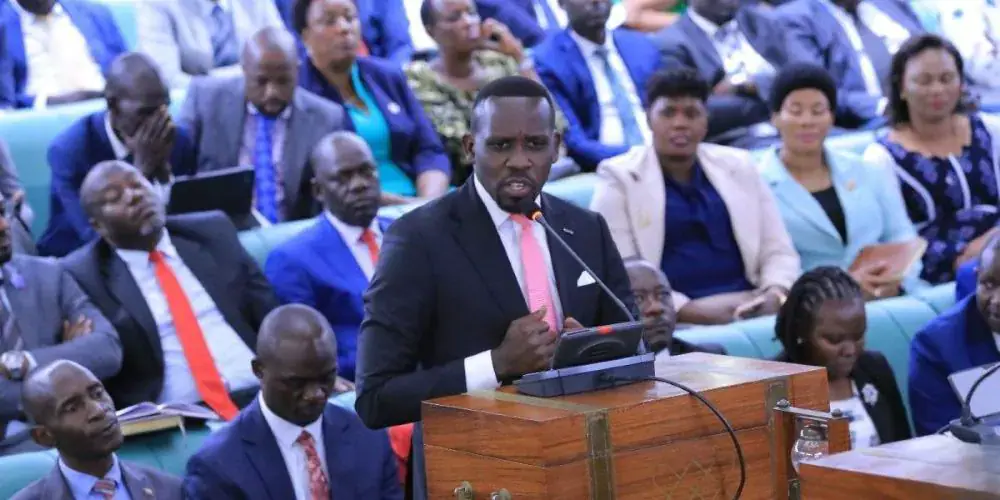
Ugandan Prime Minister Robinah Nabbanja recently expressed concern over the growing culture of habitual borrowing among citizens, including those with financial means, through mobile money platforms operated by MTN and Airtel. She noted that people, including herself, are affected by the prevalence of short-term loans. Nabbanja framed her remarks as a concern over personal financial indiscipline in an economy where digital credit has expanded rapidly. Mobile money loans have become a primary source of quick finance for many Ugandans.
The Prime Minister's comments sparked a sharp rebuttal from Leader of Opposition Joel Ssenyonyi, who accused the government of double standards. Ssenyonyi questioned the basis for assuming borrowers have means and linked household debt pressures to broader economic conditions. He argued that many Ugandans turn to MTN and Airtel because they are financially constrained, not out of profligacy. Ssenyonyi also pointed to the government's own frequent requests for parliamentary approval to borrow.
In 2025 alone, borrowers accessed at least Shs 2.75 trillion through mobile money platforms, with MTN Mobile Money accounting for the bulk, approximately Shs 2.7 trillion. The number of MTN borrowers rose from 2.2 million to 3.4 million. Finance ministry figures show Uganda's total public debt stock stood at Sh130.9 trillion (about US$35 billion) by the end of 2025. Domestic debt comprises the larger share at around 54.5%.
Debt levels as a percentage of GDP have hovered in the low-to-mid 50s in recent reporting periods. Finance Minister Henry Musasizi maintained that the debt remains sustainable over the medium term, citing fiscal consolidation efforts. However, interest payments and refinancing needs continue to absorb a significant portion of resources. State Minister for Urban Development Margaret Muhanga argued that individual over-indebtedness poses distinct risks.
Muhanga questioned the regulatory environment that allows widespread digital lending. Musasizi also interjected, noting that parliamentarians themselves participate in approving budgets that necessitate borrowing. Such funds are directed toward government obligations rather than consumption. Digital lending has improved financial inclusion and provided rapid access to small sums for emergencies, school fees, or working capital.
However, high effective interest rates, short repayment windows, loan stacking, and the linkage of defaults to national identification numbers have raised concerns about over-indebtedness and its impact on household resilience. Unpaid mobile loans can affect credit histories maintained by licensed credit reference bureaus. Nabbanja's intervention fits a pattern of government messaging on fiscal prudence, both at the household and national levels.
Opposition lawmakers counter that persistent deficits, ambitious infrastructure plans, and rising domestic borrowing costs shift the burden onto citizens through taxes, inflation pressures, and limited public service delivery. The government's borrowing is regulated under the Public Finance Management Act, 2015, which requires parliamentary authorisation for loans and establishes principles of fiscal responsibility.
Key points
- The Ugandan government faces criticism over its handling of mobile loans and public debt.
- Mobile money loans have become a primary source of quick finance for many Ugandans.
- The Leader of Opposition accused the government of double standards in its approach to borrowing.
Reporting sources
- Prime Minister, Leader of Opposition Clash over Mobile Loans · 88.2 Sanyu FM