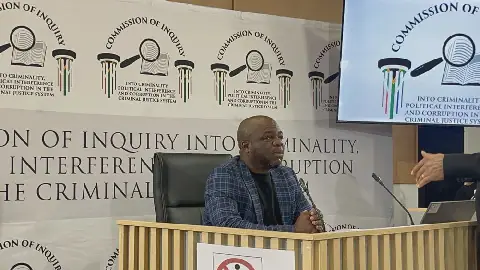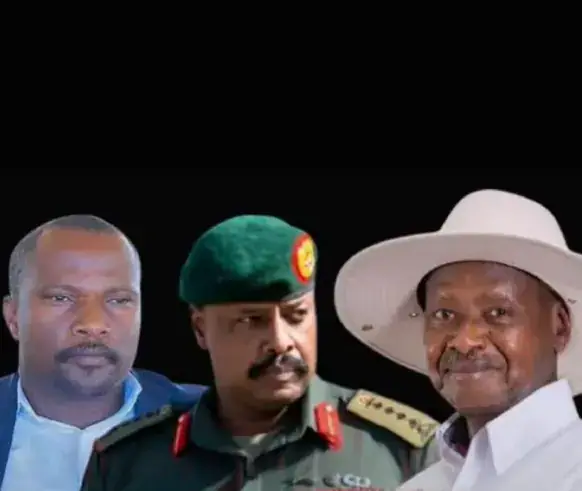
President Yoweri Museveni's Special Assistant, Yiga Kisakyamukama, has sparked controversy with his recent statements regarding Uganda's presidential succession plan. During a press briefing in Kampala on Wednesday, November 11, Kisakyamukama expressed support for Chief of Defence Forces (CDF) Gen. Muhoozi Kainerugaba to succeed Museveni as Uganda's next president. According to Kisakyamukama, Gen. Muhoozi will soon be appointed Vice President, paving the way for President Museveni to hand over power to him before the 2031 general elections.
Kisakyamukama's claims have raised eyebrows, particularly his assertion that once Gen. Muhoozi assumes office under the National Resistance Movement (NRM), Uganda will suspend elections for 10 years to focus on national rebuilding without campaign interference. This alleged plan has significant implications for Uganda's democratic processes and has sparked concerns among citizens and opposition groups. The idea of suspending elections for an extended period has been met with skepticism, with many questioning its feasibility and legitimacy.
According to Kisakyamukama, thousands of NRM cadres will be convened at the National Leadership Institute in Kyankwanzi within three weeks to receive talking points aimed at popularizing a Muhoozi presidency. This move is seen as an attempt to garner support for Gen. Muhoozi's potential candidacy and shape public opinion in his favor. However, it remains unclear whether these efforts will be successful in convincing Ugandans to support a Muhoozi presidency.
Kisakyamukama also noted that he has dropped his previous opposition to the Patriotic League of Uganda (PLU) following the replacement of former Secretary General David Kabanda with Fadhil Twalla. This development has been seen as a significant shift in Kisakyamukama's stance on the PLU, and it is unclear what implications this may have for Uganda's political landscape. The PLU has been a subject of controversy in Uganda, with some viewing it as a potential threat to the country's democratic institutions.
Despite Kisakyamukama's claims, State House, the NRM leadership, and the Electoral Commission have not issued any official statements confirming plans to alter the presidential succession timeline or suspend constitutional elections. This lack of official confirmation has left many questions unanswered, and it remains unclear what the future holds for Uganda's political transition. The absence of clear information has contributed to speculation and uncertainty about the country's democratic processes.
The controversy surrounding Kisakyamukama's claims has significant implications for Uganda's democratic institutions and its citizens. The potential suspension of elections for an extended period raises concerns about the country's commitment to democratic principles and the rule of law. As Uganda navigates this complex and uncertain period, citizens and international observers will be closely watching developments to ensure that the country's democratic processes are protected and strengthened.
The situation remains fluid, with many stakeholders eagerly awaiting official clarification on Uganda's presidential succession plan. As the country prepares for the 2031 general elections, it is essential that the government prioritizes transparency, accountability, and the rule of law to ensure a smooth and peaceful transfer of power. The international community will be watching closely to ensure that Uganda's democratic institutions are strengthened and that the country's citizens have a meaningful say in their governance.
Key points
- President Museveni's Special Assistant, Yiga Kisakyamukama, has sparked controversy with his claims about Uganda's presidential succession plan, including the potential suspension of elections for 10 years.