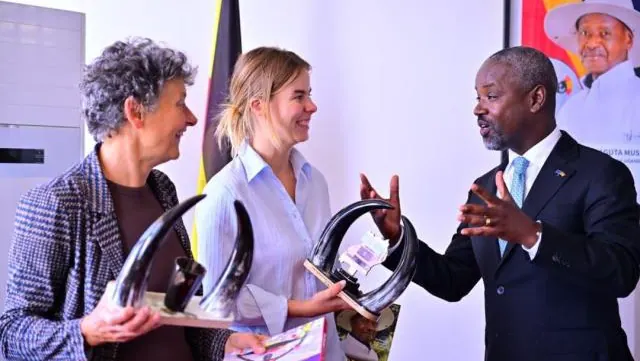
Uganda's Deputy Speaker of Parliament, Thomas Tayebwa, has called on the European Union to increase humanitarian support for refugees in the country. He made the appeal during a meeting with Members of the European Parliament, Tineke Strik and Anna Strolenberg, who are visiting Uganda to examine its refugee policies. Tayebwa warned that a deep funding shortfall is straining public services and host communities, as the country continues to shelter over two million refugees and asylum-seekers.
According to Tayebwa, Uganda's 2026 refugee response plan requires approximately $850 million, but international partners have so far provided only 12 percent of that amount. The shortfall is already being felt across government institutions and local services, with reductions in partner-supported staffing affecting the number of teachers and health workers in refugee-hosting areas. The Department of Refugees under the Office of the Prime Minister is also under pressure due to the funding shortage.
Uganda remains Africa's largest refugee-hosting nation, with data from the Office of the Prime Minister and UNHCR placing the population of refugees and asylum-seekers above two million. The majority of these refugees originate from South Sudan and the Democratic Republic of the Congo, with women and children constituting roughly 77 percent of those hosted. Under the Refugees Act of 2006, Uganda grants freedom of movement, access to employment, and use of national services to refugees.
Tayebwa stressed that Uganda would not abandon its open-door policy, welcoming refugees with a spirit of humanity. However, he called on the EU to invest more in addressing the conflicts that drive displacement from neighboring countries. He also warned that prolonged vulnerability without adequate support or livelihood opportunities could increase risks of exploitation, trafficking, and recruitment by armed groups.
The EU remains one of Uganda's consistent humanitarian partners, allocating €20.7 million for Uganda in 2026, following €23.9 million in 2025, and more than €194 million since 2021. These resources support emergency assistance, food security, education, protection, and disaster preparedness. EU parliamentarian Tineke Strik acknowledged both Uganda's hospitality and the funding challenge, stating that international partners should not leave Uganda alone.
Tayebwa framed the discussion as part of a wider Africa-Europe partnership at a time of strained multilateralism. He emphasized that Africa needs a predictable partner, and that the EU's support is crucial in addressing the refugee crisis. The meeting highlighted the need for closer cooperation on migration and protection between Uganda and the EU.
The funding shortfall has significant implications for refugee-hosting communities, with costs falling more directly on already stretched schools, clinics, water systems, and local administrations that serve both refugees and Ugandan residents. The situation requires urgent attention from international partners to prevent further strain on Uganda's resources and ensure the well-being of refugees and host communities.
Key points
- The European Union has allocated €20.7 million for Uganda in 2026 to support refugees and host communities.
- Uganda hosts over two million refugees and asylum-seekers, mostly from South Sudan and the Democratic Republic of the Congo.
- The 2026 refugee response plan requires approximately $850 million, but only 12 percent of that amount has been provided by international partners.