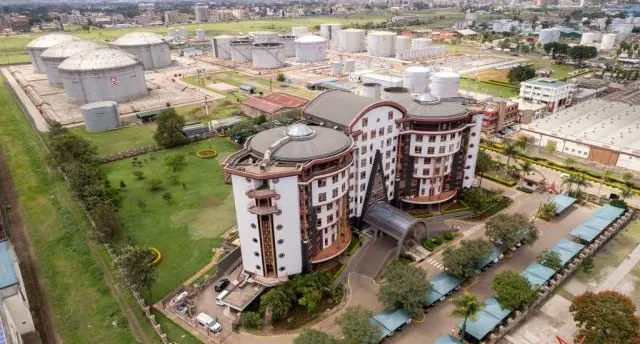
The National Social Security Fund (NSSF) of Uganda has made strategic investments in various companies, including MTN Uganda, Airtel Uganda, and Kampala Marriott Hotel. Recently, its equity allocation expanded to 18.4 percent of its total portfolio, valued at approximately 5.93 trillion shillings. This shift away from government treasury bills and bonds has driven its gains, enabling a record 22.53 percent interest rate for savers in the 2025/2026 financial year.
NSSF's Chief Investments Officer, Kenneth Owera, stated that the fund conducts comprehensive analyses of investment offers before making decisions. The fund opted out of the Kenya Pipeline Company (KPC) Initial Public Offer (IPO) due to its high pricing. NSSF Deputy Managing Director, Gerald Kasaato, mentioned that the stock's price of 9 Kenya shillings (about 270 Uganda shillings) per share was overpriced, with a Price-to-Earnings (P/E) Ratio of 21.
The P/E ratio indicates that investors would pay 21 Kenya shillings for every 1 shilling of annual profit. Kasaato compared this to Safaricom, which NSSF invested in, citing its attractive growth prospects. Several analysts in Uganda and Kenya also viewed the 9 shillings per share as too high, with Old Mutual Investment Group Uganda evaluating the company at about 141 shillings (4.61 Kenya shillings).
Old Mutual Investment Group Uganda described KPC as profitable and worth investing in but recommended waiting for a price revision. The firm estimated a fair value of KSh 4.61 per share, implying a 49% downside to the IPO price of KSh 9.00. This suggests that investors paid almost twice the amount they would have paid for what they got.
Despite the lukewarm trading of KPC shares on the Nairobi Stock Exchange, market analyses show that the stock remains strong due to institutional support from Uganda National Oil Company (20.1 percent) and the Kenya Government (35 percent). The share prices have remained relatively stable, with minor fluctuations since its public debut in March 2026.
Uganda's Ministry of Energy and Mineral Development defended the country's decision to invest in KPC, citing strategic interests and regional energy cooperation. The ministry's Permanent Secretary, Irene Bateebe, argued that holding a major stake ensures Uganda actively controls its energy lifeline, as it contributes roughly two-thirds of KPC's transit traffic revenue.
The investment was also defended by Ruth Nankabirwa, who oversaw the investment as the then line minister. She stated that the concessions provided by Kenya offer assurances for the security of supply, accessibility, and affordability of petroleum products in Uganda. The decision to purchase shares was deemed strategic, with Uganda now having a 20.15 percent share and two members on KPC's board of directors.
Key points
- NSSF avoided investing in KPC due to its high valuation and P/E ratio of 21.
- Old Mutual Investment Group Uganda estimated a fair value of KSh 4.61 per share, implying a 49% downside to the IPO price.
- Uganda invested in KPC to secure its energy interests and ensure control over its fuel supplies.