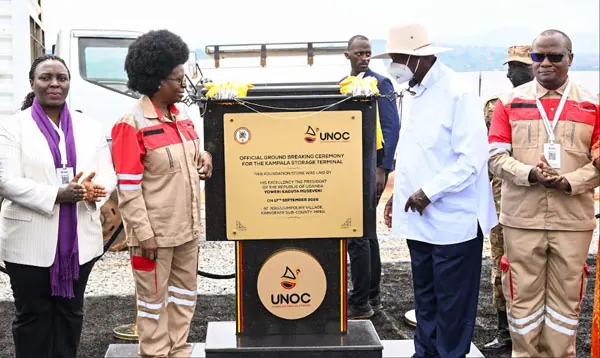
Uganda is constructing a significant petroleum storage facility in Mpigi District, about an hour from the capital, Kampala. The Kampala Storage Terminal, which will have a capacity of 320 million litres, is part of the government's effort to build alternative fuel routes and reduce dependence on a single route. The terminal will provide a buffer against fuel supply disruptions and give Uganda more flexibility in responding to changes in international prices or regional demand.
The project is part of Uganda's broader strategy to develop its oil industry, which is expected to begin commercial production by June 2027. The country estimates that it has more than 6.5 billion barrels of petroleum resources in place, with the Kingfisher project, operated by China's CNOOC, and the Tilenga project, operated by TotalEnergies, expected to provide most of the production. Uganda's crude blend, known as Pearl Sweet, will be transported through the 1,443km East African Crude Oil Pipeline to Tanga on Tanzania's Indian Ocean coast.
Despite becoming an oil producer, Uganda will still rely on imported petrol, diesel, and other refined products for some time. The country uses about 240 million litres of petroleum products every month, with more than 95% of these products imported, mostly through Kenya. Uganda has acquired a 20.15% stake in Kenya Pipeline Company for about $255 million, giving it a direct financial interest in a supply chain on which its economy already depends.
The government has also been expanding its own storage capacity, with Uganda currently having about 160 million litres of petroleum storage capacity. This includes 30 million litres at the Jinja Storage Terminal, 70 million litres at Mahathi Infra Uganda's facility at Kawuku, and about 60 million litres operated by private fuel companies. The Jinja terminal, operated by UNOC, provides bonded storage for oil marketing companies and allows the government to maintain strategic fuel stocks.
President Yoweri Museveni has raised concerns about transporting petroleum on Lake Victoria, warning of the consequences of a possible accident. He has instead argued for greater use of pipelines and railways. The Kampala Storage Terminal will have a capacity of more than 10 times the current capacity of the Jinja terminal and could hold roughly 30 days of national fuel demand.
The next major piece of the puzzle is the planned refinery at Kabaale in Hoima, which is expected to have an initial capacity of 60,000 barrels per day. The government plans to connect it to the wider petroleum network through a 211km pipeline. If the refinery is completed as planned, the Kampala terminal could eventually receive fuel from two sources: imported petroleum products and products refined from Uganda's own crude.
Uganda's strategy extends beyond its borders, with the country and Tanzania signing an agreement to develop a Tanga Regional Energy Hub. The proposed facility would support petroleum storage, refining, logistics, trading, and distribution, and could create another connection to the regional petroleum market. The financing behind this infrastructure is significant, with Vitol extending a $2 billion facility to UNOC for strategic petroleum infrastructure.
Key points
- The Kampala Storage Terminal is part of Uganda's plan to build alternative fuel routes and reduce dependence on a single route.
- Uganda will still rely on imported petrol, diesel, and other refined products for some time despite becoming an oil producer.
- The country is investing heavily in petroleum infrastructure, including a planned refinery at Kabaale in Hoima and a Tanga Regional Energy Hub.